
Planning a vacation often feels like a second job. Between juggling work deadlines and personal commitments, researching destinations, coordinating logistics, and building day-by-day schedules can consume dozens of hours. The good news? Artificial intelligence tools now handle the heavy lifting of itinerary creation, slashing research time dramatically while expert refinement strategies ensure your plans actually work in the real world. This guide walks you through a proven hybrid process that combines AI efficiency with human insight, helping you craft personalized, reliable travel itineraries that maximize experiences without the stress.
Table of Contents
-
Preparing for your travel itinerary: essential inputs and goals
-
Executing the itinerary process: AI generation and expert refinement
-
Common challenges and verification in AI-assisted itinerary planning
-
Expected outcomes and maximizing your travel experience with AI-assisted itineraries
Key Takeaways
| Point | Details |
|---|---|
| Hybrid AI refinement | AI drafts itineraries quickly, but human refinement ensures practicality and reliability. |
| Three Two One pacing | Apply the Three Two One pacing with a cap of three activities per day, plus twenty to fifty percent buffers for transit and contingencies. |
| Transit and contingency buffers | Insert buffers between activities based on distance to absorb travel time variability and weather related changes. |
| Geographic clustering | Group activities by neighborhood to minimize transit time and keep the day cohesive. |
Preparing for your travel itinerary: essential inputs and goals
Before any AI tool or expert can build your ideal itinerary, you need clarity on what you actually want from your trip. Start by identifying your travel style. Are you a museum enthusiast who thrives on cultural immersion, or do you prefer outdoor adventures and spontaneous discoveries? Defining these preferences upfront ensures your itinerary matches your personality rather than following generic tourist routes.
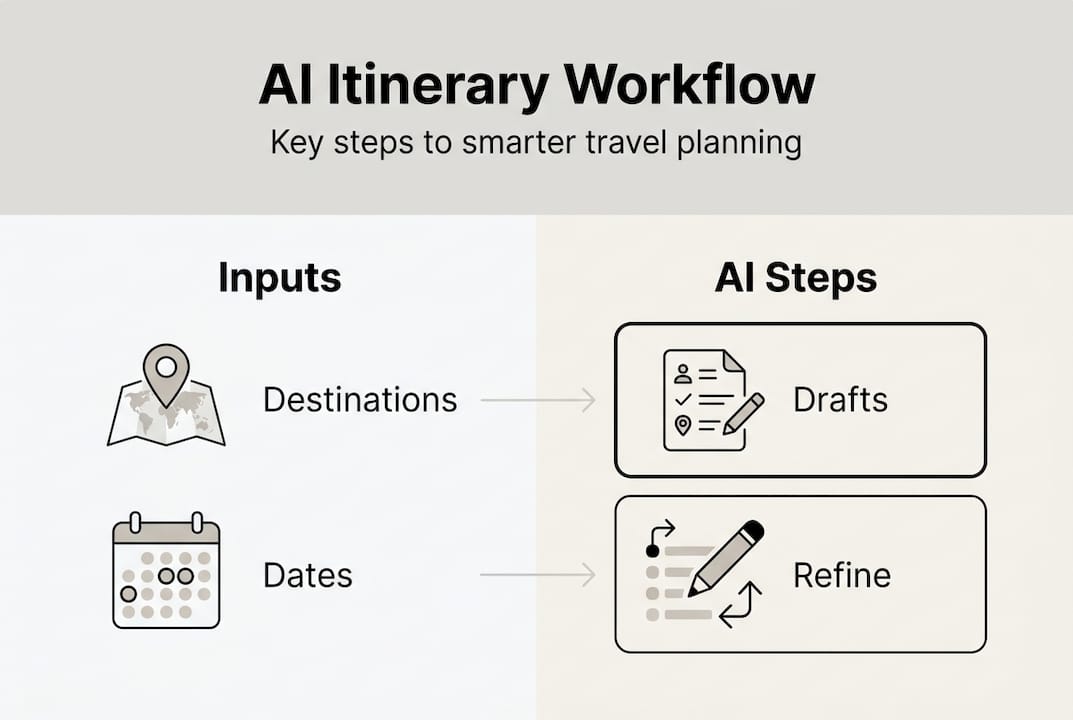
Gather the foundational data points every online travel planner requires. Lock in your destination, exact travel dates including arrival and departure times, total budget broken down by accommodation, activities, and meals, and your preferred pace. Some travelers want three major activities daily, while others need downtime between experiences. AI-assisted travel itinerary processes typically involve user input of destination, dates, preferences, budget, and pace, with AI generating day-by-day plans using large language models optimized for efficiency and personalization.
Communicate your must-see attractions and dietary requirements clearly. If you’re traveling with kids, note their ages and interests. Traveling with elderly family members? Flag mobility considerations. The more specific your inputs, the more tailored your results. AI tools that leverage advanced language models can process these nuanced preferences to suggest activities aligned with your goals.
Pro Tip: Create a simple document listing your non-negotiables before engaging any planning tool. Include items like “must visit at least two local markets” or “need vegetarian restaurant options for every dinner.” This reference keeps your planning focused and prevents generic suggestions from diluting your vision.
Executing the itinerary process: AI generation and expert refinement
Once you’ve assembled your inputs, feed them into an AI travel planning tool to generate your initial draft. Most platforms produce day-by-day schedules within minutes, suggesting activities, restaurants, and transportation between locations. Review this draft critically because AI excels at pattern recognition but sometimes misses practical constraints like walking distances or realistic timing.
Apply the 3-2-1 pacing rule during refinement. Manual expert methodology is iterative, structuring itineraries by themes and neighborhoods with a maximum of three activities per day, adding 20-50% buffers for transit, and incorporating contingency plans. This approach prevents burnout and leaves room for spontaneous discoveries that often become trip highlights.
-
Generate your AI draft with all preferences loaded
-
Map activities geographically to identify clustering opportunities
-
Apply the 3-2-1 rule and eliminate overcrowded days
-
Add buffer time between activities based on distance
-
Insert backup options for weather-dependent plans
-
Review the complete flow for stamina arcs and rest days
Geographic clustering transforms chaotic itineraries into smooth experiences. Group activities by neighborhood or district to minimize transit time. If your AI suggests a morning museum in the north, lunch in the south, and afternoon shopping back north, reorganize to keep movements logical. This simple adjustment can save hours of travel time and reduce fatigue significantly.

| Refinement step | Time investment | Impact on quality |
|---|---|---|
| Geographic clustering | 15-20 minutes | High - reduces transit by 30-40% |
| Buffer time addition | 10-15 minutes | Critical - prevents missed connections |
| Pacing rule application | 20-25 minutes | High - improves trip enjoyment |
| Contingency planning | 15-20 minutes | Medium - handles disruptions |
Pro Tip: Use different colored highlighters or digital tags to mark activities by neighborhood on a map view. This visual approach immediately reveals inefficient routing that text-based itineraries hide. Rearrange until each day follows a logical geographic flow.
Common challenges and verification in AI-assisted itinerary planning
AI tools occasionally generate impressive-sounding but entirely fictional destinations. Edge cases include AI hallucinations like fake destinations, impossible routes, and ignoring real-time data such as weather, closures, and visa requirements. Always cross-reference suggested locations with official tourism websites or trusted travel resources before committing.
Real-time conditions rarely factor into AI planning algorithms. Your generated itinerary might schedule outdoor activities during monsoon season or suggest visiting museums that closed for renovations months ago. Check current weather patterns for your travel dates and verify operating hours for every attraction. Government travel advisory sites provide essential information about visa requirements, safety concerns, and local regulations that AI systems frequently overlook.
-
Watch for restaurants or hotels that don’t exist when you search them independently
-
Verify transit times between locations using actual mapping tools, not AI estimates
-
Check if suggested activities require advance reservations or have seasonal closures
-
Confirm your itinerary doesn’t pack all highlights into the first two days while leaving final days sparse
-
Test whether your plan assumes universal credit card acceptance in cash-preferred regions
Tight connections create cascading failures when inevitable delays occur. If your itinerary schedules a museum visit ending at 2:00 PM and a 2:15 PM restaurant reservation across town, you’re setting yourself up for stress. Build realistic buffers that account for bathroom breaks, photo stops, and the simple reality that attractions take longer to explore than brochures suggest.
“The biggest mistake travelers make with AI-generated itineraries is trusting them completely without ground-truthing the logistics. A plan that looks perfect on screen can fall apart when you’re actually navigating crowded streets or dealing with unexpected closures.”
Stress-test your finalized itinerary with chaos prompts. Ask yourself what happens if your morning activity runs two hours late, if rain cancels your outdoor plans, or if a key attraction closes unexpectedly. Travel planner verification tips include having backup indoor options for rainy days and identifying flexible activities that can shift to different time slots without losing value.
Expected outcomes and maximizing your travel experience with AI-assisted itineraries
A well-executed AI-assisted itinerary process delivers tangible time savings and enhanced travel experiences. For busy professionals and leisure travelers, AI saves 15-30 hours of research but requires verification for edge cases like real-time disruptions, with hybrid approaches combining AI drafts and expert tweaks maximizing both efficiency and experiences. You reclaim evenings and weekends previously lost to endless research, redirecting that energy toward actually enjoying your trip.
Personalization reaches new levels when AI processes your specific preferences rather than defaulting to generic tourist trails. If you indicated interest in local food markets and aversion to crowded tourist traps, your itinerary should reflect those priorities throughout. The best outcomes emerge when you treat AI suggestions as starting points, then refine based on your unique travel style and energy patterns.
Stamina arcs matter more than most travelers realize. Structure your itinerary with an intentional rhythm that balances high-energy exploration days with lighter recovery periods. Front-loading intense activities often leads to exhaustion by mid-trip, reducing enjoyment of later experiences. Distribute your must-see highlights across the entire journey, ensuring you have energy to appreciate them fully.
-
Reclaim 15-30 hours typically spent on manual research and planning
-
Receive activity suggestions matched to your stated interests and pace preferences
-
Benefit from geographic clustering that reduces daily transit time by 30-40%
-
Maintain flexibility to adapt plans when weather or personal energy levels shift
-
Access backup options and contingencies built into your schedule from the start
| Outcome category | Traditional planning | AI-assisted planning | Hybrid approach |
|---|---|---|---|
| Time investment | 30-40 hours | 2-3 hours | 4-6 hours |
| Personalization level | High | Medium | High |
| Logistical accuracy | Variable | Medium | High |
| Flexibility for changes | High | Low | High |
Geographical clustering transforms how you experience destinations. Instead of crisscrossing the city multiple times daily, you explore neighborhoods deeply, discovering hidden gems that rushed itineraries miss. This approach also reduces transportation costs and environmental impact while increasing your connection to local culture. Efficient travel planning recognizes that less movement often creates richer experiences.
Maintain adaptability as your secret weapon. Even the most carefully crafted itinerary should allow spontaneity when you discover an unexpected festival, receive a local recommendation, or simply feel drawn to linger somewhere longer than planned. Build this flexibility into your schedule by avoiding back-to-back commitments and keeping at least one unstructured block each day.
Optimize your next trip with DestList travel planner
Ready to put these strategies into action without spending your entire weekend researching? DestList combines AI-powered itinerary generation with expert refinement, delivering personalized travel plans that actually work in the real world.

Our online travel planner handles the heavy lifting of research, geographic clustering, and schedule optimization while incorporating the human touch that catches AI blind spots. Input your preferences once and receive a comprehensive itinerary including flights, hotels, daily activities with mapped routes, estimated walking times, and weather considerations. The platform’s expert itinerary tools apply proven pacing rules and buffer strategies automatically, ensuring your plans remain realistic and enjoyable. Premium members receive ready-to-book trips within 24 hours, plus access to private travel perks, packing lists, and real-time adjustment support.
Frequently asked questions
How long does it take AI to generate a travel itinerary?
AI platforms typically produce initial itinerary drafts within 2-5 minutes after you submit your preferences and constraints. However, generating a truly reliable, personalized plan requires an additional 3-4 hours of human review and refinement. This verification phase catches AI errors, adds realistic buffers, applies geographic clustering, and ensures activities align with your actual interests rather than generic tourist recommendations.
Can AI handle unexpected travel changes like weather or closures?
Most AI planning tools lack real-time awareness of current conditions, operating instead on historical data and general patterns. They won’t automatically know if a museum closed for renovations last month or if your travel dates coincide with monsoon season. You must independently verify weather forecasts, check official websites for temporary closures, and confirm operating hours before departure. Building contingency plans and backup indoor options into your itinerary during the refinement phase protects against these disruptions.
What is the best way to avoid overpacking activities in one day?
Apply the 3-2-1 pacing rule strictly by limiting yourself to a maximum of three major activities per day. Add 20-50% buffer time between scheduled items to account for transit, spontaneous discoveries, meals, and simple rest. Review your draft itinerary and eliminate any day that feels rushed when you imagine actually executing it. Remember that quality experiences matter more than quantity, and exhaustion diminishes enjoyment of even the best attractions.
How do I verify if an AI-generated itinerary is reliable?
Cross-reference every suggested destination, restaurant, and hotel with independent sources like official tourism websites, current Google Maps listings, and recent traveler reviews. Use actual mapping tools to verify transit times rather than accepting AI estimates. Test your plan with chaos prompts by asking what happens if activities run late or weather forces changes. Check that your itinerary doesn’t assume universal credit card acceptance, ignore visa requirements, or schedule visits during known closure periods for the destination.