
Building a trip plan that is fully personalized and ready to book without spending hours on research can be inefficient. Most itinerary tools either depend on generic automation that skips deep personalization, or lock budget visibility and booking links behind subscriptions or limited trial access. This comparison lays out pricing, booking links, personalization, and trip collaboration features across five travel itinerary planners so you can pick the best fit for your style.
Table of contents
Destlist

At a glance
According to the company, DestList delivers ready to book trips within 24 hours. The service pairs AI assisted itinerary generation with human verification to turn your preferences into detailed plans. It includes flights, hotels, day by day activities, mapped routes, and walking times to make the schedule actionable.
Core features
-
AI assisted trip planning with human verification that reviews itineraries before delivery.
-
Personalized itineraries covering flights, hotels, activities, mapped routes with walking times, and route optimization.
-
Proactive weather alerts with alternative suggestions and packing checklist suggestions.
-
Member only perks and private rates offering up to 20% off for eligible plans and memberships.
-
Destination discovery, tour booking, visa services, and travel essentials guidance.
Key differentiator
The single biggest difference is the human verification stage after AI planning. That extra review addresses gaps the algorithm can miss. The result is ready to book itineraries that include direct booking links to airlines and hotels, not just recommendations.
Pros
-
Quick delivery. The vendor advertises delivery within 24 hours, which works well when you need a trip fast.
-
Deep personalization. Plans reflect stated preferences and offer multiple formats for families, groups, or solo travelers.
-
Practical routing. Mapped routes with walking times reduce guesswork when moving between activities.
-
Weather aware. Proactive weather alerts come with alternative suggestions so plans stay usable in bad conditions.
-
Flexible purchasing. Choose a membership for repeated use or a one time plan for a single trip, and book directly with providers to avoid extra middlemen fees.
Cons
- The service depends on clear user input and may not satisfy travelers who prefer to do their own research.
Who it's for
DestList fits travelers who want someone else to assemble a full itinerary quickly. Busy professionals, parents planning group trips, and solo travelers who want a turn key plan will find the format useful. Travelers who enjoy DIY research or piecing together tickets themselves may find the approach limiting.
Unique value proposition
Members get access to private rates and perks while keeping direct booking control. That means you can receive an agent reviewed plan and still book flights or hotels yourself. For frequent travelers, that tradeoff lowers planning time while keeping price transparency.
Real world use case
A solo traveler requests a seven day Paris plan with preferences for art museums and neighborhood restaurants. DestList returns flights, hotels, a day by day itinerary, maps with walking times, and weather alerts within a day according to the vendor. The traveler uses the included direct booking links to reserve flights and hotels.
Pricing
Pricing starts at $10.99 per month for a membership that includes up to three plans per year. Annual memberships go up to $99 per year. One time planning is available starting at $39.99.
Website: https://destlist.com
Mindtrip
At a glance
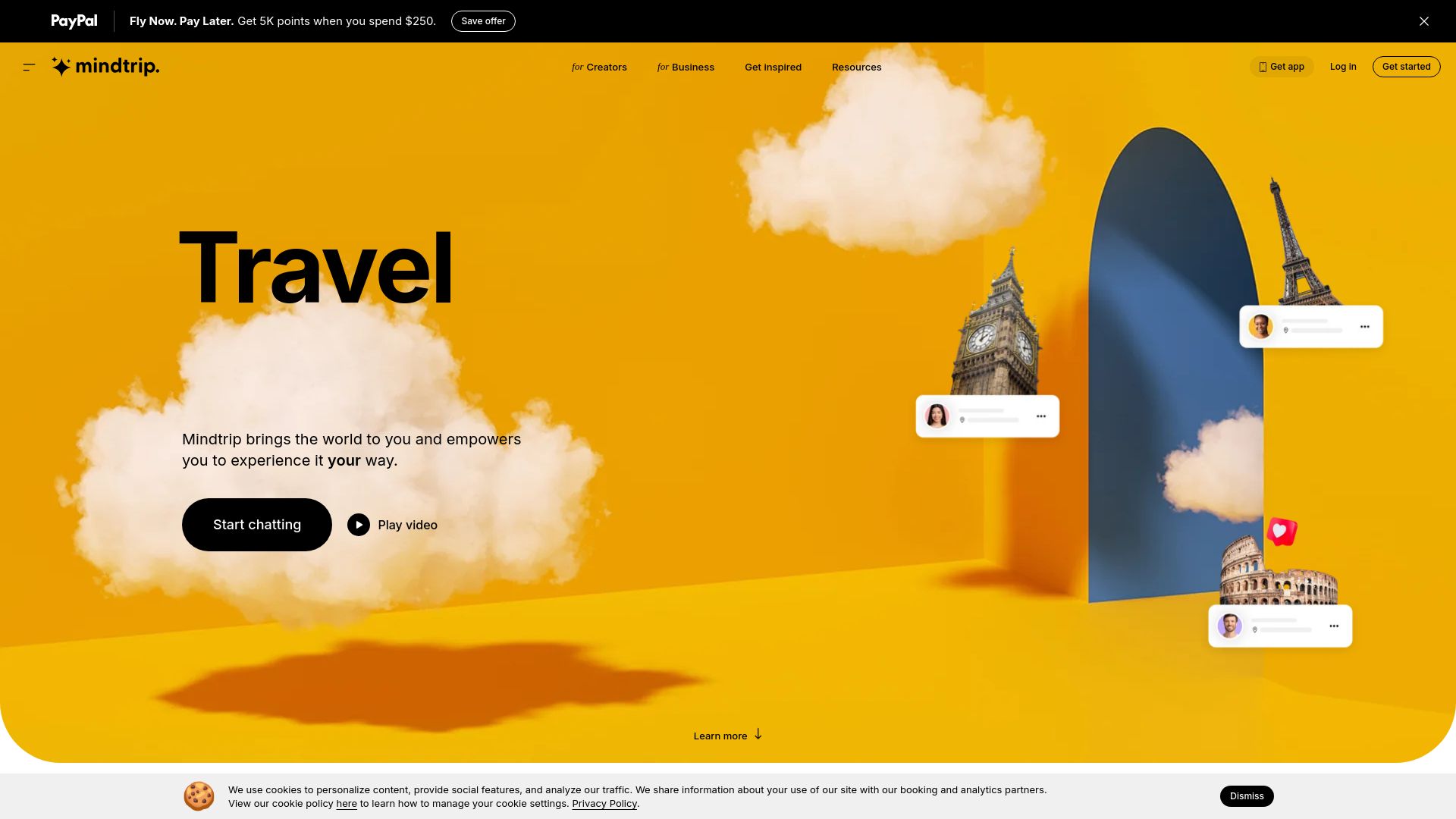
Mindtrip combines a large travel knowledge base with conversational AI to let brands deliver branded chat experiences and shareable itineraries. The product supports collaborative planning and organizes travel receipts in one place. That mix targets destination marketing organizations and hotels as much as individual travelers.
Core features
Mindtrip offers personalized travel suggestions based on stated user preferences and browsing signals. It creates customizable and shareable itineraries with photos, interactive maps, and embedded reviews. The platform stores and organizes travel receipts in one place for easier expense tracking.
Group planning works through chat and shared itineraries. Trend pages and inspiration modules help users decide where to go.
Key differentiator
Mindtrip combines a large knowledge base, proprietary AI, and flexible content rules to deliver brand consistent travel conversations at scale. That approach makes Mindtrip a tool for brands that want control over tone, content, and conversion paths. It leans toward companies and DMOs that must maintain a unified voice across guest interactions.
Pros
-
High personalization. The AI tailors suggestions to stated preferences and past interactions, which helps produce more relevant itineraries for users.
-
Collaboration features. Group chat and shared itineraries make it easy for friends or guests to plan together without exporting files.
-
Brand customization. Content rules and integration options let hotels and DMOs keep messaging consistent across the chat experience.
-
Content and analytics. The platform integrates site content, supports rich photos and maps, and offers reporting to track engagement and conversions.
-
Receipt management. Travel receipts and expense items live in one place. That simplifies post-trip reconciliation for travelers and corporate guests.
Cons
-
Outcome variability. Third party reviews note that AI responses can be accurate, but results vary based on implementation and content quality.
-
Implementation complexity. Enterprises may face longer setup times when they need custom integrations or branded content rules.
-
Pricing opacity. Pricing is not publicly listed and requires direct contact for a tailored quote.
-
Dependence on content. The product requires curated content and data setup to reach optimal performance.
When it may not fit
If you need a ready made consumer tool with clear self serve pricing, this product may feel heavyweight. Small tourism operators with no content resources will likely struggle to configure rules and feed the system. Also, teams expecting out of the box accuracy without content work will see varied results.
Who it's for
Mindtrip fits travel brands, DMOs, hotels, and tech enabled travelers that want an AI driven, brandable travel assistant. It suits marketing teams that can supply destination content and analytics owners who want to measure engagement. Independent travelers will like the shared itinerary and receipt features if they prefer concierge style planning.
Real world use case
A destination marketing organization embeds Mindtrip on its site to offer personalized trip ideas. Visitors use the chat to build shared itineraries and receive local guides. According to the vendor, that setup led to longer site visits and improved conversions when content and rules were well tuned.
Pricing
Pricing requires direct inquiry. The vendor lists pricing as contact based, which suggests custom quotes for brands and enterprise deployments. Expect to discuss scope, integrations, and content services during the sales process.
Website: https://mindtrip.ai
Layla.ai
At a glance
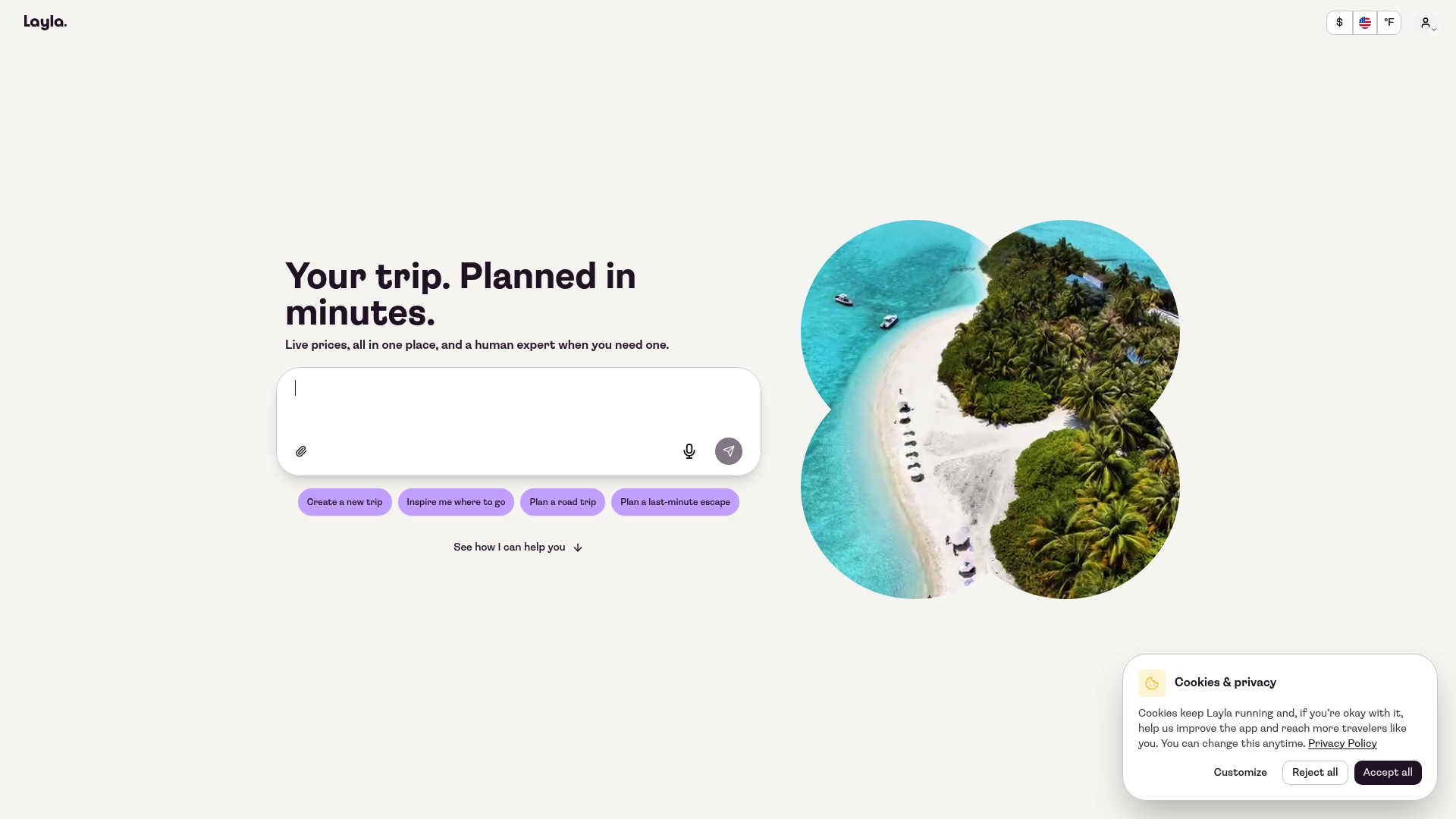
Free to use with optional paid upgrades at $49/year. Layla.ai generates AI itineraries instantly and compares live prices across flights, hotels, and activities. The service combines automated planning with occasional human guidance to speed up trip preparation for busy travelers.
Core features
- Personalized travel itineraries generated instantly from your preferences, with day by day plans and booking links.
- Live price comparison for flights, hotels, activities, and transport so you see current options from multiple sellers.
- Expert guidance and support available during planning and while you travel.
- Suggestions for hidden gems and destination inspiration tailored to your interests.
Key differentiator
Layla.ai pairs fast AI itinerary generation with real-time price comparison and access to human planning support. That mix reduces the time you spend hunting for deals and building an agenda. For travelers who want both budget visibility and a ready-made plan, this combo is the central selling point.
Pros
-
Quick planning process saves time when you need a ready itinerary in minutes. You get flight, hotel, and activity suggestions together.
-
Cost savings through live price comparison. The tool surfaces options from multiple partners so you can pick the best value quickly.
-
Highly customizable itineraries that adapt to your interests and travel pace. You can change activities, add meals, and reorder days.
-
Integrated with known travel suppliers and cited by media outlets, which helps with trust and booking options.
-
A 24/7 virtual travel assistant keeps suggestions and help available while you plan or travel.
Cons
-
Heavy reliance on AI can feel less personal than a dedicated travel agent for bespoke or very complex trips.
-
Some premium features require a subscription, which adds cost for repeat users who want extras.
-
Limited human interaction may not satisfy travelers seeking deep, hands-on concierge level planning.
-
The service depends on internet access and AI accuracy, so very unusual or highly specific requests may need extra human follow up.
When it may not fit
Avoid Layla.ai if you need white-glove planning for luxury or highly specialized itineraries that require long human consultations. Do not choose it if you prefer a full-service agent who handles every booking and personal request. Also skip it when you must plan offline or in areas with poor internet access.
Notable integrations
- Skyscanner for broad flight comparisons.
- Booking.com for hotel availability and rates.
- Viator for tours and experiences.
- GetYourGuide for additional activity options.
Who it's for
Tech-savvy travelers who want fast, flexible, and affordable trip planning will get the most from Layla.ai. Families, couples, solo explorers, and multi-destination planners benefit when they value speed and budget clarity. Users who need heavy, personalized human support may prefer a different service.
Real world use case
A family uses Layla.ai to plan a 10 day European trip and receives a tailored itinerary with flights, hotels, daily activities, and budget-friendly suggestions. The plan highlights local sights and lesser known attractions, and the price comparison finds lower-cost travel options. The family saves time and arrives with a ready schedule.
Pricing
Layla.ai is free to use with optional paid upgrades for premium features at $49/year. The subscription unlocks extra planning tools and priority support for frequent or power users.
Website: https://layla.ai
Stippl
At a glance
Stippl's marketing materials state an integrated AI generates personalized itineraries in minutes. That claim pairs the AI with live trip tracking and expense management. The app runs on web, iOS, and Android and includes an integrated eSIM for mobile data while traveling.
Core features
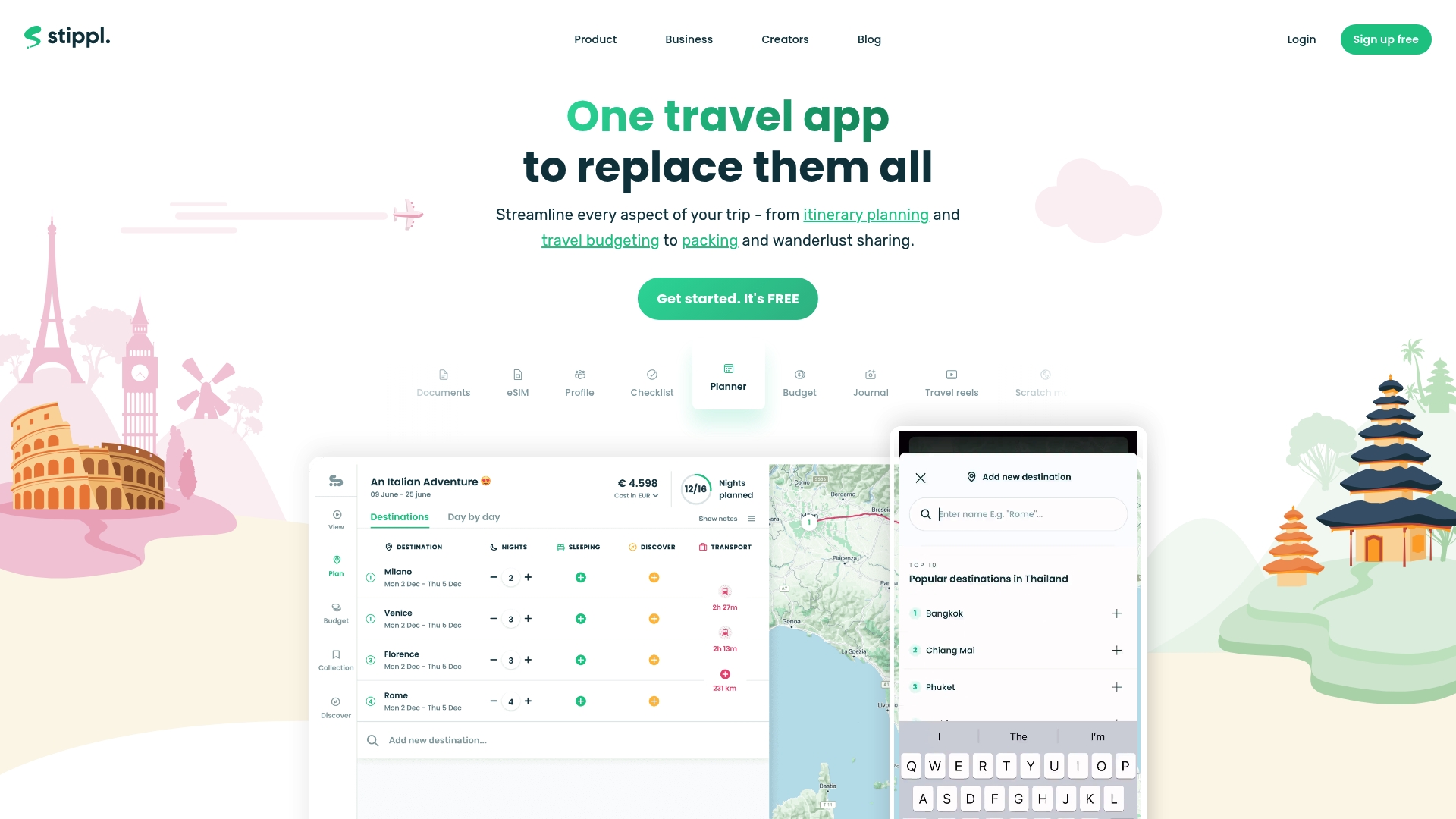
Stippl bundles planning, budgeting, packing, journaling, and sharing into one app. The feature set covers the full trip lifecycle from prep to memory keeping.
- Itinerary planner with drag and drop route organization for multi destination trips.
- Budget tracker with expense logging and currency conversion plus expense splitting for groups.
- Packing lists with shared checklists and predefined templates to speed prep.
- Travel journal with photos and notes, plus travel reels and scratch maps to revisit routes.
- Real time travel tracker for live location sharing and a personal travel map for saved spots.
- Integrated eSIM for on trip mobile data and an AI travel planner for quick itinerary drafts.
Key differentiator
The product leans on that AI feature combined with live tracking and expense tools. The AI is advertised to cut planning time by producing tailored itineraries quickly. Pairing itinerary generation with built in expense splitting and an eSIM makes Stippl a single app for planning, sharing, and staying connected.
Pros
- All core travel workflows live in one place, so you can plan and document without switching apps. This reduces friction for group trips.
- The interface is reported as user friendly and intuitive in reviews, which helps the learning curve.
- Collaboration features let multiple travelers edit itineraries and share packing lists in real time.
- The app mixes planning tools with memory keeping, so you can turn a trip plan into a journal without extra steps.
- Free basic features exist, and the vendor notes an optional premium subscription for added functionality.
Cons
- Some users report a learning curve to access the app's full potential. That can slow adoption for casual planners.
- Pricing detail is sparse in the source, so you may need to test the free tier before committing to paid features.
- The product data lists no third party booking integrations, which may force manual booking outside the app.
- Premium capabilities like the AI planner and advanced tools likely require an upgrade from the free tier.
When it may not fit
If you prefer minimal tools and only need a simple checklist, Stippl may feel too feature rich. If you rely on direct integrations with major booking sites, this product lacks those links. Budget conscious users who need clear tier details may find the pricing opacity a problem.
Who it's for
Tech savvy travelers, families, and travel groups who want planning, expense splitting, and journaling in one place will like Stippl. Frequent multi destination planners gain the most from multi stop route tools and the shared checklist features. Travelers who want live location sharing and built in mobile data options will also benefit.
Real world use case
A family planning a multi city holiday builds day by day plans with the itinerary planner and shares them with relatives. They log hotel and meal costs in the budget tracker and split expenses among adults. During travel they share live updates and save photos to the travel journal for a single trip record.
Pricing
Stippl offers a free tier with core planning and sharing features. The vendor mentions an optional paid subscription, but specific tiers and prices are not detailed in the source. Expect premium features such as advanced AI itineraries and some collaboration tools to sit behind the subscription.
Website: https://stippl.io
TripMuse
At a glance
TripMuse includes expense management with receipt photo capture and expense splitting. That feature sets it apart from many trip planners that only track bookings. The app also promises automated itinerary updates and group collaboration synced across devices. These elements make it useful for travelers who share plans and split costs.
Core features
- Smart trip organization with automated itinerary updates and synced schedules across devices.
- Collaborative planning so groups can edit shared itineraries and add notes in real time.
- Real time flight tracking and notifications to alert you about delays or gate changes.
- Expense management with receipt photo capture and automatic expense splitting for group trips.
- Personalized packing lists based on destination and activities and an AI travel assistant for instant recommendations.
Key differentiator
TripMuse centers on automatic itinerary updates and proactive support that follows the traveler across devices. That focus makes it a productivity tool for groups and frequent travelers who want fewer manual edits. Compared with Destlist, TripMuse emphasizes automation and synced collaboration rather than human curated, ready to book itineraries.
Pros
- Automates complex planning tasks, saving time when trip details change. This reduces manual edits to itineraries.
- Provides real time updates and notifications so you get alerts about flights and schedule changes. That helps avoid surprises on travel days.
- Facilitates group collaboration with shared itineraries and notes, which keeps everyone on the same page. It supports expense splitting for fair cost sharing.
- Syncs data across multiple devices so plans stay consistent for traveling households or friend groups. The AI assistant offers quick suggestions when you need them.
Cons
- Limited user reviews are available, so independent reliability reports are scarce. That makes long term stability harder to judge.
- The AI features and automation may feel generic for travelers who want highly customized itinerary edits. Custom rules or deep personalization options appear limited.
- Mobile app availability and platform support are unclear. Full feature access might depend on device or app store distribution.
When it may not fit
TripMuse may not fit travelers who require deeply customized itineraries or professional trip design. The product data indicates AI and automation may lack extensive customization options. If you need guaranteed app availability across every device, the dependency on app store access could be a problem.
Who it's for
This product suits frequent travelers who want an all in one planner that reduces manual work. It also fits groups organizing shared trips where expense splitting and synchronized updates matter. Choose TripMuse if you prefer automation and in app collaboration over hand built itineraries.
Real world use case
A family uses TripMuse to collect hotel and flight confirmations automatically into one itinerary. They snap receipts into the app during the trip and split expenses for meals and taxis. The app sends flight change alerts and updates the shared itinerary so relatives stay informed without extra messages.
Pricing
Pricing is not specified in the product data and appears to be in early development or invitation only. Expect either a closed beta or private pricing while the team finalizes plans. Contact the vendor for access details and any launch pricing.
Website: https://tripmuse.com
Comparison of alternatives
Travelers have various needs when planning their trips; while all discussed solutions offer unique benefits, DestList excels in specific scenarios such as creating ready-to-book itineraries verified for accuracy within 24 hours.
Turnaround time and user experience
DestList stands out with its unique feature of combining AI assisted trip planning with a human verification step. This process ensures highly accurate and practical itineraries delivered within 24 hours. On the other hand, TripMuse focuses on automated itinerary updates and shared group planning capabilities, which are particularly beneficial for those organizing group trips.
Budget transparency and control
Layla.ai shines for budget-conscious travelers as it incorporates real-time live price comparisons for flights, hotels, and activities, providing users with up-to-date cost data for informed decisions. This feature surpasses DestList where pricing deck information is limited to itinerary planning costs and private deals. Most useful for tech-savvy travel planners, Layla.ai delivers fast AI-generated itineraries at no cost on the base plan.
Best fit
- DestList suits travelers needing full, reliable itineraries quickly, valuing direct booking control and verified accuracy.
- Layla.ai is a great choice for budget-conscious travelers seeking real-time price comparison with an emphasis on immediacy and customization.
- Mindtrip is recommended for organizations interested in branded, interactive itinerary management for user engagement.
- Stippl benefits travelers requiring integrated tools for planning, budgeting, journaling, and collaborative features for group planning.
Our pick
For travelers valuing a reliable, ready-to-book itinerary enhanced by precision and professional verification, DestList stands out as the most effective choice. However, other alternatives provide significant advantages depending on specific needs, such as budget transparency or group collaboration.
When considering alternatives for seamless, highly individualized trip planning, the following comparison highlights key features, differentiation aspects, and potential limitations to guide your decision.
| Product | Key Features | Unique Selling Point | Best For | Notable Limitation |
|---|---|---|---|---|
| Destlist | AI-generated itineraries with expert verification | Human review ensures accuracy and reliability | Individuals needing quick, reliable plans | Requires clear input for optimal results |
| Mindtrip | Collaborative planning with brandable AI conversations | Supports branded operation for DMOs and hotels | Destination marketers requiring scalable tools | Setup dependent on curated content |
| Layla.ai | AI itineraries with live price comparison | Integration of budgeting with planning | Budget-sensitive and tech-savvy travelers | May feel less personal than thorough agent guidance |
| Stippl | Full-trip lifecycle app including budgeting and journaling | Centralized tool combining planning and logging | Groups tracking expenses and routes | Learning curve for accessing all features |
| TripMuse | Automated itinerary updates and group collaboration | Synced scheduling and expense management | Frequent group travelers | Limited customization for unique trip designs |
Discover why Destlist stands out among Travelmuse.com alternatives
Choosing the right travel planning platform means balancing personalization, speed, and easy booking access. Many travelers find that platforms like TravelMuse lack the quick, ready-to-book itineraries combined with human verification they need. Destlist answers this challenge by delivering personalized travel plans tailored to your preferences, complete with flights, hotels, mapped routes, and weather alerts – all within 24 hours. This approach eliminates the frustration of manual planning and lets you start your trip without delay.
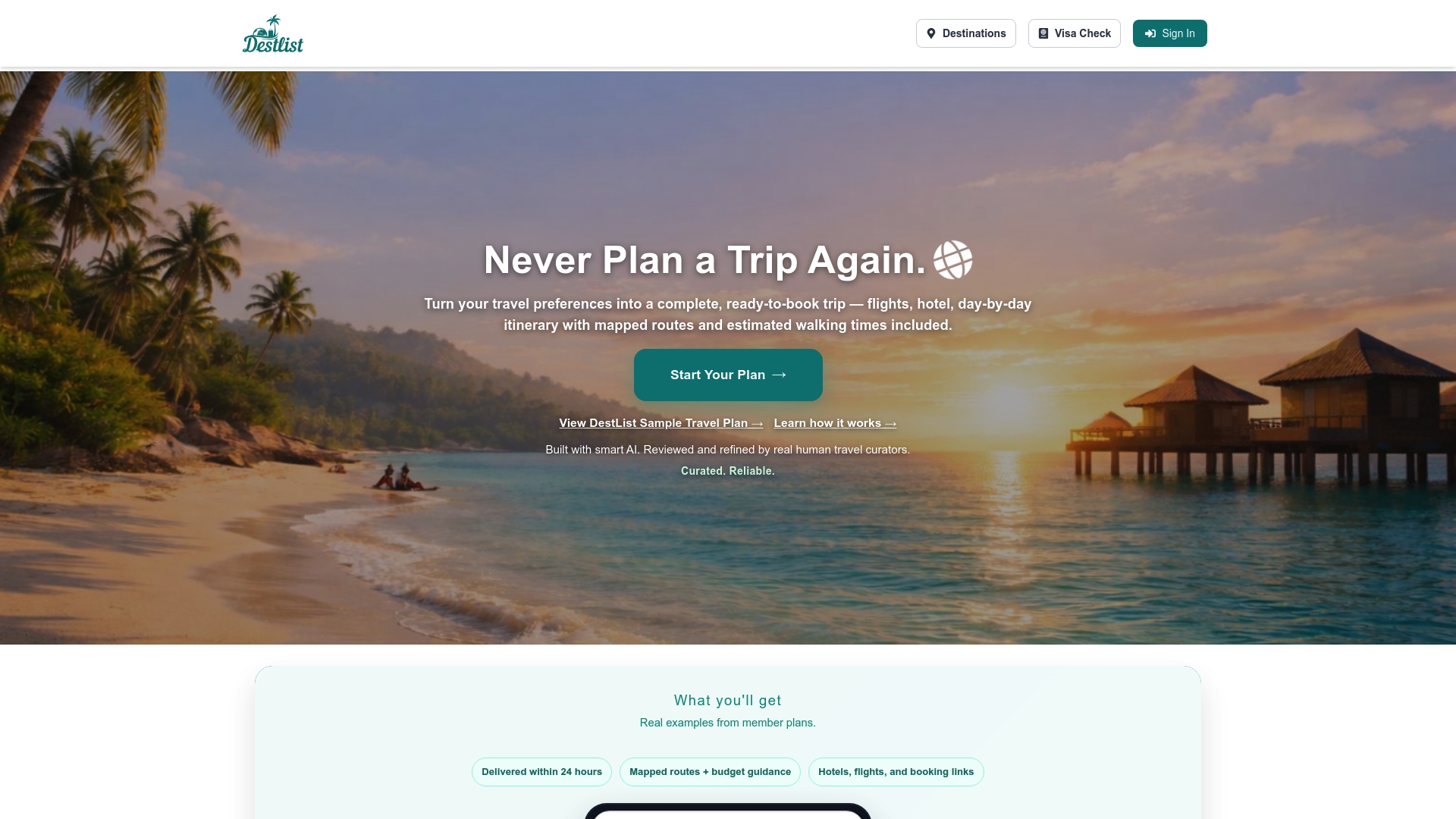
Ready to spend less time organizing and more time enjoying your travel? Visit Destlist to transform your travel ideas into actionable, budget-conscious itineraries. Experience the convenience of direct booking links and exclusive perks designed just for you. Try Destlist now and unlock a seamless way to get your next trip planned swiftly and confidently.
FAQ
What features make Destlist a strong choice for personalized travel planning?
Destlist provides AI-assisted itinerary generation verified by humans, offering a detailed plan that includes flights, hotels, and mapped routes with walking times. This combination ensures that plans are not only thorough but actionable, helping travelers navigate their trips easily.
How does Destlist compare to mindtrip in terms of personalization?
Mindtrip excels in high personalization through conversational AI that tailors suggestions based on user preferences and browsing behavior. While Mindtrip is great for collaborative planning, Destlist shines in creating fast, verified itineraries that meet the immediate needs of busy travelers looking for quick solutions.
What kind of traveler benefits most from using Destlist?
Busy professionals, parents organizing group trips, and solo travelers looking for quick and personalized plans find Destlist particularly beneficial. The service is designed for those who want to have their entire itinerary ready to book within 24 hours.
What is the pricing structure for Destlist?
Destlist's pricing starts at $10.99 per month for a membership, which grants access to up to three plans per year. For those seeking additional plans, an annual membership is available for $99, making it a flexible option for both frequent and occasional travelers.
Can i expect ongoing support while using Destlist?
Yes, Destlist offers proactive weather alerts and alternative suggestions, enhancing the user experience during travel. This feature helps ensure that plans remain adaptable, responding effectively to changing conditions.