
TL;DR:
- Trip themes organize travel plans around specific interests or moods, transforming generic trips into focused experiences. Designing routes as continuous narratives that align with the theme enhances coherence, while timing and lighting amplify ethereal and surreal effects. Starting with emotional goals rather than destinations ensures a cohesive, memorable journey with minimal logistical stress.
Trip themes are curated travel concepts that shape your entire itinerary around a specific interest, mood, or activity, turning a generic vacation into a focused and memorable experience. Whether you are drawn to ancient ruins, surreal landscapes, or spontaneous urban adventures, choosing a theme before you book transforms how you plan, what you pack, and what you remember. The travel industry increasingly recognizes themed travel ideas as a distinct planning category, separate from simple destination selection. This article covers the strongest examples of trip themes across six categories, including 2026 trends like ethereal escapes and micro-adventures, so you can find the concept that fits your next trip.
1. What are trip themes and why do they matter?
A trip theme is the organizing principle behind every decision in your itinerary, from which cities you visit to which restaurants you book. Without a theme, most travelers end up with a list of disconnected attractions. With one, every day feels intentional and connected. Cultural immersion, scenic rail routes, and romantic retreats are all examples of how a single idea can shape an entire trip. Platforms like Pinterest and travel curators at Destlist both confirm that travelers who plan around a theme report higher satisfaction and fewer regrets about their itinerary choices.
2. Cultural and historical trip themes
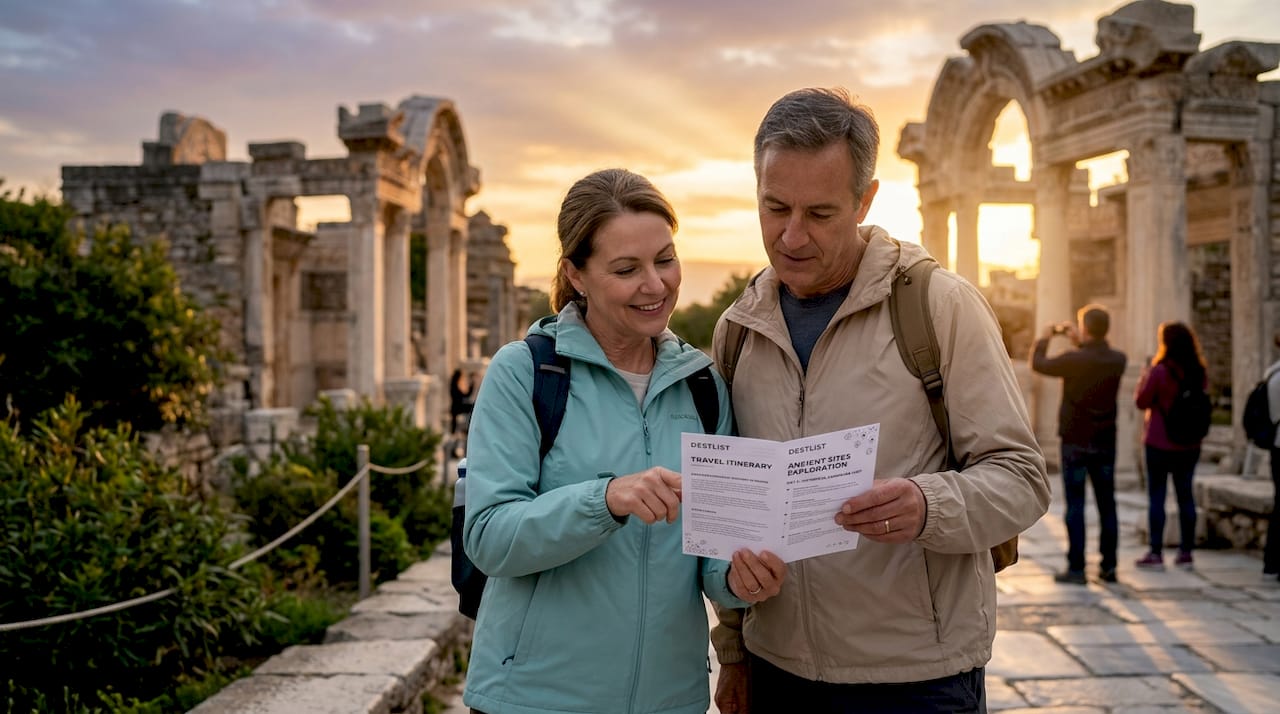
Cultural trips often include visits to UNESCO heritage sites, local festivals, and immersive art experiences that create enriched historical travel themes. This category is one of the most popular vacation themes globally because it combines learning with authentic local engagement. The appeal is straightforward: you leave knowing something real about a place, not just what it looks like from a hotel pool.
Strong examples in this category include:
- European art tour: Florence, Paris, and Amsterdam in sequence, structured around major museum collections at the Uffizi, the Louvre, and the Rijksmuseum
- Japanese cultural retreat: Kyoto's geisha districts, Nara's temple walks, and hands-on experiences like tea ceremony workshops and indigo dyeing classes
- Andean heritage circuit: Cusco, Machu Picchu, and the Sacred Valley, focused on Inca history and living indigenous communities
- West African roots journey: Ghana's Cape Coast Castle, Benin's Voodoo Festival, and Senegal's Gorée Island, connecting diaspora history to present culture
- Ottoman trail: Istanbul's Topkapi Palace, Ephesus ruins, and Cappadocia's underground cities, tracing a single civilization across centuries
The key to a strong cultural theme is sequencing. Visiting related sites in a logical order, rather than jumping between unrelated attractions, deepens the narrative and reduces decision fatigue.
3. Adventure and nature-based trip themes
Adventure themes work best when the natural environment itself becomes the main character of the trip. The goal is not to check off a list of parks or peaks but to build a route where each day's landscape feeds directly into the next. Switzerland's train route exemplifies this approach, connecting Zürich, Lucerne, Interlaken, Montreux, and Zermatt through rides on the GoldenPass Express and Gornergrat Railway, with each leg offering a distinct visual transition.
Popular adventure and nature trip themes include:
- African safari circuit: Kenya's Masai Mara, Tanzania's Serengeti, and Botswana's Okavango Delta, timed around the Great Migration
- Swiss alpine rail route: A one-week scenic journey by train through the Alps, minimizing car logistics while maximizing mountain views
- Patagonia trekking loop: Chile's Torres del Paine and Argentina's Los Glaciares National Park, built around multi-day hikes
- Scandinavian fjord expedition: Norway's Geirangerfjord and Nærøyfjord by boat and foot, with optional northern lights extensions in winter
- Costa Rica biodiversity trail: Cloud forests, volcanic parks, and Pacific coast wildlife reserves in a single continuous route
Routing constraints aligned with your theme transform transit days into thematic transitions rather than wasted travel time. This is the single most underrated planning move in adventure travel.
Pro Tip: Design your adventure route as a single line on a map, not a loop with backtracking. Following one continuous path, as Switzerland's train route demonstrates, reduces logistics friction and keeps the thematic momentum intact from day one.
4. Romantic and relaxation trip themes
Romantic trip themes succeed when private, sensory experiences replace crowded tourist itineraries. The distinction matters: a romantic theme is not just about visiting a beautiful place. It is about structuring the trip so that intimacy and atmosphere are built into every activity. Destinations like Madeira offer private boat tours, wine tasting at local quintas, and sunrise viewpoints that deliver exactly this kind of curated closeness.
Examples of romantic and relaxation themes include:
- Bali luxury escape: Private infinity pool villas in Uluwatu, couples' spa treatments, and cliff-top sunset dinners, as seen in Destlist's Bali romantic itinerary
- Istanbul private discovery: Traditional hammam sessions, private ferry rides at sunset on the Bosphorus, and rooftop dinners in Sultanahmet
- Madeira island retreat: Levada walks, private boat tours along volcanic coastlines, and local wine pairings at family-run estates
- Maldives overwater escape: Snorkeling from private decks, underwater dining, and sunrise yoga on isolated sandbanks
- Tuscany slow travel: Renting a farmhouse in the Val d'Orcia, visiting small-production wineries, and attending a local sagra food festival
The planning principle here is density of private moments over density of attractions. Fewer stops, more depth, and experiences that cannot be replicated in a group tour setting define this theme.
5. Ethereal and escapist trip themes for 2026
The defining 2026 travel trend is what travel editors are calling "fairytale meets fever dream." Travelers are actively seeking destinations that feel surreal, mystical, and visually unlike anything in daily life. This is not about luxury or adventure in the traditional sense. It is about emotional and visual impact, the feeling that you have stepped into a different reality entirely.
Cohesive ethereal themes enhance traveler satisfaction by focusing on aesthetic consistency rather than geography or a checklist of attractions. The destinations that define this trend share one quality: they produce surreal effects naturally, without filters or staging.
Strong examples include:
- Scottish Highlands mystical circuit: Glencoe's fog-draped valleys, the Fairy Pools on Skye, and Eilean Donan Castle at dusk
- Bolivia's surreal south: The Salar de Uyuni salt flats at sunrise, the Eduardo Avaroa Andean Fauna National Reserve, and the red lagoons of the Altiplano
- Japan's bamboo and mist route: Arashiyama's bamboo grove at dawn, Yakushima's ancient cedar forest, and the moss gardens of Saihoji Temple in Kyoto
- Iceland's elemental loop: Black sand beaches at Reynisfjara, the Jökulsárlón glacier lagoon, and the Landmannalaugar rhyolite mountains
- Cappadocia and Pamukkale combination: Hot air balloons over fairy chimneys at sunrise followed by the white travertine terraces of Pamukkale
Ethereal trip themes require planning how and when you will encounter each thematic element. Timing, lighting, and terrain are the three variables that determine whether a destination delivers its full emotional impact or simply looks like a photograph you have already seen.
Selecting places that naturally produce surreal effects rather than simply visiting many attractions is the core planning discipline for this theme. Arrive at the Salar de Uyuni at sunrise when the water reflection creates a perfect mirror. Visit Arashiyama's bamboo grove before 7 a.m. when it is empty and the light filters through at an angle. Timing is the theme.
6. Micro-adventure trip themes for budget travelers
Microadventures are short, local, low-cost activities designed to create novelty and reward quickly, making them ideal for travelers who want variety without complex logistics. The concept, popularized by British adventurer Alastair Humphreys, reframes the idea of adventure as something accessible on any budget, in any location, on any schedule.
- Urban stargazing night: Take a local train to the nearest dark sky area, bring a blanket and a star map app like SkySafari, and spend the night identifying constellations
- Wilderness picnic challenge: Hike to a location with no cell service, cook a simple meal on a portable stove, and stay until sunset
- Alphabet dinner crawl: Eat one dish from a different cuisine for each letter of the alphabet across a single city over several days
- Night hike with a headlamp: Choose a familiar trail and walk it after dark to experience a completely different sensory environment
- Local sensory exploration: Spend a full day in one neighborhood using only your senses as a guide, no map, no reviews, no agenda
Microadventures can be spontaneous and creative, using prompts or local challenges to keep the travel experience novel and rewarding. The alphabet dinner crawl and sensory exploration examples above require no advance booking and cost almost nothing, yet they generate the kind of specific memories that generic sightseeing rarely produces.
Pro Tip: Build one micro-adventure into every full travel day, even on a culturally or romantically themed trip. A 90-minute night hike or a spontaneous market challenge breaks routine and creates the unexpected moments that travelers remember most.
Key takeaways
The most effective trip themes are built around emotional and aesthetic consistency, not just geography, and the best examples combine a clear organizing concept with routing that reduces logistical friction.
| Point | Details |
|---|---|
| Theme before destination | Choose your theme first, then select destinations that serve it rather than the reverse. |
| Route as narrative | Design your route as a continuous line, not a scattered loop, to maintain thematic momentum. |
| Timing defines ethereal themes | For surreal and escapist themes, arrival time and lighting conditions matter more than the destination itself. |
| Micro-adventures add depth | One small, spontaneous activity per day creates the specific memories that structured itineraries often miss. |
| Romantic themes need fewer stops | Intimacy and atmosphere come from depth of experience, not volume of attractions. |
Why I think most travelers pick their theme too late
I have reviewed hundreds of trip itineraries, and the single most common mistake is choosing a destination first and retrofitting a theme afterward. You end up in Kyoto trying to make a "cultural immersion" trip out of a schedule that already includes a theme park and a bullet train to Tokyo for one night. The theme becomes a label rather than a structure.
The travelers who get this right start with a feeling. Not a place. They ask: do I want to feel small and awed, or connected and intimate, or physically challenged? The destination follows from that answer. A couple who decides they want "private and sensory" will land on Madeira or Bali or the Maldives naturally. A solo traveler who wants "surreal and visually overwhelming" will find Bolivia or Iceland or Cappadocia without much debate.
The other thing I have learned is that thematic coherence does not require rigidity. The best themed trips I have seen leave one full day unscheduled. That day almost always produces the trip's best story. You can build themed itineraries with structure and still leave room for the unexpected. The theme is a spine, not a cage.
— Helen
Plan your themed trip with Destlist
Destlist builds personalized travel itineraries that start with your theme and work outward to flights, hotels, day-by-day activities, and mapped routes. Whether you are planning a surreal escapist adventure or a private romantic retreat, Destlist's combination of AI planning and human travel curation delivers a ready-to-book itinerary within 24 hours. Every plan includes budget-matched flights and hotels, curated activity flow, weather alerts, and packing lists. You bring the theme. Destlist handles everything else. Start with a custom travel itinerary built around exactly what you want to feel on your next trip.
FAQ
What are trip themes in travel planning?
Trip themes are organizing concepts that shape every itinerary decision around a specific interest, mood, or activity. Examples include cultural immersion, adventure routes, romantic escapes, and ethereal escapist experiences.
What are the most popular vacation themes right now?
Cultural and historical tours, adventure and nature routes, and romantic retreats are consistently popular vacation themes. In 2026, ethereal and escapist themes focused on surreal, mystical destinations are the fastest-growing trend.
How do I choose a trip theme that fits my travel style?
Start with the emotional experience you want, whether awe, intimacy, physical challenge, or cultural connection, and then select destinations that naturally deliver that feeling. Avoid choosing a destination first and forcing a theme onto it afterward.
Can micro-adventures be part of a larger themed trip?
Yes. Microadventures like urban stargazing, night hikes, and sensory exploration challenges work as daily additions to any broader trip theme, adding spontaneity and specific memories without disrupting the main itinerary.
How does a trip theme reduce travel stress?
A clear theme eliminates decision fatigue by filtering out attractions and activities that do not fit. Routing your trip as a continuous thematic line, rather than bouncing between disconnected points, also reduces logistics complexity and travel fatigue.