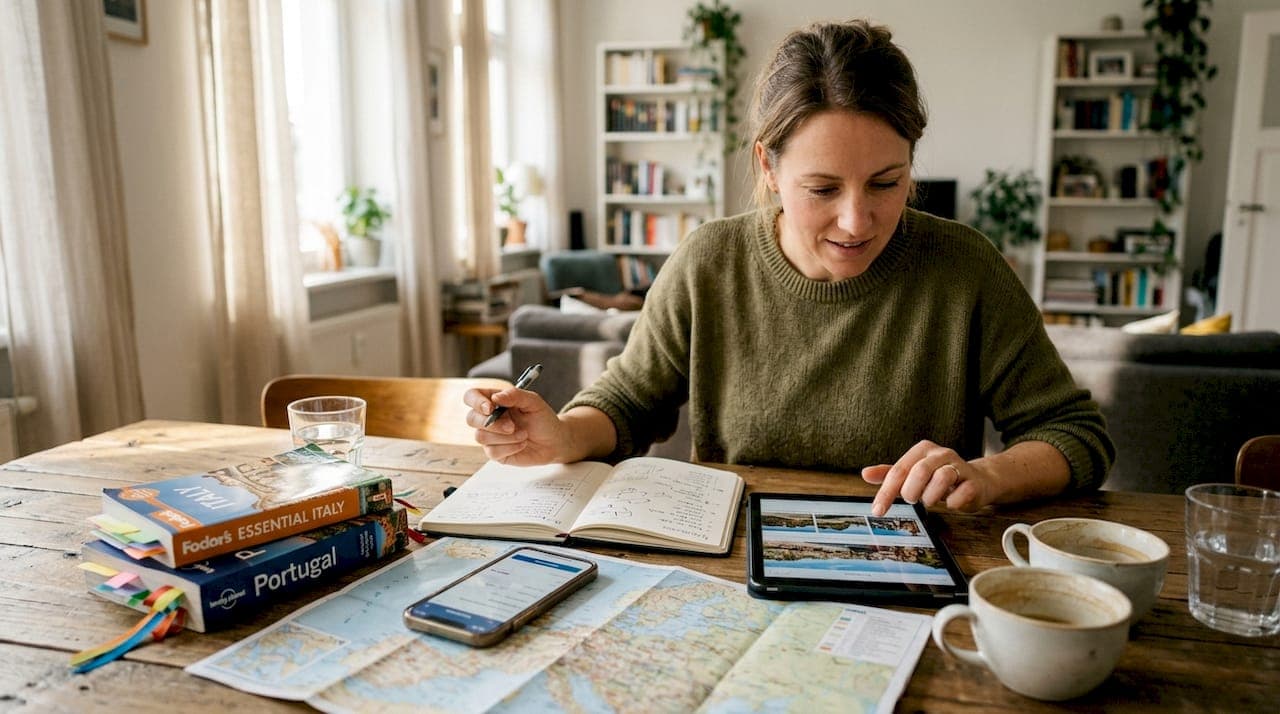
Most people think personalized travel just means picking activities you enjoy. But there's a deeper shift happening in how the best trips are designed. Museum curation principles are now being applied to travel itself, moving the focus from logistics to narrative and authenticity. This article breaks down what cultural trip curation actually means, why it produces richer experiences than standard planning, and how you can use these ideas to travel in a way that feels genuinely meaningful rather than just checked off a list.
Table of Contents
- Defining cultural trip curation
- How the curation framework transforms travel experiences
- The power of small destinations and activation
- Bringing cultural trip curation into your own travel planning
- Why cultural trip curation matters more than ever
- Start planning your curated cultural adventure
- Frequently asked questions
Key Takeaways
| Point | Details |
|---|---|
| Deeper travel stories | Cultural trip curation transforms travel into narrative-rich experiences instead of just checking off sights. |
| Unlock hidden destinations | Small or lesser-known places can deliver incredible journeys when resources are well-curated and activated. |
| Be a co-creator | Travelers can shape and personalize their journeys through collaborative, curated planning. |
| Authenticity matters | Focusing on local stories and partnerships leads to more meaningful and memorable trips. |
Defining cultural trip curation
Cultural trip curation is not a buzzword. It is a real shift in how travel experiences are designed, and it borrows directly from the world of museums and galleries. In a museum, a curator does not just collect objects and put them in a room. They select pieces with intention, arrange them in a sequence that tells a story, and create context so visitors understand what they are seeing. Cultural trip curation applies that exact thinking to travel.
The result is a trip built around meaning, not just movement. Instead of a list of attractions, you get a journey with a thread running through it. Every stop connects to the next. Every experience adds to a larger picture of the place, its people, and its history.
The curatorial turn in tourism brings narrative, authenticity, and co-creation to the forefront, replacing the old model of commodified sightseeing. Co-creation, in this context, means that travelers and local hosts shape the experience together rather than the traveler simply consuming a pre-packaged product.
Here is what separates curated cultural travel from conventional itinerary planning:
- Narrative over logistics: The trip tells a story, not just a schedule
- Authenticity over popularity: Experiences are chosen for meaning, not just for Instagram value
- Co-creation over consumption: Travelers and locals shape the experience together
- Sequencing over randomness: Each activity is placed intentionally to build on the last
- Context over spectacle: You understand why something matters, not just what it looks like
Understanding these industry terms for travel curation is the first step toward planning trips that actually stick with you long after you return home.
"The curatorial approach to travel is not about doing more. It is about experiencing things in a way that connects them into something larger than the sum of their parts."
This framework also changes who is responsible for the quality of your trip. In traditional planning, a travel agent or booking platform delivers a product. In curated travel, you are a participant in shaping the experience, and that involvement is what makes it feel real.
How the curation framework transforms travel experiences
Knowing the definition is one thing. Seeing how it works in practice is where it gets interesting. A curation framework applied to travel follows a clear set of principles that change what you actually encounter on the ground.
The four core principles are:
- Selection: Choose experiences that connect to a central theme or question about the destination
- Sequencing: Arrange those experiences so each one builds emotional or intellectual context for the next
- Story: Tie everything together with a narrative that gives the traveler a sense of progression
- Guest involvement: Build in moments where the traveler makes choices, asks questions, or interacts with locals
Here is a side-by-side look at how curated and traditional planning differ in practice:
| Element | Traditional planning | Curated cultural trip |
|---|---|---|
| Starting point | Attractions list | Central theme or question |
| Experience order | Convenient or popular | Intentionally sequenced |
| Local involvement | Optional add-on | Built into the structure |
| Traveler role | Passive consumer | Active co-creator |
| Outcome | Places visited | Story experienced |
The curatorial tourism model focuses on narrative and co-creation rather than simply packaging destinations for mass consumption. This matters because passive tourism tends to leave travelers feeling like they saw a place without ever really knowing it.
Pro Tip: Before your trip, ask your guide or planner one specific question: "What is the story of this place that most visitors never hear?" That single question can unlock a completely different layer of experience.
Using AI tips for itinerary planning can help you apply these sequencing and selection principles faster, especially when you are working across multiple destinations or tight timelines. The key is always to start with the story you want to tell, then build the logistics around it.
The power of small destinations and activation
Here is something that surprises most travelers: bigger does not mean better when it comes to cultural depth. Small destinations can outperform larger ones when they activate their resources effectively. Activation means turning what a place has, its history, its people, its food, its crafts, into genuine experiences rather than background scenery.
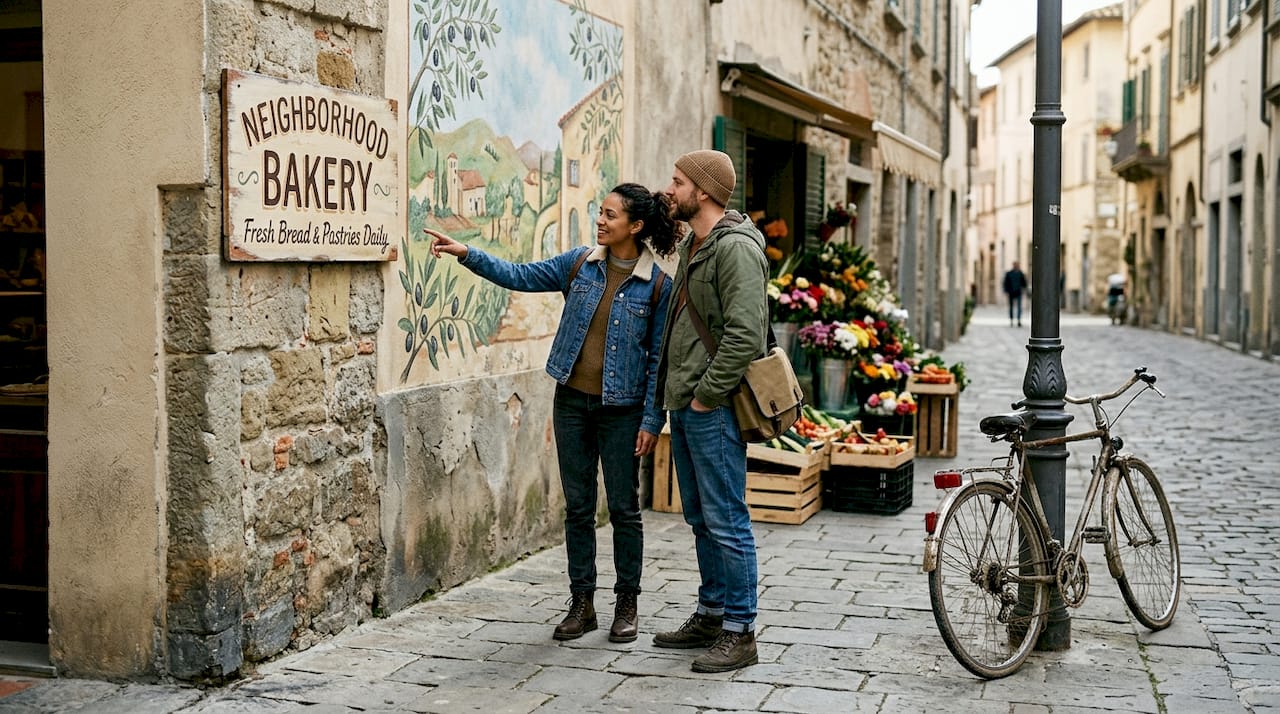
Think about a small town in rural New Mexico versus a major tourist city. The city has more to see on paper. But the small town might have a third-generation weaver who teaches traditional Navajo patterns, a family-run restaurant serving recipes unchanged for 80 years, and a local historian who walks you through a forgotten chapter of American history. That is activation. And it produces a kind of cultural richness that no landmark can replicate.
What makes a small destination worth seeking out for a curated trip? Look for these factors:
- Unique, non-replicable experiences: Things you genuinely cannot find anywhere else
- Strong local involvement: Community members who are active participants, not just backdrop
- Authentic craft or tradition: Living practices, not museum displays
- Narrative coherence: A place with a story it knows how to tell
- Non-standard offerings: Experiences that fall outside the typical tourist circuit
The per capita cultural value of a well-activated small destination often exceeds that of a crowded major city, where the sheer volume of visitors dilutes the personal quality of every interaction.
When you explore cultural trip planning alternatives, you will notice that the best services are already thinking this way. They are not just pointing you toward the most famous spots. They are helping you find places where the story is still alive and the experience still feels personal.
The practical takeaway is this: do not dismiss a destination because it is small or unfamiliar. Ask whether it has been activated. Ask whether there are people there who are genuinely invested in sharing what makes their place special. If the answer is yes, that trip may be more memorable than anything on the standard tourist map.
Bringing cultural trip curation into your own travel planning
Knowing the theory is useful. Applying it to your actual trip is where the real value appears. Here is a practical process for bringing cultural curation into your planning, whether you are doing it yourself or working with a service.
- Define your central theme: What do you want to understand better after this trip? It could be the food culture of a region, the history of a specific movement, or the daily life of a particular community.
- Select experiences that serve the theme: Every activity, restaurant, and site should connect back to that central question. If it does not add to the story, cut it.
- Sequence intentionally: Start with context-building experiences, like a local history walk or a market visit, before moving to deeper or more personal encounters.
- Build in co-creation moments: Leave room for conversations, spontaneous detours, and local recommendations. These are often where the best memories come from.
- Reflect as you go: Keep a simple travel journal or voice memo habit. Articulating what you are experiencing helps you absorb it more deeply.
Collaborative approaches between hospitality providers and guests are what make truly tailored cultural experiences possible. The best trips happen when the traveler is not just a recipient but a genuine participant in shaping what unfolds.
Pro Tip: When booking guides or local experiences, ask this directly: "Can you design this around a specific theme I care about?" Most skilled local guides will light up at that question. It signals that you want depth, and they will deliver it.
Digital platforms that support AI-powered trip collaboration can accelerate this process significantly, helping you map narrative-driven days, match experiences to your interests, and sequence activities so the trip flows naturally from start to finish.
Why cultural trip curation matters more than ever
Most travelers settle for the surface. They see the famous sites, eat at the well-reviewed restaurants, and come home with photos that look exactly like everyone else's. There is nothing wrong with that. But it is a missed opportunity.
Curated travel asks a harder question: what do you actually want to know after this trip that you do not know now? That question changes everything. It shifts your focus from collecting experiences to building understanding.
We have seen this play out consistently. Travelers who approach a trip with a narrative framework, even a loose one, come back with stories that are genuinely their own. They did not just visit a place. They engaged with it. And often, the most powerful moments happened in small, overlooked destinations that nobody else on their social feed had visited.
The uncomfortable truth is that most travel planning tools are still built around logistics, not meaning. They optimize for efficiency, not depth. Learning from curation industry lessons shows that the future of travel is guest-driven, with travelers as active co-creators of their own stories. The checklist model is fading. The designed story model is taking its place.
Start planning your curated cultural adventure
You now have a clear picture of what cultural trip curation is and why it produces travel experiences that actually stay with you. The next step is putting it into practice.
DestList is built around exactly this approach. Every itinerary combines AI-powered planning with human expertise to create trips that are narrative-driven, locally informed, and tailored to what you actually care about. Whether you are drawn to a major US city or a lesser-known gem, a personalized travel planner can help you design a journey with real depth, not just a list of stops. Ready-to-book plans arrive within 24 hours, so you spend less time planning and more time experiencing. Start your curated adventure today.
Frequently asked questions
What is the main goal of cultural trip curation?
The main goal is to create travel experiences that are meaningful, authentic, and shaped by a narrative framework tailored to the traveler's personal interests. Cultural curation uses narrative to move beyond sightseeing into genuine understanding.
How does cultural trip curation differ from standard travel planning?
Curated trips are built around storytelling, local collaboration, and intentional sequencing rather than just booking convenient attractions. Curatorial tourism emphasizes co-creation and story over simple commodification of destinations.
Can small or lesser-known destinations offer better curated experiences?
Absolutely. Small destinations, when activated, can surpass larger ones in cultural value by offering unique, locally driven experiences that feel personal and non-replicable.
How can travelers participate in curating their own trips?
Travelers can define a central theme, use digital planning tools, and collaborate with locals or planners to build narrative-driven itineraries that reflect their specific interests and curiosity.