
Most travelers spend more time planning a trip than actually enjoying it. Between comparing flights, mapping routes, juggling hotel options, and trying to squeeze every experience into a limited window, the process becomes its own kind of exhausting. The good news is that a structured approach to trip optimization cuts that chaos down dramatically. Whether you have five days of PTO or a full month to roam, the right strategy means fewer wasted hours, smarter spending, and a trip that actually delivers what you came for.
Table of Contents
- Identify your travel objectives and constraints
- Gather your essential tools and resources
- Plan your route and optimize your travel schedule
- Smart scheduling: Maximize vacation days and experiences
- Handle disruption: Build flexibility and contingency plans
- Let DestList handle the heavy lifting
- Frequently asked questions
Key Takeaways
| Point | Details |
|---|---|
| Clarify goals | Set clear priorities for time, budget, and experiences when planning a trip. |
| Leverage smart tools | Adopt route optimizers and AI apps to save time and reduce travel costs efficiently. |
| Maximize time off | Combine PTO hacks and holiday scheduling to extend your travel days dramatically. |
| Plan for disruptions | Always include contingency strategies for handling common travel interruptions. |
Identify your travel objectives and constraints
Before you open a single booking tab, get clear on what kind of traveler you are right now. Not in general, but for this specific trip. That distinction shapes every decision that follows.
Busy professionals and leisure travelers approach planning very differently. Professionals prioritize efficiency and productivity rituals like loyalty programs and lounge access, while leisure travelers focus on maximizing experiences and stretching every PTO day. Neither approach is wrong. They just require different planning frameworks.
Here are the core constraints worth mapping out before you do anything else:
- Time available: Total days off, including travel days
- Budget ceiling: Flights, accommodation, food, and activities combined
- Non-negotiables: The two or three experiences you absolutely cannot miss
- Flexibility level: Can you shift dates by a day or two for a better fare?
- Physical pace: Do you want packed days or breathing room between stops?
"Your travel focus determines your planning strategy. A professional optimizing a five-day trip needs a completely different framework than a leisure traveler with three open weeks."
Once you have these mapped, you can also start thinking about logistics like what to pack. A solid packing list built around your destination and pace prevents last-minute scrambling and overpacking that slows you down at airports.
Gather your essential tools and resources
The right tools do not just save time. They prevent the kind of costly mistakes that come from planning in silos. Manual planning doesn't scale and software or AI handles constraints like time windows far more consistently than a spreadsheet ever could.

Here is a breakdown of the core tools worth having in your planning stack:
| Tool type | Best use | Example options |
|---|---|---|
| Flight tracker | Fare alerts and price history | Google Flights, Hopper |
| Route optimizer | Sequence stops efficiently | Rome2rio, TripIt |
| AI itinerary builder | Full day-by-day planning | DestList, ChatGPT |
| Calendar sync | Align travel with work schedule | Google Calendar, Fantastical |
| Weather monitor | Real-time destination alerts | Weather.com, Windy |
Beyond the tools themselves, gather your raw data before you start building anything. That means confirmed dates, a realistic budget range, a shortlist of destinations or activities, and any hard constraints like visa requirements or school schedules.
Pro Tip: Use Google Flights in an incognito window or with a VPN active. AI-driven fare hikes are real, and airlines use browsing history to serve higher prices to repeat searchers. A clean session often surfaces fares that a logged-in search will not.
For itinerary building specifically, AI-powered planning tools have become genuinely useful, not just as novelty but as time-saving engines that factor in opening hours, travel distances, and budget simultaneously.
Plan your route and optimize your travel schedule
Route planning is where most travelers lose the most time and money. Visiting stops in the wrong order adds hours of backtracking and unnecessary transport costs. A structured approach fixes that fast.
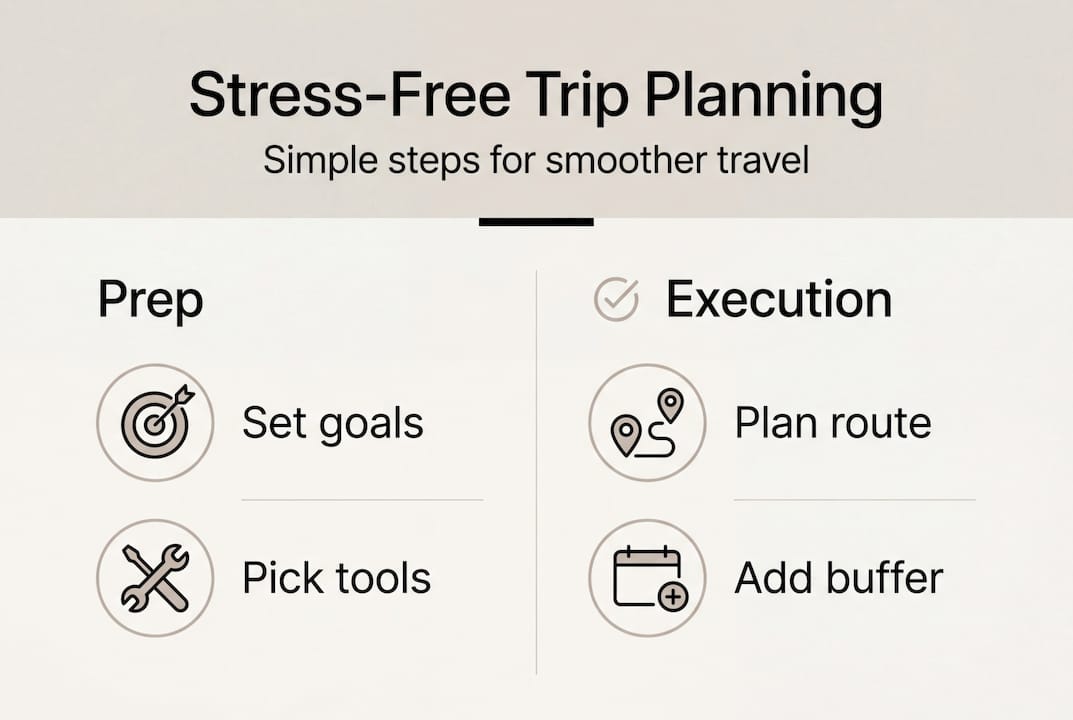
Follow these steps to build an efficient route:
- List all destinations and stops in one place, including airports, hotels, and key attractions
- Group stops geographically to minimize backtracking between neighborhoods or cities
- Assign transport modes based on distance, cost, and time (train vs. flight vs. car)
- Sequence your days so the heaviest travel days fall at the start and end of the trip
- Add buffer time between stops, especially for international connections or border crossings
Route optimization software can deliver up to 20% fuel savings and reduce costs from poor routing by 10 to 30 percent. That is not a marginal improvement. On a two-week international trip, that gap can mean hundreds of dollars saved.
| Planning method | Time investment | Cost efficiency | Flexibility |
|---|---|---|---|
| Manual (spreadsheet) | High | Low | Low |
| Algorithm-based tools | Medium | High | Medium |
| AI-powered platforms | Low | Very high | High |
For multi-stop international trips, sequencing matters even more. A Europe trip that jumps from Paris to Prague to Lisbon and back to Rome wastes days in transit. Looping geographically, Paris to Rome to Lisbon to Prague, cuts that waste significantly. For domestic city-hopping, the same logic applies but with more flexibility since short-haul flights are cheaper and more frequent.
If you are planning something more adventurous like a safari, budget-conscious route planning follows the same principles but adds wildlife season timing and park access logistics to the mix. Understanding travel curation terminology also helps when working with platforms or agents who use industry-specific language.
Smart scheduling: Maximize vacation days and experiences
Here is where professionals especially can gain a serious edge. Most people treat PTO as a fixed resource. It is not.
Strategic PTO booking around public holidays and long weekends can turn 15 PTO days into up to 55 travel days. That is not a typo. It requires planning months ahead, but the math works.
Here is how to build that kind of schedule:
- Pull your country's public holiday calendar for the next 12 months
- Identify long weekend clusters where one or two PTO days bridge a gap between holidays
- Check your company's blackout dates and plan around them early
- Map destination peak seasons to avoid crowds and inflated prices
- Book flights and accommodation as soon as the schedule is confirmed, not after
Pro Tip: Use AI scheduling tools to plan meals and activities in sequence. Dynamic scheduling that accounts for restaurant reservation windows, attraction opening times, and travel between stops can boost your daily experience quality significantly. Research on AI-assisted meal and activity planning shows that scheduling accuracy improves from around 61% to 80% when dynamic tools replace static lists.
Leisure travelers with more flexible schedules benefit from a different angle. Rather than maximizing days, the goal is maximizing depth. That means fewer stops, more time per location, and scheduling that leaves room for spontaneous detours without blowing the budget.
Handle disruption: Build flexibility and contingency plans
Even the most optimized itinerary hits friction. Flights get delayed. Museums close unexpectedly. Strikes happen. Weather turns. The travelers who handle this best are not the ones who planned perfectly. They are the ones who planned for imperfection.
The most common disruptions to plan around include:
- Flight delays and cancellations: Always book rebookable fares when the price difference is small
- Weather events: Monitor forecasts 72 hours out and have indoor alternatives ready
- Attraction closures: Check official websites the day before, not just during planning
- Transport strikes: Common in Europe; check local news for your destination in the week before travel
- Overbooking and accommodation issues: Use platforms with free cancellation as a default
"AI systems like TripTide are now being tested for real-time adaptability under disruption scenarios, showing that LLM-based planners can resequence itineraries dynamically when delays or closures occur."
Building a 10 to 15 percent time buffer into each travel day is the simplest contingency move most travelers skip. That buffer absorbs minor delays without cascading into missed connections or rushed experiences. Pair that with AI-assisted disruption tools that push real-time alerts and suggest alternatives, and your trip stays on track even when the unexpected hits.
The goal is not a rigid plan. It is a resilient one.
Let DestList handle the heavy lifting
Planning a trip this thoroughly takes real time, and that is exactly the problem for most busy travelers. You know what a great itinerary looks like. You just do not have six hours to build one.
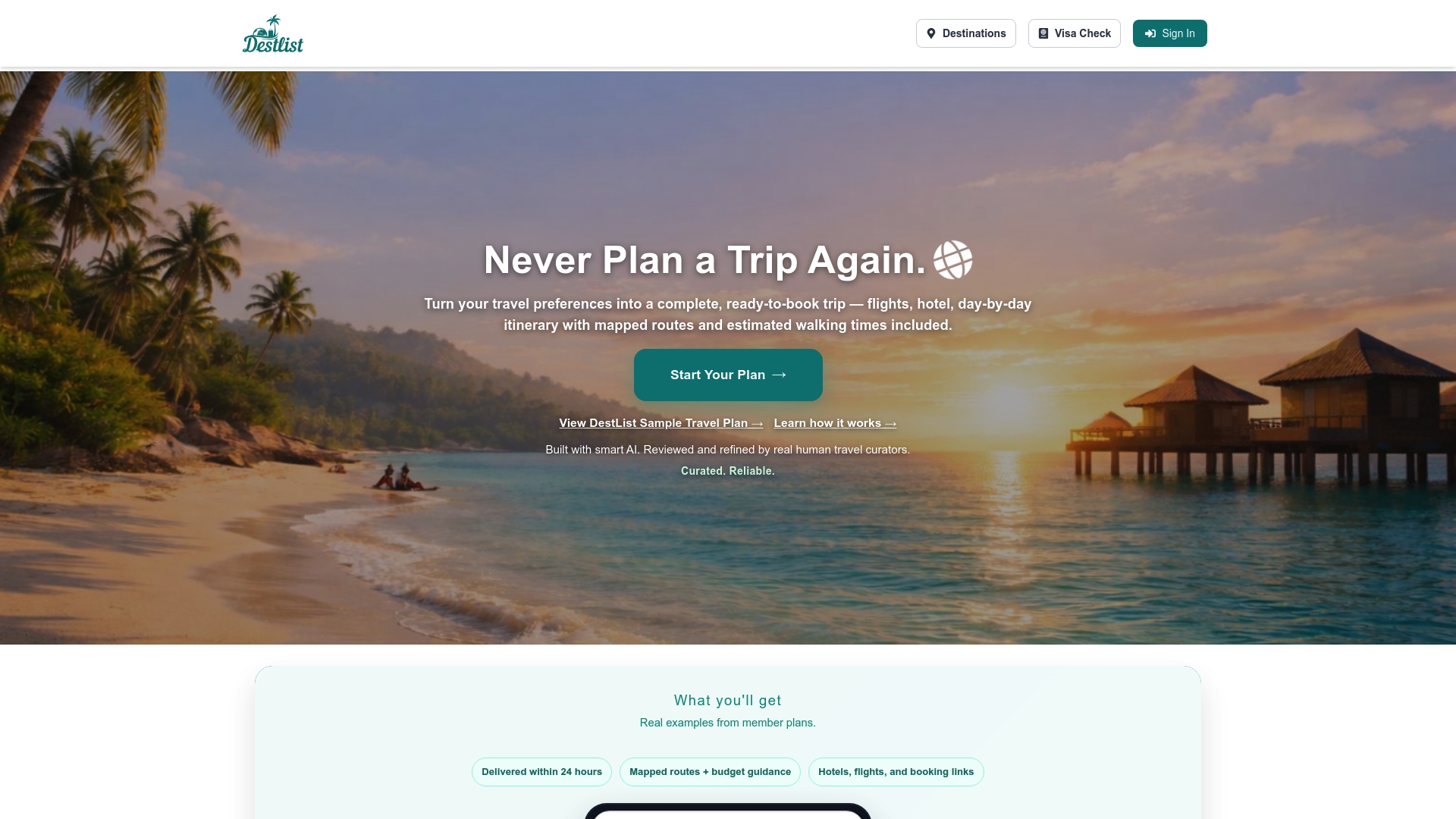
DestList combines AI precision with human travel expertise to deliver ready-to-book itineraries within 24 hours. You get mapped routes with estimated walking times, budget-matched flights and hotels, curated day-by-day activity plans, weather alerts, and packing list support, all built around your specific preferences and constraints. Whether you are a professional squeezing a five-day trip out of a tight calendar or a leisure traveler planning a month abroad, DestList turns your travel goals into a complete, actionable plan without the hours of research.
Frequently asked questions
What is the biggest time-saver in trip planning?
AI and route optimization tools save the most time because they handle complex constraints like timing, distance, and budget simultaneously, something manual planning cannot do at scale.
How can I get cheaper flights without spending hours searching?
Book early and use incognito mode or a VPN to avoid AI-driven price increases that target repeat searchers with higher fares.
How can professionals maximize their PTO for travel?
Booking PTO strategically around public holidays and long weekends can stretch 15 PTO days into up to 55 travel days with careful calendar planning.
What is the best way to prepare for unexpected travel disruptions?
Book rebookable fares, monitor real-time alerts, and use AI-adaptive planning tools that can resequence your itinerary quickly when delays or closures occur.
Recommended
- Online Travel Planner for New York, San Francisco, Austin, Atlanta and Los Angeles | DestList
- Streamline your travel itinerary process with AI tips
- Packing list essentials for efficient leisure travel
- Master industry terms for travel curation in 2026
- Top advantages of guided safaris in Uganda for 2026