
TL;DR:
- Personalized itineraries enhance traveler satisfaction by focusing on individual preferences, pace, and interests. Using structured planning, AI tools for drafts, and deep emotional insights creates more fulfilling and realistic travel experiences. Verifying logistics and local conditions ensures a smooth, memorable trip tailored to each traveler or group.
Most travelers have experienced the disappointment of following a generic itinerary that felt like it was built for someone else. You end up at a crowded tourist trap you never wanted to visit, running out of energy by day two because the pace was relentless, or wasting precious vacation time on logistics that could have been solved in advance. Explaining itinerary personalization is really about solving that exact problem. A personalized itinerary treats your trip as uniquely yours, shaped around what you actually enjoy, how you travel, and what you want to feel by the time you get home.
Table of Contents
- Key Takeaways
- What itinerary personalization is and why it matters
- The core steps of personalizing your itinerary
- Using AI tools for personalization
- Personalization beyond the basics
- Common pitfalls to avoid
- My take on blending tech and instinct
- Plan your trip the smarter way with Destlist
- FAQ
Key Takeaways
| Point | Details |
|---|---|
| Personalization beats generic plans | Custom itineraries yield 40% higher traveler satisfaction compared to standard package tours. |
| Start with non-negotiables | Define your interests, pace, and accessibility needs before researching destinations or activities. |
| AI tools need human oversight | AI drafts save time but require manual verification of hours, availability, and local conditions. |
| Hyper-personalization changes trips | Factoring in energy levels, emotional needs, and group dynamics turns a good trip into a memorable one. |
| Upfront detail drives better results | The more specific you are with your preferences upfront, the fewer revisions and surprises you'll face. |
What itinerary personalization is and why it matters
At its core, itinerary personalization means building a travel plan that reflects your specific preferences, not a template designed for the widest possible audience. It goes beyond picking a destination. A truly personalized itinerary accounts for your travel pace, budget priorities, physical needs, interests, and even your emotional goals for the trip.
Why does this matter? Because generic travel packages are built around the most common denominator. They assume you want to see the top ten landmarks, eat at the most well-known restaurants, and move at a pace that fits a broad group. That rarely aligns with what any individual traveler actually wants.
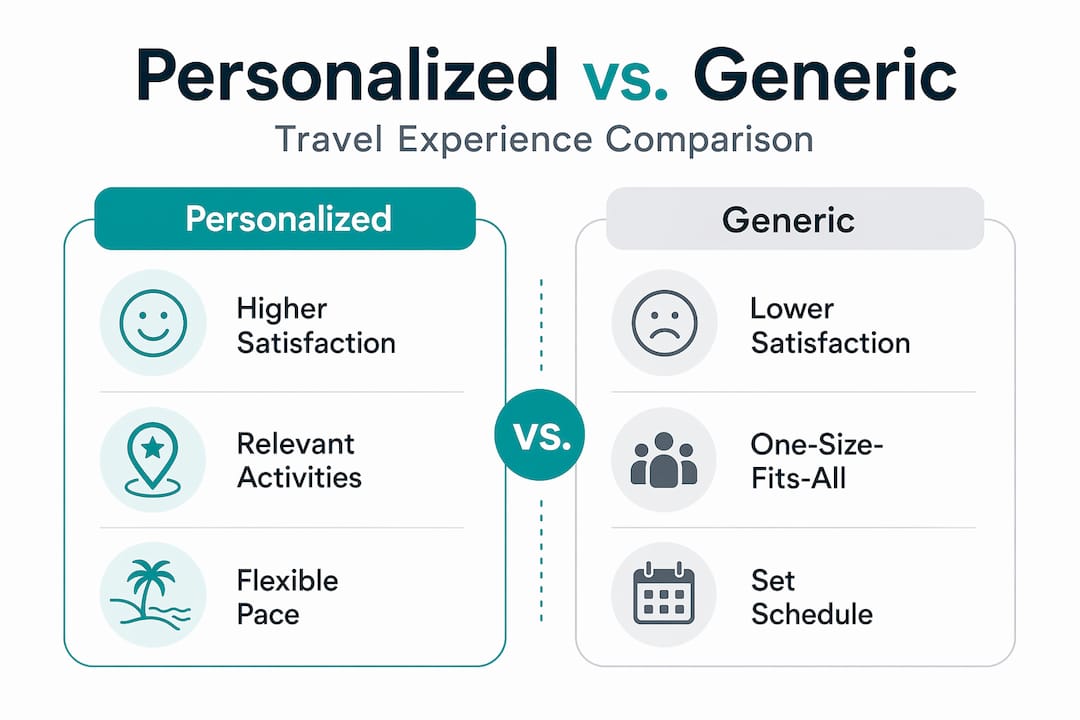
The demand for customized travel plans has grown sharply as travelers grow more experienced and more specific about what they value. A solo traveler who loves street food, slow mornings, and independent art galleries has almost nothing in common with a family of four who needs kid-friendly activities, early dinners, and accessible transport. The same destination requires a completely different plan for each of them.
Here is what separates a personalized itinerary from a standard one:
- Pace alignment. Your itinerary reflects whether you prefer two or three deep experiences per day or a packed schedule of eight stops.
- Budget clarity. Money is allocated based on your actual priorities, not a package's profit margin.
- Interest specificity. Activities match your genuine interests, whether that is architecture, hiking, culinary experiences, or nightlife.
- Accessibility consideration. Physical limitations, dietary restrictions, or family needs are built in from the start, not patched in later.
- Logistical realism. Routes are mapped so you are not crossing the city three times in a single afternoon.
The payoff is real. Travelers who follow plans built around their preferences report more fulfilling experiences, less frustration, and a stronger sense of connection to the places they visit. That is why travel personalization matters more than ever in 2026.
The core steps of personalizing your itinerary
Getting personalization right requires a structured approach. A scattered list of ideas does not become a coherent trip without a workflow. Here is the process that consistently produces the best results, combining both manual thinking and smart use of tools.
-
Define your non-negotiables. Before you research anything, write down the activities or experiences you absolutely must have. One traveler might require a cooking class. Another might need accessible accommodation throughout. Quality upfront detail reduces revisions and speeds up the tailoring process significantly.
-
Research experiences at each destination. Once you know what matters most, explore what your destination actually offers. Go deeper than the top search results. Look at travel forums, local blogs, and recent visitor reviews to find experiences that genuinely fit your interests.
-
Set a budget range and prioritize spending. Decide where you want to spend more and where you are comfortable spending less. Some travelers will splurge on accommodation and budget on food. Others do the opposite. Your budget allocation should reflect what brings you the most value.
-
Map your routes. Group activities by geographic proximity to reduce unnecessary travel time. A well-mapped day means less transit stress and more time actually enjoying where you are. Tools like Google Maps or a good travel itinerary platform can help you visualize movement patterns before you leave home.
-
Verify operational details. Check opening hours, reservation requirements, and seasonal availability for every item on your list. This step prevents the frustrating discovery that a museum is closed on Mondays or that a popular restaurant requires a booking two weeks out.
-
Build your day-by-day sequence. Arrange activities so each day has a logical flow, with energy-intensive activities earlier and more relaxed experiences toward the evening. A hybrid manual and AI planning approach produces the strongest results and saves significant time at this stage.
Pro Tip: Write a one-sentence description of what each day should feel like before you fill in the details. "Day 3 should be slow, scenic, and food-focused" will guide your activity selection better than any template.
Using AI tools for personalization
AI has genuinely changed how travelers approach itinerary customization. Tools can now generate detailed day-by-day draft itineraries in seconds, pulling from vast databases of destinations, activities, and logistics. When used well, they cut planning time dramatically and surface options you might never have found on your own.

AI-supported personalization uses past bookings, stated preferences, and real-time availability to prevent promoting sold-out or non-bookable options. That is a significant improvement over static travel guides that may be months or years out of date.
But AI tools have real limits. Here is what to watch for:
- Hallucinations and outdated data. AI systems can confidently suggest attractions that have closed, hours that have changed, or transit options that no longer exist. Always verify independently.
- Missing local nuance. A language model does not know that a particular neighborhood becomes uncomfortably crowded on weekend mornings, or that a popular viewpoint requires a permit that books up fast.
- Privacy exposure. Many AI planners collect detailed personal data including location, budget, and travel dates. Privacy-first planning tools ask for explicit user permissions and provide data deletion controls. You should know what data any tool stores and how long it keeps it.
- Generic outputs without specific inputs. The quality of what an AI produces is directly tied to how specific you are when describing your preferences. Vague inputs produce vague itineraries.
Dynamic itinerary recommendations that factor in seasonality, device context, and guest history increase booking likelihood because they feel genuinely relevant. But even the best system benefits from a human layer of review before you commit to a plan.
Pro Tip: Use AI to generate a first draft and a list of activity options, then spend your review time cutting, reordering, and verifying rather than building from scratch. You will get a more personalized result in a fraction of the time.
Personalization beyond the basics
Most guides stop at interests and budget. The travelers who come back from genuinely memorable trips tend to plan at a deeper level, accounting for factors that standard itinerary advice ignores entirely.
Hyper-personalization considers energy levels, comfort preferences, food habits, family dynamics, and emotional expectations, including at least one unforgettable moment. This approach transforms trip planning from a logistical exercise into something that actually moves people.
Here is what that looks like in practice:
- Energy mapping. If you know you hit a wall around 3 PM, schedule a sit-down coffee break or a low-key activity at that time. Do not put the hardest hike of the trip on day five of a seven-day schedule.
- Emotional peaks. Deliberately plan at least one experience per trip that will feel extraordinary. That might be a sunrise hike, a private dinner with a view, or a hands-on craft workshop with a local artisan. Comfort-driven itinerary design builds these moments in intentionally rather than hoping they happen spontaneously.
- Family and group dynamics. When traveling with others, identify the one or two experiences each person considers non-negotiable and build the itinerary around satisfying those first. Compromise on the rest. Consider options like smart vacation rentals that accommodate group needs around comfort and shared space.
- Flexible buffers. Over-scheduling is one of the most common personalization mistakes. Build in at least one unscheduled half-day per four days of travel. Spontaneity is easier when you have space for it.
Common pitfalls to avoid
Even experienced travelers make preventable mistakes when building personalized itineraries. Knowing where things go wrong is half the work of getting it right.
- Over-trusting AI without verification. Verify AI-generated itineraries by checking opening hours, transport schedules, weather patterns, and local community feedback before committing to a plan. A fast draft is only useful if it is accurate.
- Ignoring local conditions. Weather, local holidays, and regional events significantly affect what is enjoyable or even accessible. A beach itinerary during monsoon season or a city visit during a major festival requires a completely different plan than you might expect.
- Skipping geography checks. An itinerary that looks clean on paper can become exhausting in reality if you have not accounted for distance, traffic, or unreliable transit between stops.
- Missing community feedback. Recent traveler reviews on forums and apps surface real-time insights that no guide or AI system captures quickly enough. Check them within a week or two of your departure date.
- Forgetting a final verification pass. Do a complete review forty-eight hours before departure. Confirm reservations, check for any schedule changes, and flag any gaps that need a backup plan.
My take on blending tech and instinct
I've spent years watching travelers overcorrect in one of two directions. Some refuse to use any technology and spend thirty-plus hours manually researching a two-week trip, ending up exhausted before they even leave. Others hand everything to an AI tool, print the output, and arrive to find that two of their planned activities are closed and one restaurant no longer exists.
What I've found actually works is using technology as a first-pass engine and your own judgment as the final filter. AI is genuinely useful for surfacing options fast and spotting logistics you might have missed. But technology enhances, not replaces human intuition and traveler involvement in effective personalization.
The part most people skip is the emotional layer. I've refined dozens of itineraries and the ones that become truly memorable trips always had one thing in common: the traveler knew what they wanted to feel, not just what they wanted to see. That kind of clarity cannot come from a preference form. It comes from you.
My practical advice: spend ten minutes writing a few sentences about the emotional tone of your ideal trip before you touch any planning tool. That single step will shape every decision that follows better than any algorithm.
— Helen
Plan your trip the smarter way with Destlist
Building a genuinely personalized itinerary takes real effort, but it does not have to take days of your time. Destlist combines AI-powered planning with expert human review to create custom travel itineraries built around your actual preferences, budget, and travel style. Every plan includes day-by-day activities, mapped routes, flight and hotel matching, estimated walking times, and weather alerts so you arrive prepared.
Whether you are planning a solo adventure, a family trip, or a long weekend getaway, Destlist has curated itineraries across destinations ready to be tailored to you. You get a ready-to-book trip plan delivered within 24 hours, without the hours of research, tab overload, or second-guessing. If you know what kind of trip you want but not quite where to go yet, the free destination discovery tool helps you match your mood and budget to the right place.
FAQ
What is itinerary personalization?
Itinerary personalization is the process of building a travel plan around a specific traveler's preferences, pace, budget, interests, and needs rather than using a generic template. It results in more relevant, satisfying, and logistically realistic trips.
Why does itinerary personalization matter?
Personalized plans yield 40% higher satisfaction than standard package tours because they align with what individual travelers actually want to experience, rather than what most people generally enjoy.
How do I start personalizing my itinerary?
Begin by defining your non-negotiables: the experiences, pace, and comfort requirements you cannot compromise on. From there, research your destination, set a realistic budget, and map routes before building your day-by-day schedule.
Can AI tools fully personalize a travel itinerary?
AI tools can generate strong first-draft itineraries quickly, but human verification remains necessary. LLMs can miss real-time changes and local nuances, so always check opening hours, transport options, and recent traveler feedback before finalizing any AI-generated plan.
How do I personalize an itinerary for a group or family?
Identify the one or two non-negotiable experiences for each person in the group first and build the schedule around satisfying those. Then add flexible buffer time so the itinerary can adapt to different energy levels and changing preferences without falling apart.