
TL;DR:
- Following a strict sequence is crucial in travel planning, starting with visa confirmation and ending with activities. Proper timing of bookings, especially for flights and accommodations, prevents stress and costly mistakes during trips. Using organized checklists and tools like Destlist helps ensure every element aligns and avoids common logistical errors.
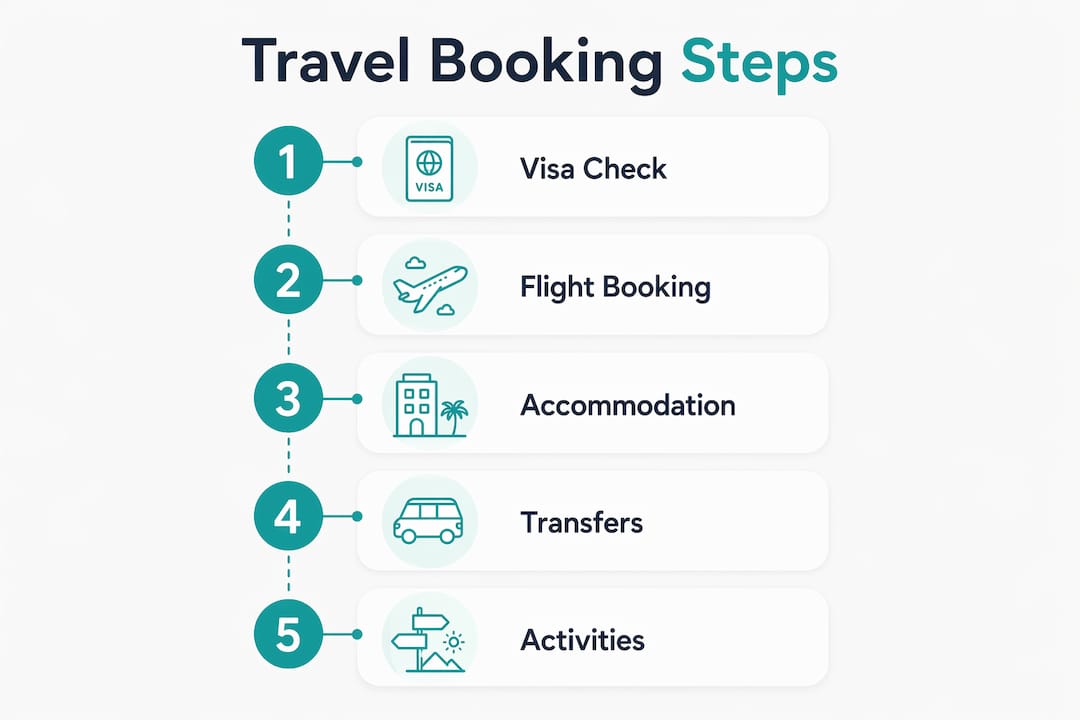
Travel logistics is the planned coordination of every trip element, from visas and flights to accommodation, transport, and activities, arranged in the right sequence to prevent costly mistakes. Most travel stress traces back to one error: booking in the wrong order. Confirm your documents first, then build everything else around them. This guide walks you through how to organize travel logistics step by step, using the dependency order that experienced travelers and international travel standards follow. Get this sequence right, and the rest of your planning falls into place.
How to organize travel logistics: start with prerequisites
The single most important rule in trip planning is this: visa confirmation precedes every other booking. Visa processing times range from instant e-visas to 8–10 weeks for embassy applications. Book a flight before your visa is approved and you risk a nonrefundable ticket, a rushed application, or both.
Before you touch a booking site, work through this checklist:
- Passport validity. Most countries require at least six months of validity beyond your return date. Check your passport expiration before anything else.
- Visa requirements. Use official government resources like travel.state.gov or Destlist's visa requirements checker to confirm entry rules by nationality and destination.
- Budget. Set a realistic total that covers flights, accommodation, activities, food, transport, and a 10–15% buffer for surprises.
- Travel insurance. Purchase insurance within 24–48 hours of booking your flights. Coverage for cancellations only applies to events that occur after the purchase date. Buy it late and you leave a gap in your protection.
- Bank and currency prep. Notify your bank of travel dates. Research whether your destination is cash-heavy or card-friendly.
Pro Tip: Use Destlist's UK visa document checker if you are traveling to the United Kingdom. It flags missing documents before you submit, saving you weeks of back-and-forth.
When and how should you book flights, accommodation, and activities?
Timing your bookings correctly is the difference between a well-priced, flexible trip and an expensive, stressful one. Each component has its own optimal booking window, and they build on each other.
Flights
Book international flights 3–6 months in advance for the best combination of price and seat availability. The sweet spot for economy seats is typically around four months out. Premium cabin seats sell out faster and reward earlier booking. For domestic legs, 6–8 weeks is usually sufficient.
- Confirm your visa timeline first. Never book a flight before you know your visa processing window.
- Set fare alerts. Use Google Flights fare tracking to monitor price movements on your route.
- Check baggage policies at booking. Budget carriers charge separately for checked bags. Factor that cost into your price comparison.
- Book direct when possible. Connecting itineraries save money but add risk. A missed connection on a budget carrier can strand you without compensation.
Accommodation
Book your first two to three nights and your last night with free cancellation as soon as your flights are confirmed. These nights are logistically critical. Your first night anchors your airport transfer, and your last night must align with your departure time. The nights in between can stay flexible until four to six weeks out, giving you room to adjust your route.
Pro Tip: Always read the cancellation policy before confirming. "Free cancellation" sometimes has a cutoff of 48 hours before check-in. Canceling 47 hours out still costs you a full night.
For airport transfer coordination, book your arrival and departure transfers at the same time as your first and last night accommodation. Knowing your hotel address and check-in time lets you confirm transfer timing accurately.
Activities and tours
Book high-demand attractions 6–8 weeks ahead. The Colosseum in Rome, Machu Picchu entry permits, and popular cooking classes in Tokyo all sell out well in advance. For everything else, a two-week window is usually fine. Leaving some days unscheduled is not laziness. It is good planning.
What tools and checklists keep travel logistics organized?
The right tools turn a pile of confirmation emails into a clear, navigable plan. The goal is one place where everything lives.
Use a digital document organizer, a folder in Google Drive or a dedicated travel app, to store every confirmation: flights, hotels, tours, insurance, and visa approvals. Label each file with the date and type so you can find it in seconds at an airport gate.
A daily travel checklist keeps you on track during the trip itself. Structure each day around one main activity, supplemented by one or two lighter stops and built-in rest time. Anchor your main activity in the morning when energy is highest and crowds are thinner. Leave afternoons open for food, walking, and recovery.
| Tool | Purpose | When to use |
|---|---|---|
| Google Flights fare alerts | Track price changes on your route | 6+ months before travel |
| Offline Google Maps | Navigation without data or roaming | Download before departure |
| eSIM providers (Airalo, Holafly) | Affordable data on arrival | Activate before landing |
| Digital document folder | Store all confirmations in one place | Throughout planning |
| Packing list app | Track gear against airline weight limits | 48–72 hours before departure |
Downloading offline maps and activating an eSIM before you land removes two of the most common arrival-day problems: no navigation and no data. Providers like Airalo and Holafly offer plans you activate before your flight. Offline Google Maps lets you navigate even when your eSIM signal drops in rural areas.
Set calendar reminders for every check-in window, tour confirmation deadline, and visa appointment. Online check-in typically opens 24–48 hours before departure. Missing it on a full flight can cost you your preferred seat or, on some budget carriers, a boarding fee.
How do you avoid common travel logistics mistakes?
Most travel disasters are predictable. They follow the same patterns, and knowing them in advance is the fastest way to avoid them.
- Booking flights before visa approval. This is the most expensive mistake in international travel planning. Always confirm your visa timeline before touching a flight booking.
- Delaying travel insurance. Buying insurance a week after your flight booking means any illness or incident that occurred in that window is not covered.
- Using airport currency exchange desks. Airport exchange desks charge significantly higher fees than local ATMs or specialist cards. Cards like Wise or Charles Schwab minimize international transaction fees. Always carry some physical cash regardless of how cashless a destination claims to be.
- Overloading your itinerary. Trying to visit four cities in seven days sounds exciting in planning. It produces exhaustion in practice. Build in at least one rest day per week of travel.
- Ignoring baggage rules. Weigh your luggage at home before departure. Confirm all bookings and baggage compliance at least 48 hours before your flight to avoid gate fees.
The travelers who enjoy their trips most are not the ones who planned the most activities. They are the ones who planned the right activities, in the right order, with enough space between them to actually breathe.
For group airport pickups or multi-passenger arrivals, coordinate transfer timing with everyone's flight details before departure. A single delayed flight in a group can cascade into missed hotel check-ins and lost dinner reservations if transfers are not planned with buffer time.
Key Takeaways
Effective travel logistics depends on following a strict dependency order: confirm visa status first, then book flights, then lock in accommodation and activities around those confirmed dates.
| Point | Details |
|---|---|
| Visa first, always | Confirm visa processing time before booking any flights or accommodation. |
| Book flights 3–6 months out | Economy seats hit their best price around four months before departure. |
| Anchor first and last nights | Book arrival and departure accommodation early with free cancellation to secure transfers. |
| Buy insurance within 48 hours | Coverage gaps open if you delay insurance purchase after booking flights. |
| One main activity per day | Structure each day around one anchor activity to prevent fatigue and itinerary collapse. |
Why the order of your planning matters more than the tools you use
Most travel planning advice focuses on apps and checklists. That is useful, but it misses the real problem. The reason trips go wrong is almost never a missing app. It is a sequencing error made weeks before departure.
I learned this the hard way on a trip to Southeast Asia. I booked flights before confirming visa processing times for one of my stops. The visa took three weeks longer than expected. I ended up rebooking two flights and losing a nonrefundable hotel deposit. The financial hit was annoying. The stress of managing it while still trying to plan the rest of the trip was worse.
The fix is not complicated. Treat your travel plan like a construction project. You do not pour the foundation after you frame the walls. Visa and document status is your foundation. Everything else stacks on top of it.
My personal approach now: I use a layered booking strategy. First and last nights go firm the day flights are confirmed. Middle nights stay on free-cancellation holds until six weeks out. Activities get booked in two rounds: high-demand reservations at eight weeks, everything else at two weeks. This approach gives me flexibility without leaving anything critical to chance.
The one thing most travelers underestimate is time buffers. A 45-minute layover looks fine on paper. At a large international hub with a gate change, it is a sprint. Build in more time than you think you need, especially on the first and last days of any trip.
— Helen
Destlist takes the sequencing work off your plate
Planning a trip correctly requires tracking a lot of moving parts in the right order. Destlist handles that coordination for you.
Destlist combines AI planning with human travel curation to build custom travel itineraries that include flights, hotels, day-by-day activities, mapped routes, and estimated walking times. Every plan is built around your budget, travel dates, and preferences. Ready-to-book trips are delivered within 24 hours. If you want a fully built plan without the sequencing stress, Destlist's done-for-you travel planning service covers everything from visa checks to final-night accommodation. Your trip, planned correctly, from the first step.
FAQ
What is the first step in organizing travel logistics?
Confirm your visa requirements and passport validity before booking anything else. Visa processing times range from instant e-visas to 8–10 weeks, and booking flights before approval risks costly cancellations.
How far in advance should I book international flights?
Book international economy flights 3–6 months ahead, with four months being the typical sweet spot for price and availability. Premium cabin seats require earlier booking.
When should I buy travel insurance?
Buy travel insurance within 24–48 hours of booking your flights. Coverage for cancellations only applies to events that occur after the purchase date, so delays create unprotected gaps.
How do I avoid overpacking my travel itinerary?
Structure each day around one main activity, add one or two lighter stops, and build in rest time. Overloaded itineraries are the leading cause of travel fatigue on multi-day trips.
What is the safest way to handle currency abroad?
Avoid airport currency exchange desks and use local ATMs or low-fee cards like Wise or Charles Schwab. Always carry some physical cash as a backup, even in destinations that favor card payments.