
TL;DR:
- Early booking with flexible options saves money and reduces stress by securing refundable rates and better availability.
- Verifying passport and visa requirements well in advance prevents last-minute entry issues and travel disruptions.
Travel planning do's and don'ts are practical guidelines that separate a smooth, memorable vacation from a stressful, costly one. The difference between a trip that flows and one that falls apart usually comes down to decisions made weeks before departure: whether you booked refundable flights, checked your passport validity, or packed a carry-on that sailed through TSA. This guide covers the most important rules for how to plan a trip in 2026, from documentation and booking strategy to itinerary design and packing. Follow these and you will spend less time troubleshooting and more time actually enjoying your destination.
1. Do book early and prioritize flexible options
Planning months in advance reduces stress and increases cost savings, especially during peak travel seasons. Flights and hotels booked early consistently offer better pricing and availability than last-minute alternatives. The savings compound when you factor in fewer upgrade fees, better seat selection, and access to sold-out experiences.

The critical qualifier is flexibility. Booking early with refundable options maximizes savings while protecting you from cancellation costs. Look for fare classes labeled "flexible" or "changeable" on carriers like Delta, United, and British Airways. Hotels on Booking.com and Expedia frequently offer free cancellation rates that cost only marginally more than non-refundable ones.
Pro Tip: Book your flights and accommodations at least 6 to 8 weeks before departure for domestic trips, and 3 to 6 months out for international travel. The price gap between early and late booking widens significantly during summer and holiday periods.
2. Do verify your passport and visa requirements early
Passport validity must extend at least 6 months beyond your travel dates, and visa interviews for some countries require in-person appointments that can take weeks to schedule. Many travelers discover this requirement too late to act on it. Checking your documents the moment you start researching a destination, not after you book, is the correct sequence.
Visa and entry rules change frequently. A country that was visa-free for U.S. passport holders last year may now require an electronic travel authorization or a full visa. The Destlist visa requirements checker lets you verify requirements by nationality, residence, and destination in one place, which removes the guesswork from international trip planning.
3. Do pack smart and follow TSA's 3-1-1 rule
TSA restricts carry-on liquids to containers of 3.4 oz (100ml) or less, all fitting inside one quart-sized clear bag. The rule is based strictly on container size, not how full the bottle is. A half-empty 8 oz shampoo bottle will be confiscated at the checkpoint every time.
Overpacking is the other common error. A bag that exceeds airline weight limits costs money and slows you down at every transfer. Pack clothes that mix and match across multiple outfits, use packing cubes to compress volume, and leave one-third of your bag empty for items you pick up during the trip. Apps like Packr and TripIt include packing list templates organized by destination and trip length.
4. Do include travel insurance in your trip planning essentials
Travel insurance is not optional for international trips or any booking that involves non-refundable costs. Medical emergencies abroad, flight cancellations, and lost luggage are all covered under standard policies from providers like Allianz Partners, World Nomads, and Travel Guard. A single emergency room visit in countries without reciprocal healthcare agreements can cost thousands of dollars out of pocket.
The right policy covers trip cancellation, medical evacuation, and baggage loss at minimum. Read the exclusions carefully. Adventure activities like skiing or scuba diving often require add-on riders. Purchase your policy within 14 days of your first trip deposit to qualify for pre-existing condition coverage on most plans.
5. Do group activities geographically in your itinerary
Building your itinerary by geographic clusters rather than jumping across a city or region each day reduces transit time and absorbs schedule shifts without derailing the whole plan. If you are spending three days in Rome, organize Day 1 around the Vatican and Trastevere, Day 2 around the Colosseum and Palatine Hill, and Day 3 around the Spanish Steps and Villa Borghese. Each cluster is walkable and logically connected.
This approach also makes it easier to swap activities when something runs long or closes unexpectedly. Wanderlog and Google Maps both support geographic clustering by letting you pin locations and visualize travel distances before you commit to a sequence. Destlist's tailored itinerary guide goes deeper on how to structure days for efficient, enjoyable travel.
6. Do recheck your documents closer to departure
Re-verifying passport and visa status shortly before travel mitigates last-minute entry problems caused by changing regulations. Document verification is not a one-time task. Entry requirements for countries like Australia, Canada, and the EU's Schengen Zone have changed multiple times in recent years, and a check done at booking may be outdated by departure day.
Set a calendar reminder for two weeks before your trip to recheck all entry requirements through official embassy or consulate websites. Confirm your passport expiration date, any required visas or electronic travel authorizations, and whether your destination requires proof of onward travel or travel insurance. This 15-minute check has saved countless travelers from being turned away at the gate.
7. Don't over-schedule your itinerary
Scheduling one major attraction per day and leaving downtime for rest and spontaneous exploration produces a more enjoyable trip than cramming five landmarks into eight hours. Over-scheduling is the most common itinerary mistake, and it turns what should be a vacation into a logistics sprint.
A balanced day looks like this: one anchor activity in the morning, a relaxed lunch in a neighborhood restaurant, one secondary activity in the afternoon, and an unplanned evening. That structure leaves room for the unexpected discovery, the street market you stumble into, or the extra hour you want to spend at a museum. Mixing rest with grouped sightseeing reduces burnout and maximizes travel enjoyment across a full week or more.
Pro Tip: Block at least one completely free half-day per three days of travel. Use it for whatever feels right in the moment. These unplanned windows consistently produce the most memorable parts of any trip.
8. Don't ignore backup plans for disruptions
2026 travel conditions, including high airfares and crowded airports, make backup plans a practical necessity rather than an overcautious habit. Know your options before something goes wrong. If your flight is canceled, which airline has the next available seat on the same route? If your hotel overbooks, which nearby property has availability?
Refundable bookings make backup planning much easier. When you hold a flexible reservation, switching to an alternative costs nothing. Non-refundable bookings lock you into a single option and force you to absorb the cost of any change. The small price premium for refundable rates is almost always worth it on trips with multiple moving parts.
9. Don't skip cultural research before you travel
Arriving in a new country without understanding basic local customs creates avoidable friction. Dress codes at religious sites in countries like Japan, Morocco, and Italy are enforced, not suggested. Tipping customs vary widely: tipping in Japan is considered rude, while in the United States it is expected. Knowing these norms before you arrive prevents embarrassment and shows respect for local culture.
Cultural research also improves your experience. Understanding the local dining schedule in Spain, where dinner rarely starts before 9 p.m., means you will not show up to a restaurant at 6 p.m. and find it empty. Resources like Lonely Planet country guides, Culture Trip, and local tourism board websites provide reliable, destination-specific context.
10. Don't book without a clear budget framework
Booking flights and hotels without a total trip budget leads to overspending on accommodation and underspending on experiences, or vice versa. A clear budget framework allocates percentages across flights, lodging, food, activities, and contingency before any booking happens. A common split for a 7-day international trip is 35% flights, 30% accommodation, 20% food, 10% activities, and 5% contingency.
Tracking tools like Trail Wallet and TravelSpend let you log expenses in real time against your budget. Knowing your daily spending limit before you land removes the anxiety of every purchase and lets you make confident decisions about splurges versus savings throughout the trip.
Key takeaways
Effective trip planning requires early booking with flexible options, repeated document verification, smart packing, and itinerary balance to minimize cost, stress, and disruptions.
| Point | Details |
|---|---|
| Book early, stay flexible | Secure flights and hotels months ahead, but prioritize refundable rates to protect against changes. |
| Verify documents twice | Check passport validity and visa requirements at booking and again two weeks before departure. |
| Follow TSA's 3-1-1 rule | Carry-on liquids must be in containers of 3.4 oz or less; container size is what matters, not fill level. |
| Cluster your itinerary | Group activities by geography to cut transit time and build in natural flexibility for each day. |
| Always have a backup plan | Refundable bookings and alternative routes reduce the cost and stress of unavoidable disruptions. |
Why I think most travelers plan their trips backwards
Most people I talk to start trip planning by searching for flights. That feels logical, but it is actually the wrong starting point. The correct sequence is: destination, budget framework, documentation check, then flights and accommodation. When you reverse that order, you end up booking a trip to a country you cannot legally enter on your current passport, or spending 80% of your budget on flights and eating street food for a week because nothing is left.
The other thing I have seen derail otherwise well-planned trips is the illusion of thoroughness. Travelers spend hours researching restaurants and zero minutes confirming their visa status. They build color-coded spreadsheets and forget to check whether their passport expires three weeks after they land. Document verification is a compliance exercise before it is a trip preparation step, and treating it as an afterthought is how people end up stranded at check-in.
The mindset shift that actually works is treating your itinerary as a framework, not a schedule. You are not trying to execute a plan. You are trying to create conditions for a good trip. That means building in slack, keeping bookings flexible where possible, and accepting that the best moments of any vacation are rarely the ones you planned. I have found that travelers who follow the stress-free planning steps outlined by Destlist consistently report less pre-trip anxiety and more satisfaction with the trip itself. The framework matters. The rigidity does not.
— Helen
Let Destlist handle the planning for you
If applying every do and don't in this guide sounds like a second job, that is exactly the problem Destlist was built to solve. Destlist combines AI-powered itinerary building with human travel curation to produce ready-to-book trip plans within 24 hours. Every plan includes curated day-by-day itineraries with geographically clustered activities, budget-matched flights and hotels, and built-in flexibility so your trip adapts when reality does not match the plan.
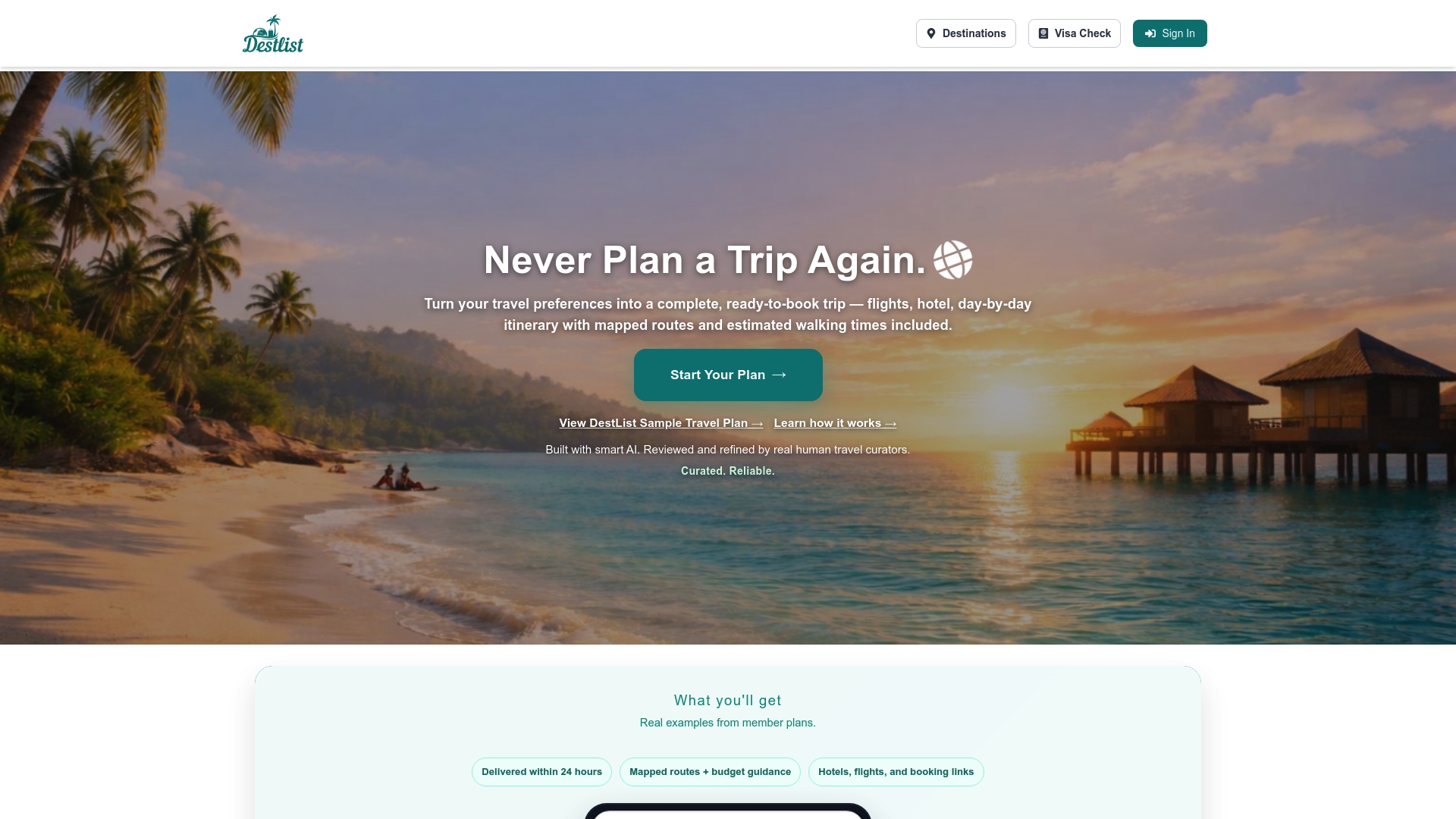
Whether you are planning a week in Bali, a city break in Istanbul, or a family trip through Bangkok, Destlist builds the trip around your preferences and budget. You skip the research hours, the spreadsheet juggling, and the anxiety of wondering what you missed. Visit Destlist's travel planning platform to get your personalized itinerary started today.
FAQ
How far in advance should I book a trip?
Book international trips 3 to 6 months in advance and domestic trips 6 to 8 weeks out. Planning months ahead reduces costs and secures better availability, especially during peak seasons.
What is TSA's 3-1-1 liquid rule?
TSA requires all carry-on liquids to be in containers of 3.4 oz or less, all fitting in one quart-sized clear bag. The rule applies to container size, not how full the bottle is.
How do I avoid over-scheduling my travel itinerary?
Limit yourself to one major attraction per day and group activities by neighborhood or geographic area. Allianz Partners recommends leaving downtime each day for rest and unplanned discoveries.
When should I check my passport and visa requirements?
Check your passport validity and visa requirements as soon as you choose a destination, then recheck shortly before departure since entry rules change frequently. Your passport must be valid for at least 6 months beyond your travel dates for most international destinations.
Is travel insurance worth buying for every trip?
Travel insurance is worth purchasing for any trip with non-refundable costs or international medical exposure. Providers like Allianz Partners and World Nomads offer policies that cover trip cancellation, medical emergencies, and lost baggage for a fraction of what a single incident would cost out of pocket.