
TL;DR:
- Proper document preparation, including passports, visas, and insurance, is crucial to avoid last-minute issues.
- Using a structured packing system like the 5-4-3-2-1 rule and packing cubes saves time and space.
- Building flexible itineraries with buffers and using digital tools streamlines planning and reduces stress.
Planning a vacation sounds exciting until the logistics pile up. Passport renewals, visa deadlines, flight bookings, hotel research, packing decisions, itinerary building — each task feels manageable alone, but together they create a wall of decisions that busy travelers rarely have time to scale properly. A missing document or forgotten step can cost hundreds of dollars or even cancel a trip outright. The good news is that a well-structured travel planning checklist cuts through the noise. In this guide, you'll get an expert-informed, time-saving checklist covering documents, packing, itinerary building, budgeting, and the tech tools that modern travelers actually use.
Table of Contents
- Establish your travel basics: Documents, deadlines, and health
- Efficient packing strategies for time-constrained travelers
- Building your itinerary: Structure, buffers, and flexibility
- Personalization, budgeting, and tech tools for smarter planning
- Why most travel checklists miss the mark — and how experts really plan
- The next step: Streamline your trip with personalized planning solutions
- Frequently asked questions
Key Takeaways
| Point | Details |
|---|---|
| Document security | Check passport, visa, insurance, and health items early to avoid disruption. |
| Smart packing | Stick to proven packing rules and gear to save time and minimize travel stress. |
| Itinerary buffers | Leave 10-40% downtime in your schedule and cap transit to stay flexible and energized. |
| Personalized planning | Use modern apps and AI tools for fast, tailored itineraries and better travel decisions. |
| Dynamic checklists | Focus on checklists that adapt to your timeline and needs, not just endless to-dos. |
Establish your travel basics: Documents, deadlines, and health
Every successful trip starts with paperwork, not Pinterest boards. The foundational logistics — documents, health requirements, and entry rules — are the non-negotiables that must be handled first. Skip them and nothing else on your checklist matters.
For international travel, passport validity should extend at least 6 months beyond your return date, since many countries enforce this rule at the border. Visas can take weeks or months to process depending on your destination, so apply the moment your dates are confirmed. Travel insurance protects you from cancellations, medical emergencies, and lost baggage — a genuinely smart investment, not optional padding. Vaccination records matter too, especially for regions with yellow fever or other entry requirements.
Here's your core travel documents checklist:
- Passport (valid for 6+ months beyond travel dates)
- Visa or entry permit (check processing times early)
- Travel insurance policy and emergency contact numbers
- Vaccination records and prescription documentation
- Driver's license or international driving permit
- Copies of hotel confirmations and flight itineraries
- Emergency contact list and local embassy info
Digital backups are essential. Store scanned copies in a secure cloud folder and email them to yourself. Keep one physical copy of your passport photo page in a separate bag. These steps sound small, but they've saved countless travelers stuck at borders or dealing with theft.
Pro Tip: Start visa and vaccine applications the same week you book flights. Processing delays are real, and some vaccines require multiple doses spread weeks apart.
For a broader view of stress-free trip steps and the full expert guide for travel planning, building your checklist around a proven structure pays dividends. This guide to trip planning reinforces why document prep is the single most critical stage of any itinerary.
Efficient packing strategies for time-constrained travelers
Once your core travel requirements are locked in, packing smart becomes your next biggest time saver. The goal isn't packing everything you might need — it's packing only what you'll actually use, in a system that takes minutes to set up each day.
The 5-4-3-2-1 rule from The Ultimate Packing List is a proven framework for efficient packing:
- 5 tops (mix of casual and smart casual, neutral colors)
- 4 bottoms (2 pants, 1 shorts, 1 versatile dress or skirt)
- 3 pairs of shoes (walking, dressy, sandals or flip-flops)
- 2 sets of accessories (belt, scarf, or versatile jewelry)
- 1 formal or event outfit (packable, wrinkle-resistant)
Neutral colors are the unsung hero here. Navy, gray, and beige mix and match easily, doubling or tripling your outfit combinations without extra weight.
Carry-on vs. checked bag: A quick comparison
| Factor | Carry-on only | Checked bag |
|---|---|---|
| Cost | Free on most carriers | $30 to $70+ per flight |
| Wait time | Zero baggage claim time | 15 to 45 extra minutes |
| Risk of loss | Minimal | Real risk with connections |
| Flexibility | Move faster between gates | Haul more gear |
| Best for | Trips under 10 days | Family trips, long stays |
Packing cubes are genuinely life-changing for frequent travelers. They compress clothing, keep categories organized, and mean you never dig through a messy bag at 6 a.m. in a dark hotel room. Assign one cube per clothing category and repack in seconds.

Pro Tip: Pack your essentials (medications, phone charger, one change of clothes, travel documents) in your personal item bag. If your carry-on gets gate-checked, you're covered for unexpected overnight layovers.
For a full breakdown of packing essentials tailored to leisure travel, this resource goes deeper on category-by-category decisions.
Building your itinerary: Structure, buffers, and flexibility
With your essentials squared away and your bag packed, it's time to build a trip that actually works for your real-life schedule. A great itinerary isn't just a list of places — it's a sequence with breathing room.
Follow these steps to build one that holds up:
- Define your trip's purpose and dates. A beach reset looks different from a city culture deep-dive. Clarity here shapes every other decision.
- List your unmissable events first. Work backward from fixed commitments like concerts, reservations, or guided tours.
- Cap daily transit at 4 to 6 hours. Exceeding daily transit limits drains energy and turns travel days into punishment.
- Build buffer time into every day. A minimum of 10% flex time per day accounts for delays, discovery moments, and rest.
- Assign activities by energy level. Morning for high-effort sights, afternoons for food and markets, evenings for relaxed dining.
Recommended buffer time by traveler type
| Traveler type | Suggested buffer | Key reason |
|---|---|---|
| Solo | 10 to 15% | Fast and adaptable |
| Business | 20 to 25% | Meetings run long |
| Family | 30 to 40% | Kids need unpredictable stops |
| Group | 25 to 35% | Coordination takes extra time |
"Overbooking a schedule is the fastest way to burn out on vacation. Group travel especially needs shared checklists and built-in downtime, since coordination risks burnout faster than any single delay will."
For AI itinerary tips and efficient itinerary formatting, digital tools now handle much of the heavy lifting. Business travelers especially benefit from structured frameworks like those outlined in business itinerary structure.
Pro Tip: Always cap your daily activities at a realistic number. Five planned stops per day feels manageable at home and exhausting on the ground.
Personalization, budgeting, and tech tools for smarter planning
Now that you have the basics and a working structure, the real upgrade comes from using technology and personalization to reduce the hours you spend planning without sacrificing trip quality.
Top digital tools for modern trip planning:
- TripIt or Wanderlog for itinerary management and real-time updates
- Trail Wallet or Splitwise for budgeting and group expense tracking
- Google Drive for document backups and sharing with travel companions
- Hopper or Google Flights for fare tracking and booking alerts
- Notion for a fully customized trip planning workspace
Personalization is where most planners leave time and money on the table. Research on AI personalization in travel shows that using weighted scoring to choose transport options — for example, weighting travel time at 35 to 50%, cost at 25 to 45%, and reliability at 15 to 25% — leads to faster, more satisfying decisions. You're not guessing; you're choosing based on what actually matters to you.
Business and leisure travel require different approaches. Business travel planning essentials emphasize structured schedules with minimal flex, while leisure trips benefit from looser buffers and spontaneous detours. Knowing which mode you're in before you start planning saves hours of second-guessing.
Memberships like AAA deliver real value too — roadside assistance, hotel discounts, and travel planning services that speed up the process considerably.
Pro Tip: Use an AI-enabled planner early in your research phase to shortlist destinations and draft a rough schedule. Adjust later as flights and hotels get confirmed. It cuts early-phase planning time by a meaningful amount.
For budget travel planning, comparing trip planners, and multi-trip planning across multiple destinations in 2026, these resources help you build a system that scales.
Why most travel checklists miss the mark — and how experts really plan
Here's the uncomfortable truth about most travel checklists: they're catalogs, not plans. They list everything imaginable — 200 items, every adapter type, every possible scenario — and leave the traveler more overwhelmed than when they started. The checklist becomes the problem.
Experts don't plan that way. They sequence decisions. They front-load the deadlines that actually have consequences (visas, health requirements, peak-season bookings) and deprioritize everything else until it's genuinely relevant. When you do something matters more than what you do. A passport application started three months out is irrelevant stress. The same application started three weeks out is a crisis.
The deeper issue is decision fatigue. A long checklist forces you to evaluate dozens of low-stakes decisions alongside high-stakes ones, which exhausts the mental energy you need for the choices that actually shape your trip. The fix isn't a shorter checklist — it's a dynamic framework that optimizes trip planning by telling you what to act on and when.
Personalization makes this real. Your checklist should adapt to your travel style, your destination's quirks, and your personal non-negotiables. A solo digital nomad and a family of four share almost none of the same priorities. A generic checklist serves neither well.
Stop looking for the perfect list. Start building a system that fits how you actually travel.
The next step: Streamline your trip with personalized planning solutions
You now have the framework: documents first, smart packing, structured itineraries with real flex time, and tech tools that personalize the experience. The challenge for most busy travelers isn't knowing what to do — it's finding the time to do all of it well.
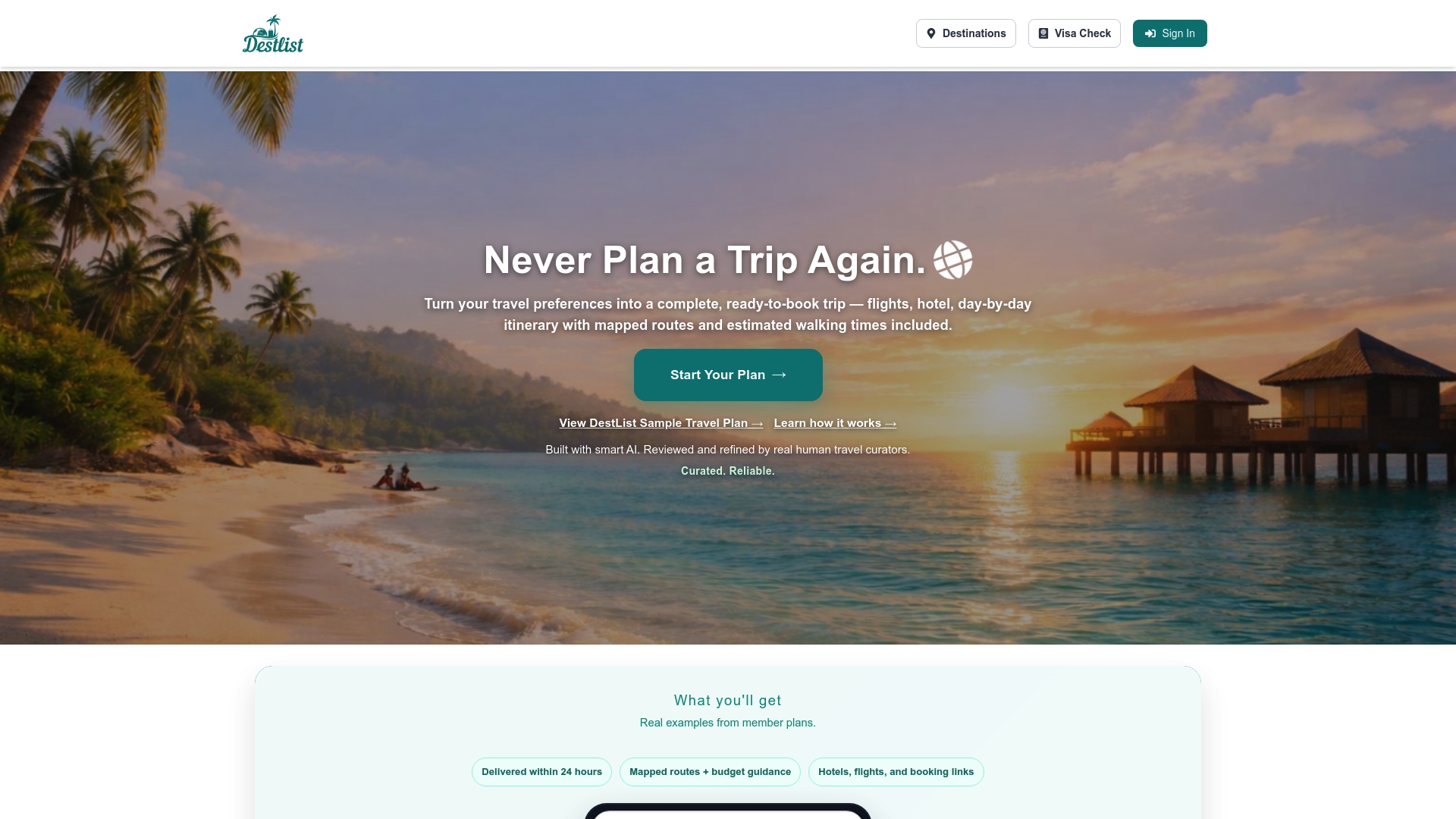
That's exactly where DestList steps in. Our done-for-you travel planning service takes your preferences and turns them into a ready-to-book trip within 24 hours — flights, hotels, day-by-day activities, and mapped routes included. Browse custom travel itineraries built around your budget, travel style, and destination goals, or explore our curated guided tours for hands-off experiences that handle the logistics for you. Your checklist just became a real trip.
Frequently asked questions
What is the most important step in travel planning for busy people?
Double-check your passport, visa, and health requirements first, since missing documents or entry paperwork can derail your trip at the last moment before departure.
How early should I start booking travel?
For the best prices and availability, book flights 5 to 6 months ahead, especially if you're traveling during peak seasons when demand pushes prices significantly higher.
How can I avoid overpacking for my vacation?
Follow the 5-4-3-2-1 packing rule and use packing cubes to keep clothing minimal, versatile, and organized so your bag stays light and manageable at every stage of travel.
Which apps or tools help most with trip planning and budgeting?
Digital travel apps for itinerary management, expense tracking, and document backups save significant planning time and reduce the chance of costly errors throughout your trip.