
TL;DR:
- Planning trips six to eight weeks in advance reduces booking costs significantly.
- Using digital tools like Google Flights and Skyscanner helps optimize travel expenses.
- Ethical travel choices involve balancing cost savings with fair wages and environmental impact.
Most travelers leave hundreds of dollars on the table every trip, not because they're careless, but because they're planning the wrong way. Booking flights at the wrong time, skipping price comparison tools, and letting excitement override strategy are all common traps. The good news? A few simple, proven adjustments to how you plan can dramatically cut costs without cutting experiences. This guide breaks down exactly how to approach budget travel in a smarter, more systematic way, so you spend less time stressing over spreadsheets and more time actually enjoying your destination.
Table of Contents
- Why most travelers overspend: The psychology behind travel budgeting
- Digital tools and apps: Your new travel sidekicks
- Ethical savings: Balancing low cost with responsible travel
- Building your efficient, flexible itinerary: 5 essential steps
- Why the cheapest trip isn't always the best trip
- Plan smarter, save more — try DestList today
- Frequently asked questions
Key Takeaways
| Point | Details |
|---|---|
| Don’t fall for ultra-low prices | Extreme bargains often come with hidden costs for workers and the environment. |
| Let tech work for you | Use free and affordable apps to find deals, track expenses, and build your plan efficiently. |
| Balance savings with value | Aim for fair pricing to get the most from your travel dollar while supporting responsible tourism. |
| Follow a flexible, step-by-step process | Research, prioritize, budget, and book with adaptability to optimize your whole experience. |
Why most travelers overspend: The psychology behind travel budgeting
Now that we've set the stage on why you need a plan, let's understand what's really at stake and why travelers often pay more than they should.
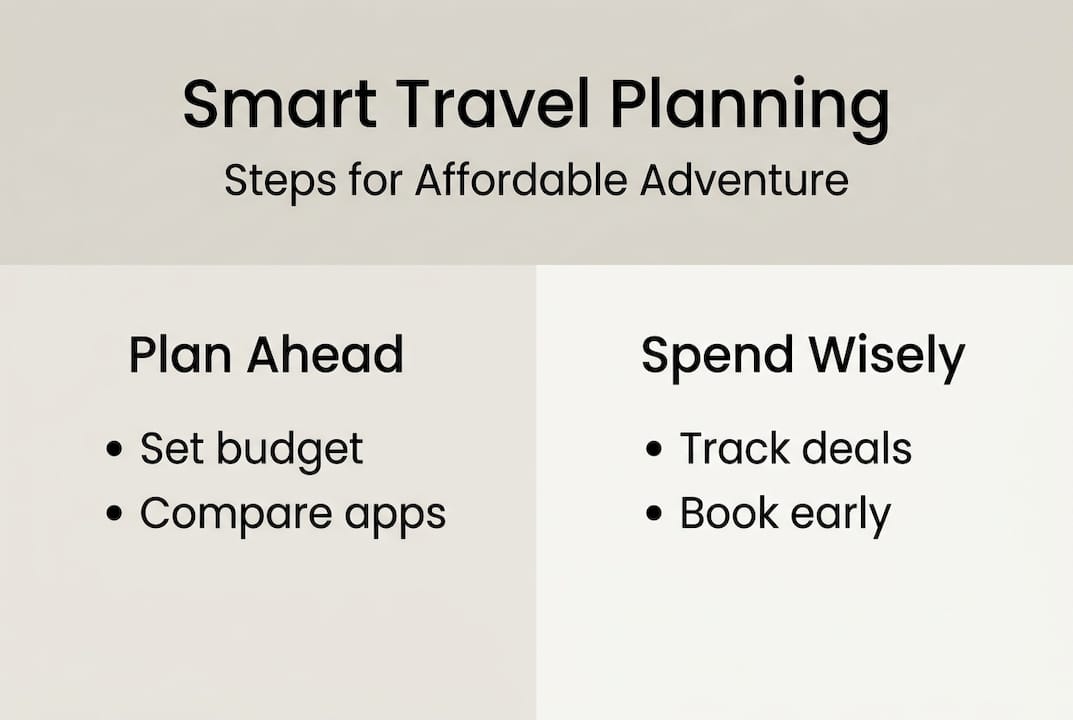
Last-minute planning is one of the biggest budget killers. When you book within two weeks of departure, airlines and hotels know you're desperate, and prices reflect that. Studies consistently show that flights booked six to eight weeks in advance cost significantly less than those booked days before travel. Urgency is expensive.
Beyond timing, there's a deeper psychological trap at work. Travelers often suffer from what behavioral economists call "fear of missing out" on deals, which leads to impulsive purchases that weren't in the original budget. You see a flash sale for a tour you didn't plan for and suddenly your budget has a new hole in it. Understanding your travel budget types before you start booking is one of the most underrated moves you can make.
Here are the most common spending traps budget travelers fall into:
- Failing to define must-haves versus nice-to-haves before booking
- Booking accommodation and flights separately without comparing bundle savings
- Ignoring hidden fees like resort charges, baggage costs, and city taxes
- Overestimating how much they'll cook and underestimating dining costs
- Skipping travel insurance and paying far more when something goes wrong
Then there's the "cheapest is best" myth. Many travelers assume that the lowest price is always the smartest choice. But as one investigative piece points out, ultra-low prices may harm sustainability and the workers behind your experience. That $8 guided tour might mean a local guide earning below a living wage. That bargain resort might be cutting corners on environmental practices.
"The real cost of ultra-cheap travel isn't always visible on your receipt. Sometimes it shows up in the communities and ecosystems you visit."
Structured planning helps you sidestep emotional spending by giving you a framework to evaluate every purchase against your actual priorities. When you know your budget and your non-negotiables upfront, impulse buys lose their power.
Digital tools and apps: Your new travel sidekicks
Understanding the psychology is just the first step. Here's how technology can close the gap and put tools in your hands.

The right apps can do the heavy lifting that used to take hours of manual research. For flights, Google Flights and Skyscanner are the go-to tools for comparing prices across dates and routes, while Trail Wallet helps you track spending in real time and Rome2Rio maps out every transport option between two points. These aren't just nice to have. They're the difference between overpaying and optimizing.
Here's a quick comparison of the most useful travel planning tools:
| Tool | Best for | Free version? | Standout feature |
|---|---|---|---|
| Google Flights | Flight price tracking | Yes | Price calendar and alerts |
| Skyscanner | Multi-destination search | Yes | "Everywhere" search |
| Trail Wallet | Budget tracking | Limited | Daily spend limits |
| Rome2Rio | Transport planning | Yes | Door-to-door route options |
| TripIt | Itinerary organization | Yes | Auto-imports booking emails |
Beyond individual apps, AI-powered platforms are changing how travelers plan entire trips. Instead of piecing together a dozen browser tabs, tools like online travel planners can generate complete, personalized itineraries that account for your budget, travel style, and schedule. This is especially useful when you're short on time but still want a well-organized trip.
For those exploring AI-driven options, it's worth reading up on Destinations.ai alternatives to find the right fit for your planning needs. And if you want to get the most out of any AI tool, AI travel itinerary tips can help you ask the right questions and get better results.
Pro Tip: Set up price alerts on Google Flights and Skyscanner for your target route as soon as you know your travel window. You'll get notified when prices drop, which means you can book at the right moment without obsessively checking fares every day.
The best approach combines free tools for research and alerts with a structured planning resource, like a travel planning expert guide, to keep everything organized and on budget.
Ethical savings: Balancing low cost with responsible travel
Apps can help you save, but what about the hidden costs? Let's dig into ethical spending so you can feel good about your decisions.
Budget travel and responsible travel are not opposites. But ultra-cheap travel, the kind that squeezes every last cent out of every transaction, often comes at someone else's expense. The difference matters.
Here's a simple breakdown of where the line falls:
| Spending type | Impact on locals | Environmental footprint | Recommended? |
|---|---|---|---|
| Budget-conscious | Neutral to positive | Moderate | Yes |
| Ultra-cheap | Often negative | Can be high | Use caution |
| Mid-range ethical | Positive | Lower | Yes |
| Luxury sustainable | Very positive | Varies | Yes if aligned |
As reported by travel journalists, extreme cost-cutting in tourism can suppress local wages and damage fragile ecosystems. When a tour operator charges $5 for a full-day experience, someone in the supply chain is absorbing that loss, usually the guide, the driver, or the local community.
Here's how to spot when paying a little more is the right call:
- The service involves local guides, artisans, or family-run businesses
- The price is dramatically below the regional average with no clear reason
- The operator has no visible sustainability or fair-wage policy
- Reviews mention staff being overworked or underpaid
- The experience involves wildlife or sensitive natural environments
Paying fairly doesn't mean abandoning your budget. It means being intentional. A well-packed bag, for example, can eliminate checked baggage fees and free up funds for experiences that actually benefit local communities. Check out these packing list essentials to cut costs before you even leave home.
Pro Tip: When comparing tour prices, look for operators who are transparent about how they pay their staff and what portion of fees goes back to the local community. A slightly higher price from an ethical operator is almost always the better investment.
Building your efficient, flexible itinerary: 5 essential steps
With your ethical compass set, here's how to put it all into action with a streamlined and budget-savvy process.
Planning a trip doesn't have to be overwhelming. Breaking it into five clear stages makes the whole process faster and more effective.
-
Research your destination thoroughly. Use tools like Google Flights and Skyscanner to compare flight prices across a range of dates. Look at accommodation options in different neighborhoods, not just the tourist center. Free resources like travel blogs, Reddit communities, and destination tourism boards are goldmines of current, practical information.
-
Prioritize your must-haves. Write down the three to five experiences you absolutely cannot miss. Everything else is flexible. This prevents you from overspending on things you don't actually care about and keeps your budget focused on what matters most to you.
-
Set a realistic daily budget. Break your total budget into daily spending limits across accommodation, food, transport, and activities. Use a tool like Trail Wallet to track this in real time. Knowing your numbers before you arrive removes the guesswork and prevents end-of-trip panic.
-
Book strategically. Flights and accommodation should be booked first, since they're the biggest expenses and the most time-sensitive. Activities and dining can often be arranged on arrival, which gives you flexibility to take advantage of local deals. For a deeper look at how to optimize trip planning, a structured approach makes a real difference.
-
Build in adjustment time. Leave at least one unscheduled half-day per three days of travel. This buffer lets you recover from delays, explore unexpected finds, or simply rest without derailing your budget. Understanding why trip planning matters goes beyond just saving money. It's about protecting your energy and enjoyment too.
Pro Tip: Keep a "deals folder" in your email or notes app where you save any promotions or discounts you spot during the research phase. When you're ready to book, you'll have a shortlist ready instead of starting from scratch. For a full walkthrough, these stress-free trip steps are worth bookmarking.
Why the cheapest trip isn't always the best trip
We've covered practical steps. Now let's step back for a broader view that challenges conventional wisdom.
Here's something most budget travel guides won't tell you: obsessing over the lowest possible price often produces the most forgettable trips. We've seen it repeatedly. Travelers who spend weeks hunting for the absolute cheapest option in every category often end up with a fragmented, stressful experience that doesn't reflect what they actually wanted from the trip.
The real goal isn't to spend as little as possible. It's to spend wisely. That means knowing when a slightly higher price buys you something genuinely valuable, whether that's a centrally located hotel that saves you two hours of daily commuting, or a guided experience that gives you context and connection you couldn't get alone.
As the evidence around ultra-low pricing shows, the cheapest option often has costs that don't show up in your bank account. They show up in the quality of your experience, the wellbeing of local communities, and the long-term health of the destinations you love.
Smarter spending, guided by clear priorities and good information, consistently delivers richer, more memorable trips. Getting familiar with travel curation terms can help you evaluate itineraries and services with a sharper eye, so you know exactly what you're paying for and why it's worth it.
Plan smarter, save more — try DestList today
Ready to put these strategies into action? Here's how DestList can make your next affordable trip a reality.
DestList brings together AI-powered planning and real travel expertise to build personalized itineraries that actually fit your budget. You get matched flights, curated hotels, day-by-day activity plans, and mapped routes, all delivered within 24 hours. No more juggling tabs or second-guessing your choices.
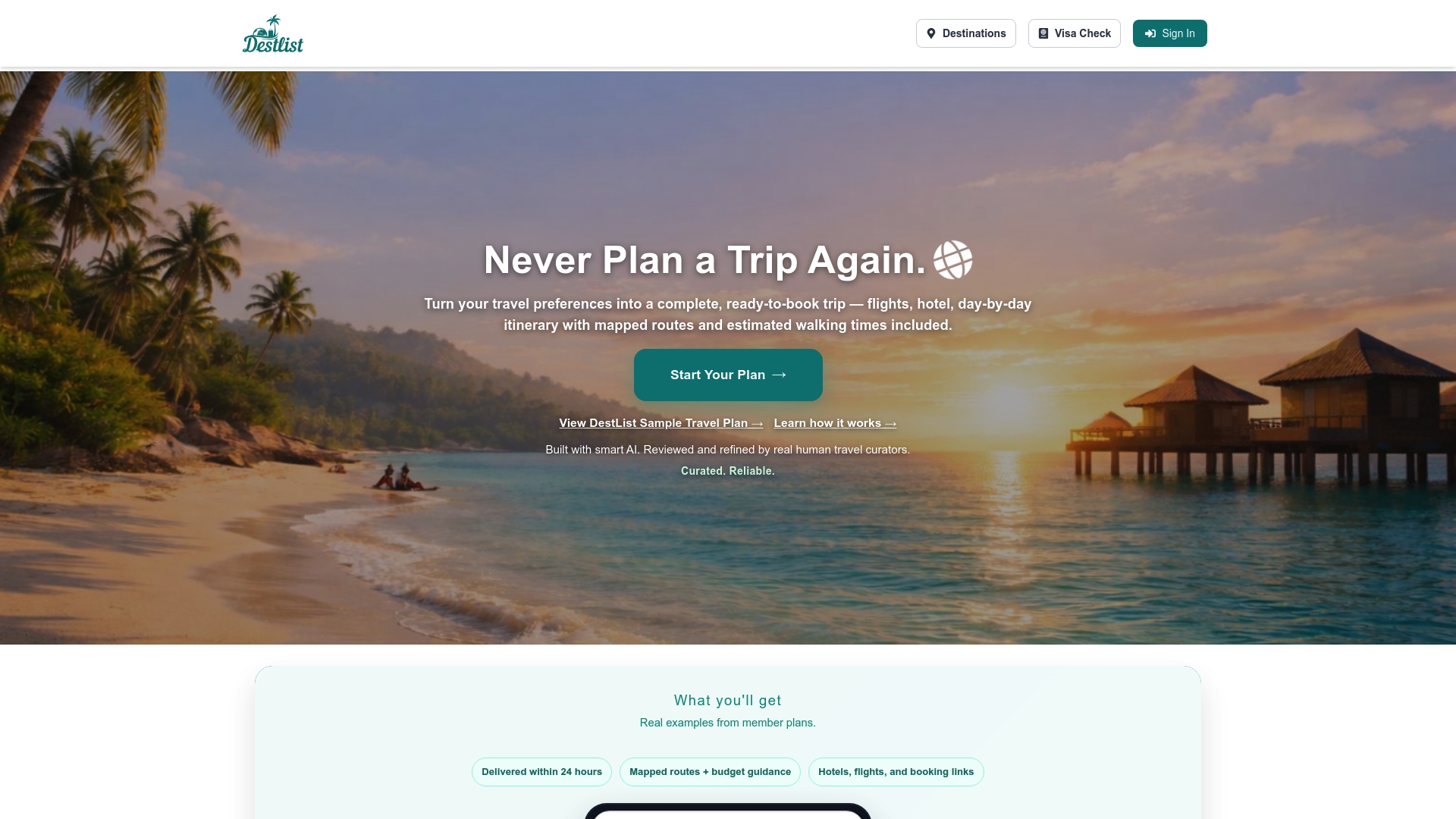
Whether you're planning a weekend escape or a multi-week adventure, plan your next trip with DestList and skip the hours of manual research. For a deeper look at how structured planning pays off, the expert travel planning guide is a great place to start. Your next trip should be exciting to plan, not exhausting.
Frequently asked questions
Which apps save the most money when booking flights and stays?
Top picks include Google Flights, Skyscanner, and Trail Wallet for cost tracking, according to travel experts. Each tool covers a different part of the planning process, so using them together gives you the most complete picture.
Can I plan a flexible trip and still get good deals?
Absolutely. Being flexible with your travel dates and destination allows you to adjust to price drops and avoid peak-season surcharges, which maximizes both your savings and your options.
Are ultra-cheap travel deals ethical?
Not always. Deals that seem too good to be true may come at the cost of fair wages and sustainability, so paying a fair price for quality experiences is the more responsible approach.
How do I avoid common budgeting mistakes on my trip?
Set clear spending priorities before you leave, use expense tracking apps like Trail Wallet throughout your trip, and avoid last-minute booking decisions that are driven by urgency rather than value.