
TL;DR:
Choosing between top-down and bottom-up approaches depends on spending limits and desire for accuracy.
Most travelers fall into budget, mid-range, or luxury categories, with costs varying by destination.
Hidden costs like baggage fees and taxes can significantly inflate travel budgets; planning for a buffer is essential.
Estimating how much a trip will actually cost is one of the most stressful parts of planning a vacation. You can spend hours comparing flights, scrolling hotel listings, and guessing at meal prices, only to arrive at a number that feels completely arbitrary. The real challenge isn’t setting a dollar amount. It’s choosing the right type of budget framework that matches how you actually travel, what you value most, and what your destination realistically demands. This guide breaks down every major approach, compares them side by side, and gives you a clear path to picking the one that fits your trip.
Table of Contents
Key Takeaways
| Point | Details |
|---|---|
| Pick your approach | Choose top-down, bottom-up, or hybrid methods to match your travel style. |
| Know cost categories | Budget, mid-range, and luxury trips have distinct daily costs and trade-offs that impact your experience. |
| Plan for surprises | Always add a 10-20% buffer to cover hidden costs and unexpected changes. |
| Personalize your plan | Let your trip priorities and flexibility guide your budget, not generic templates. |
Key approaches to travel budgeting
Before you open a spreadsheet or download an app, it helps to understand that there are two foundational ways to build a travel budget. Each shapes your entire planning process.
The first is the top-down approach: you decide on a fixed total amount you’re willing to spend, then divide it across categories like flights, hotels, food, and activities. The second is the bottom-up approach: you estimate the cost of each category separately, then add them together to reach a total. As travel budget fundamentals explain, neither method is universally better. Top-down works well when you have a hard spending limit. Bottom-up works better when you want accuracy and are flexible on total spend.
Regardless of which method you use, one rule applies to both: always include a 10-20% buffer on top of your estimated total. Unexpected costs are not the exception. They are the rule.
Here’s a simple process to get started:
-
Choose your method (top-down or bottom-up) based on whether you have a hard limit or want precision.
-
List your core categories: flights, accommodation, food, local transport, activities, shopping, and emergency fund.
-
Research real costs for your destination using recent traveler reports and cost databases.
-
Add your buffer of 10 to 20 percent before finalizing.
-
Pick a tracking tool: a budgeting app, a simple spreadsheet, or even labeled envelopes for cash-heavy destinations.
Your budget method also shapes your travel style in ways you might not expect. Travelers who use bottom-up budgeting tend to research more deeply and often find better deals. Those who use top-down budgeting tend to be more decisive but sometimes underestimate costs in specific categories.
Pro Tip: If you want stress-free trip planning, build your budget before you book anything. Locking in flights before you’ve estimated your total spend is one of the fastest ways to blow your budget.
Main travel budget types: Budget, mid-range, and luxury
With a clear view of budgeting methods, it’s time to match those with the main travel spending categories travelers actually use.
Most travelers fall into one of three spending tiers. Understanding where you land helps you set realistic expectations and avoid the frustration of constantly feeling like you’re either overspending or missing out.

| Budget type | USA (per day) | Europe (per day) | Typical accommodation | Typical meals |
|---|---|---|---|---|
| Budget | $75–$120 | €40–€120 | Hostels, budget hotels | Street food, self-catering |
| Mid-range | $150–$250 | €120–€200 | 3-star hotels, Airbnb | Casual restaurants |
| Luxury | $350+ | €200+ | 4 to 5-star hotels | Fine dining, room service |
These daily cost estimates give you a baseline, but real numbers vary significantly by destination, season, and personal habits.
Here’s what each type actually looks like in practice:
-
Budget travelers prioritize experiences over comfort. They stay in shared dorms or cheap private rooms, eat local street food, and use public transit almost exclusively. The trade-off is less privacy and more planning effort.
-
Mid-range travelers want comfort without excess. They book private hotel rooms, eat at sit-down restaurants most nights, and occasionally splurge on a tour or activity. This is the most common profile among American vacationers.
-
Luxury travelers prioritize convenience, quality, and exclusivity. They book premium rooms, private transfers, and curated experiences. The average vacation cost for a US traveler already sits well above what most people expect, and luxury trips can push that number dramatically higher.
Knowing your tier also helps when streamlining your travel plans because it narrows your search criteria immediately. You stop wasting time comparing five-star resorts when you’re a mid-range traveler.
Hybrid and high-low travel budgeting: Best of both worlds
Beyond strict categories, many travelers blend approaches. Hybrid or high-low budgeting can offer flexibility and real satisfaction without the guilt of overspending.
Hybrid budgeting means you don’t commit to one tier for your entire trip. Instead, you budget most days and splurge on key activities or locations that matter most to you. This approach is increasingly popular because it acknowledges a simple truth: not every day of a trip deserves the same level of spending.
Here’s a sample daily expense breakdown showing how a hybrid week might look:
| Day | Accommodation | Food | Activities | Daily total |
|---|---|---|---|---|
| Day 1 (arrival) | Budget hotel: $80 | Casual dining: $30 | None | $110 |
| Day 2 (city explore) | Budget hotel: $80 | Street food: $20 | Museum: $25 | $125 |
| Day 3 (splurge day) | Boutique hotel: $200 | Fine dining: $90 | Private tour: $120 | $410 |
| Day 4 (recovery) | Budget hotel: $80 | Self-catering: $15 | Free park: $0 | $95 |
| Day 5 (departure) | Budget hotel: $80 | Airport meal: $25 | None | $105 |
The hybrid model works especially well in these situations:
-
Special destinations like a once-in-a-lifetime national park or a famous food city where the experience is the point.
-
Festivals and events where premium access genuinely changes the experience.
-
Family travel where comfort on certain days (especially with young kids) is worth the extra cost.
-
Long trips where sustaining a pure budget approach for weeks becomes exhausting.
Pro Tip: Review hybrid budget strategies before your trip and mark your “splurge days” in advance. Pre-planning your high spend days prevents impulse overspending on days that don’t actually matter to you. You can also use streamlined trip planning tools to map these days into your itinerary from the start.
Hidden costs, edge cases, and common budgeting mistakes
Even the smartest budget type won’t help if unexpected costs pop up. Let’s tackle the most common traps.
Hidden costs are the single biggest reason travel budgets fail. Most travelers account for flights and hotels but forget about everything in between. Baggage fees alone can run $30 to $70 per bag per flight, and that adds up fast on a multi-leg trip. Add tips, tourist taxes, resort fees, and peak season surcharges of 50 to 100 percent, and your carefully planned budget can collapse before day three.
Common hidden costs to watch for:
-
Baggage fees: $30 to $70 per bag, each way
-
Tips: 15 to 20 percent on meals, taxis, and tours in the US
-
Tourist taxes: Common in European cities like Amsterdam and Barcelona
-
Resort or destination fees: Often not included in listed hotel prices
-
Peak season markups: Summer and holiday travel can cost 50 to 100 percent more
-
Currency exchange losses: ATM fees and poor exchange rates eat into your budget quietly
Edge cases also matter. Business travelers often work with per diems (daily allowances set by employers) that don’t reflect real costs in expensive cities. Solo travelers pay more per night than couples or groups because they can’t split room costs. Group travel, on the other hand, can unlock discounts on tours and accommodations that solo travelers never see.
“The most common budgeting mistake isn’t overspending on big items. It’s ignoring the small daily costs that compound over a week-long trip.”
The fix for most of these problems is the same: research hidden travel costs before you finalize your budget, and always build in that buffer. You can also save money by saving money on travel through early booking and off-peak timing.
How to select and personalize your travel budget type
Now that you know the landscape and the pitfalls, here’s how to confidently pick and fine-tune your ideal travel budget.
Choosing a budget type isn’t a one-size-fits-all decision. It requires honest answers to a few key questions before you commit to any framework.
Ask yourself:
-
What is the single most important part of this trip for me?
-
Am I more willing to sacrifice comfort or experiences to save money?
-
How long is the trip, and does my budget need to stretch further?
-
Is this a solo trip, a couple’s trip, or a group trip?
-
Am I traveling in peak season or off-peak?
Once you’ve answered those, follow this step-by-step process:
-
Set your priorities first. Decide whether you value activities, accommodation, food, or flexibility most. Start with priorities before you look at any prices.
-
Research destination-specific costs using traveler forums, cost databases, and recent blog posts. Prices from two years ago are often outdated.
-
Build your budget by category using a 7-category framework: flights, accommodation, food, local transport, activities, shopping, and buffer.
-
Decide if a hybrid approach fits your trip. If there are two or three must-do experiences that are expensive, plan for them and budget conservatively around them.
-
Book early and off-season where possible. This single move can cut costs by 20 to 40 percent on flights and hotels.
-
Use tools that track spending in real time: apps like Trail Wallet or TravelSpend, or a simple shared spreadsheet for group trips.
Pro Tip: Personalizing travel budgets works best when you also plan your packing strategy early. Check out packing for efficient travel to avoid baggage fees and overweight charges that quietly inflate your costs.
The overlooked truth about travel budgeting: Priorities matter most
Most budgeting guides focus on categories and dollar amounts. We think that misses the real point.
After working with thousands of travelers, the pattern is clear: the people who stay on budget and still feel like they had an amazing trip are not the ones with the most detailed spreadsheets. They’re the ones who were honest about what they actually value. A traveler who cares deeply about food will always feel cheated on a strict budget trip, no matter how well they planned. A traveler who cares about adventure will happily sleep in a basic hostel if it means they can afford a once-in-a-lifetime hike.
Rigid budget categories create false constraints. They force you to spend evenly across things that don’t matter equally to you. The smarter move is to ask, “What do I value most on this trip?” and then build your budget around that answer. Experienced travelers don’t stick to a tier. They shift dynamically, spending more where it counts and pulling back everywhere else.
Use itinerary optimization tips to map your spending priorities directly into your daily plan. When your itinerary and your budget are aligned, you stop second-guessing every purchase and start actually enjoying the trip.
Start planning smarter: Tools for every travel budget
If you’ve made it this far, you already know more about travel budgeting than most people who book trips every year. The next step is putting that knowledge into action.
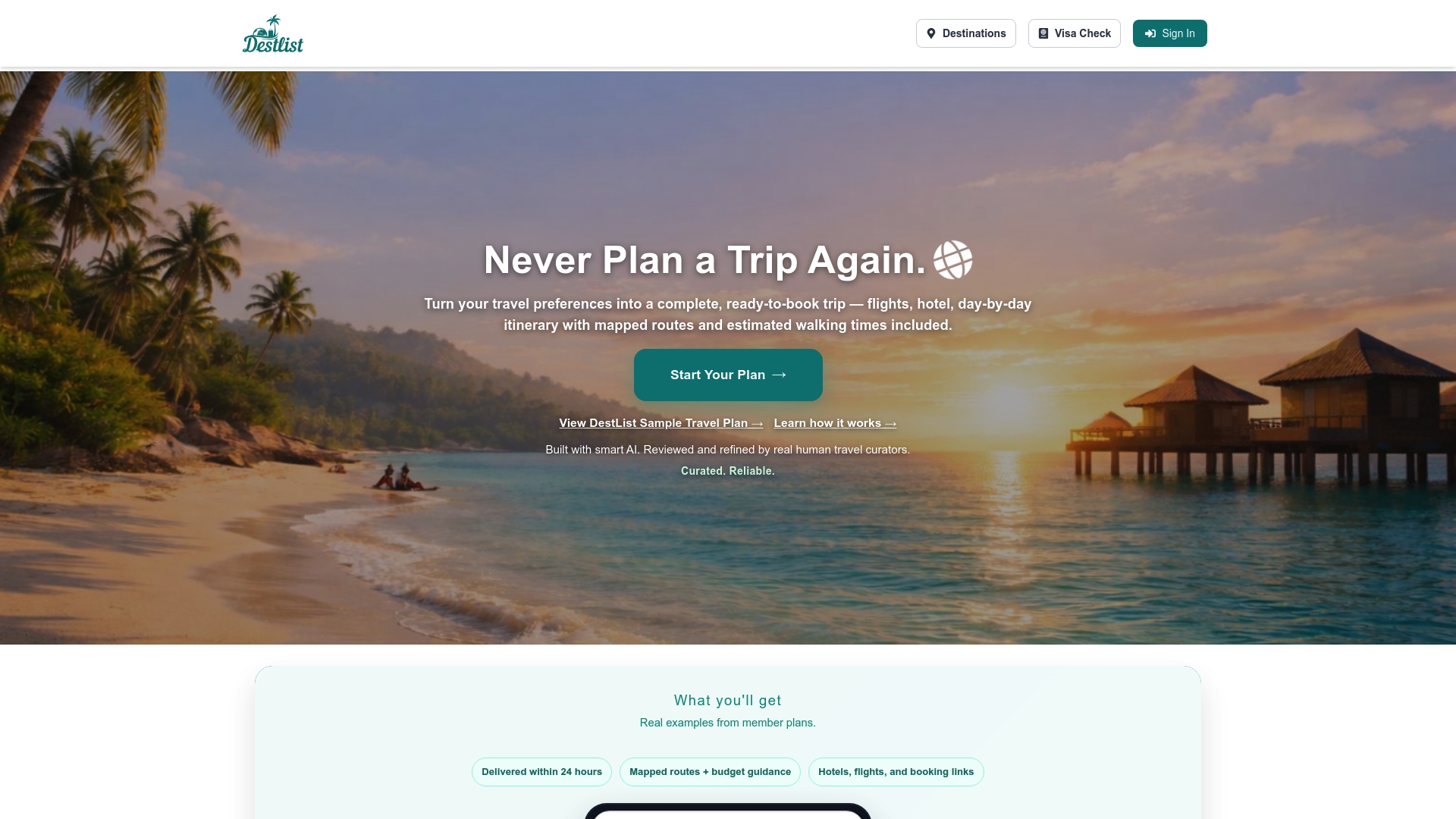
Plan your trip with DestList and let the platform do the heavy lifting. DestList’s online travel planner helps you set a realistic budget, match it to flights and hotels that actually fit your spending tier, and build a day-by-day itinerary with smooth flow and no wasted time. Whether you’re a strict budget traveler or a high-low hybrid, DestList gives you a ready-to-book plan within 24 hours. Stop guessing and start planning with a tool built specifically for travelers who want maximum value from every dollar they spend.
Frequently asked questions
What is the best way to set a travel budget?
Start with your priorities, estimate costs by category using trusted data, and always include a 10-20% buffer for unexpected expenses. Either a top-down or bottom-up approach works depending on whether you have a hard spending limit.
How much does a typical budget, mid-range, or luxury trip cost per day?
Budget travel in the US averages $75 to $120 per day, mid-range runs $150 to $250 per day, and luxury starts at $350 per day. Costs vary significantly by destination and season.
What hidden costs do travelers often miss?
The most frequently overlooked costs are baggage fees of $30 to $70, tips, tourist taxes, resort fees, and peak season surcharges that can double base prices. Building a buffer into your budget is the most reliable defense.
Is a hybrid travel budget effective?
Yes. A hybrid high-low approach often delivers the best overall value by keeping daily costs low while reserving spending for the experiences that matter most to you.