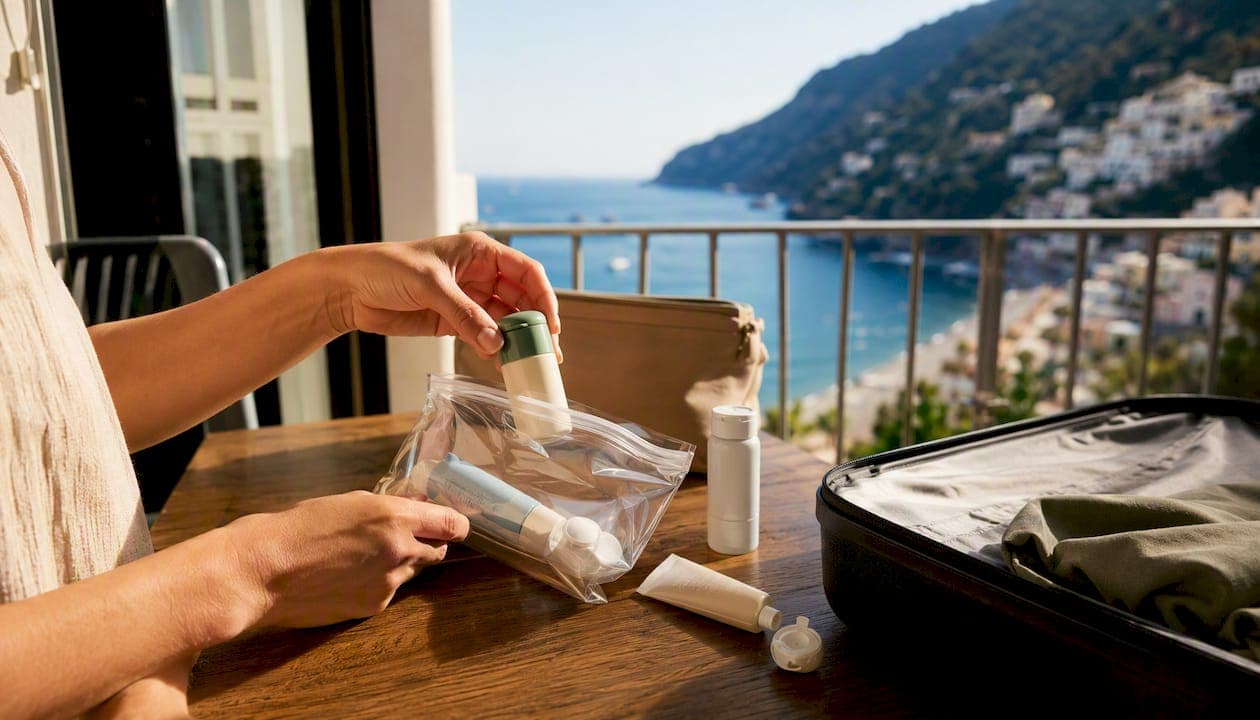
Every liquid, gel, aerosol, cream, or paste in your carry-on has to be 3.4 ounces (100 milliliters) or smaller, and every one of those containers has to fit into a single quart-sized, clear resealable bag. That's the 3-1-1 rule, and it applies to one bag per passenger, no exceptions on the count. If something is bigger than that, checked luggage is your answer, unless it falls under a specific exemption.
A few categories skip the bag entirely. Medically necessary liquids, baby formula, breast milk, and toddler food don't have to fit into your quart bag. Duty-free bottles sealed in a tamper-evident bag with a receipt can also ride along. Here's what to do right now, before you even get to the airport:
- Sort your toiletries: anything over 3.4 oz goes in checked luggage.
- Pull medications and baby items aside. Declare them to the officer at the checkpoint instead of bagging them with everything else.
- Keep duty-free purchases sealed in their original tamper-evident bag with the receipt visible.
The Transportation Security Administration sets these rules, and they haven't changed in any fundamental way in years, though enforcement details shift by airport.
Key Takeaways
The TSA liquids rule limits carry-on containers to 3.4 ounces each inside one quart bag, but medical, infant, and duty-free items follow separate rules you can use to your advantage.
| Point | Details |
|---|---|
| Container size is the rule | TSA checks the labeled capacity of the bottle, not how full it is. |
| One bag, one passenger | Each traveler gets one quart-sized, clear, resealable bag for compliant liquids. |
| Declare exemptions | Medications, breast milk, formula, and toddler food skip the bag but must be told to an officer. |
| Duty-free needs proof | STEB seals must stay intact, and receipts must show a purchase within 48 hours. |
| When in doubt, check it | Packing oversized liquids in checked luggage avoids confiscation risk entirely. |
Table of Contents
- What Counts as a Liquid Under TSA's Rule
- How the Medication and Baby Item Exemptions Actually Work
- Duty-Free Liquids and the 48-Hour Receipt Rule
- Packing Your Quart Bag So It Actually Works at the Checkpoint
- What Happens if Your Liquids Don't Comply
- The 3-1-1 Rule Isn't the Problem. Bad Packing Habits Are
- Sources
What Counts as a Liquid Under TSA's Rule
Toothpaste, lotion, sunscreen, shampoo, hairspray, and lip gloss all count as liquids, gels, aerosols, or pastes under TSA's screening rules. So does peanut butter, oatmeal, and that squeezable applesauce pouch you packed for the flight. If it pours, spreads, sprays, or smears, treat it as a liquid.
Here's the detail that trips people up constantly: the limit is based on what the container is labeled to hold, not how much is actually inside it. A 5-ounce bottle that's half empty still gets pulled at the checkpoint, because TSA checks printed capacity, not fill level.
- Liquids and gels: shampoo, contact lens solution, hand sanitizer
- Aerosols: dry shampoo, spray sunscreen, deodorant spray
- Pastes and creams: toothpaste, peanut butter, lip balm in a pot
Solid items like bar soap, stick deodorant, and powder makeup are exempt from the 3-1-1 rule. Powders get their own scrutiny, though: TSA officers may ask you to separate powder-based items larger than 12 ounces for additional screening, so a big tub of protein powder or baby formula powder could slow you down even though it's technically not a liquid.
How the Medication and Baby Item Exemptions Actually Work
If you carry insulin, liquid prescriptions, or other medically necessary items, you don't need to squeeze them into your quart bag. The same goes for breast milk, baby formula, and toddler food, along with the ice or gel packs used to keep them cold. TSA's guidance on liquid medications makes clear these items are exempt from the size cap, but you still have to tell an officer they're coming through.
Here's the step-by-step for a smooth pass:
- Separate medically necessary liquids and baby items from your quart bag before you reach the X-ray belt.
- Tell the TSA officer you have exempt items and want to declare them.
- Expect additional screening. Officers may test liquids or ask you to open containers.
- Keep prescriptions in their original, labeled bottles when possible. It speeds up identification and avoids questions.
The CDC recommends packing a travel health kit with your prescription medications kept accessible and in durable, sealed containers, which happens to be exactly what makes a TSA checkpoint go faster too.
Pro Tip: Print your prescription label or keep a photo of it on your phone. If a bottle gets relabeled by a pharmacy or you're carrying pills in a weekly organizer, having proof of what it is saves you from a longer conversation at the checkpoint.
Duty-Free Liquids and the 48-Hour Receipt Rule
Bought a bottle of rum or perfume at an overseas duty-free shop before a connecting flight into the U.S.? You can carry it on, even over 3.4 ounces, as long as it's sealed in a secure tamper-evident bag (STEB) from the retailer and shows no signs of tampering. You'll also need the original receipt showing the purchase happened within the last 48 hours.
- Keep the STEB sealed. Cutting it open to peek voids the exemption.
- Have the receipt ready to show, not buried in a checked bag you already dropped off.
- TSA still screens these bags, and a damaged seal or missing receipt means the item gets tossed or you get pulled for extra screening.
Even with the exemption available, TSA recommends packing anything over 3.4 ounces in checked baggage when you have the option. It's simply less that can go wrong.
Packing Your Quart Bag So It Actually Works at the Checkpoint
A quart bag holds less than people think, and cramming it wrong wastes minutes you don't have in a security line. Flat bottles with wide caps pack more efficiently than tall, rounded ones, and reusable silicone travel bottles often fit better than the oddly shaped originals your toiletries came in.
Here's a workflow that keeps you moving, following insights on convenience in business travel:
- Pack your quart bag last, after everything else, so it stays on top and reachable.
- Choose flat or squarish containers over cylindrical ones. You'll fit more per bag.
- Keep exempt items (meds, baby food) in a separate, clearly visible pouch and not mixed into the quart bag.
- Store duty-free receipts in an outer pocket, not folded inside luggage where you'd have to dig.
- Present the quart bag separately at standard checkpoints unless signage says otherwise.
Airports vary. Newer CT scanner lanes and TSA PreCheck lines sometimes let you keep liquids inside your bag entirely, since the scanner can see through layers better than older X-ray machines. Watch the checkpoint signage or ask the officer directing the line, since not every lane at every airport has been upgraded yet.
Pro Tip: Consolidating everything into one accessible bag isn't just about compliance. Security screeners consistently flag bags where liquids are scattered across multiple pockets for secondary screening, so one bag, one spot, keeps you out of that line.
What Happens if Your Liquids Don't Comply
Non-compliant items usually go one of three ways: the officer asks you to step aside for manual inspection, the item gets confiscated on the spot, or you get a short delay while they sort it out. Officers have discretion, and how you respond matters more than people expect.
- Offer to check the item if there's time before boarding. Some airports have repack stations or nearby shipping kiosks.
- Stay calm and cooperative. Arguing rarely changes the outcome and always adds time.
- Ask directly what your options are. Officers can tell you if checking, discarding, or mailing the item is possible.
If you're unsure whether something will fly before you even leave home, AskTSA answers real-time questions by chat or social media, often faster than a Google search turns up a straight answer.
How Destlist Helps You Avoid TSA Surprises
A custom itinerary from Destlist comes with a packing checklist built around your actual trip, not a generic list. It flags toiletries likely to exceed 3.4 ounces and suggests checked-bag alternatives before you're standing at the belt wondering why your sunscreen got pulled. That's one less thing to think about on travel day.
The 3-1-1 Rule Isn't the Problem. Bad Packing Habits Are
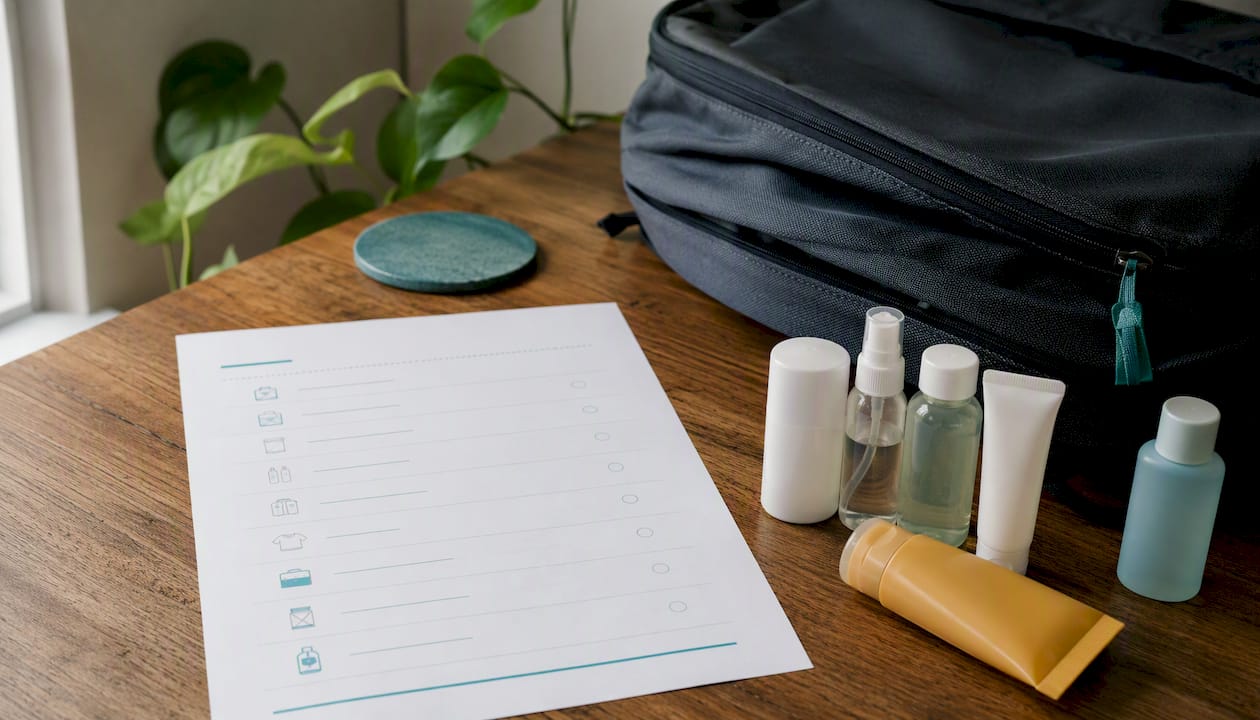
Most complaints about the TSA liquids rule aren't really about the rule. They're about people packing toiletries the night before, grabbing whatever bottle is in the shower, and finding out at the checkpoint that it's 8 ounces, not 3. The rule itself hasn't meaningfully changed in years, and it's more predictable than most travelers give it credit for.
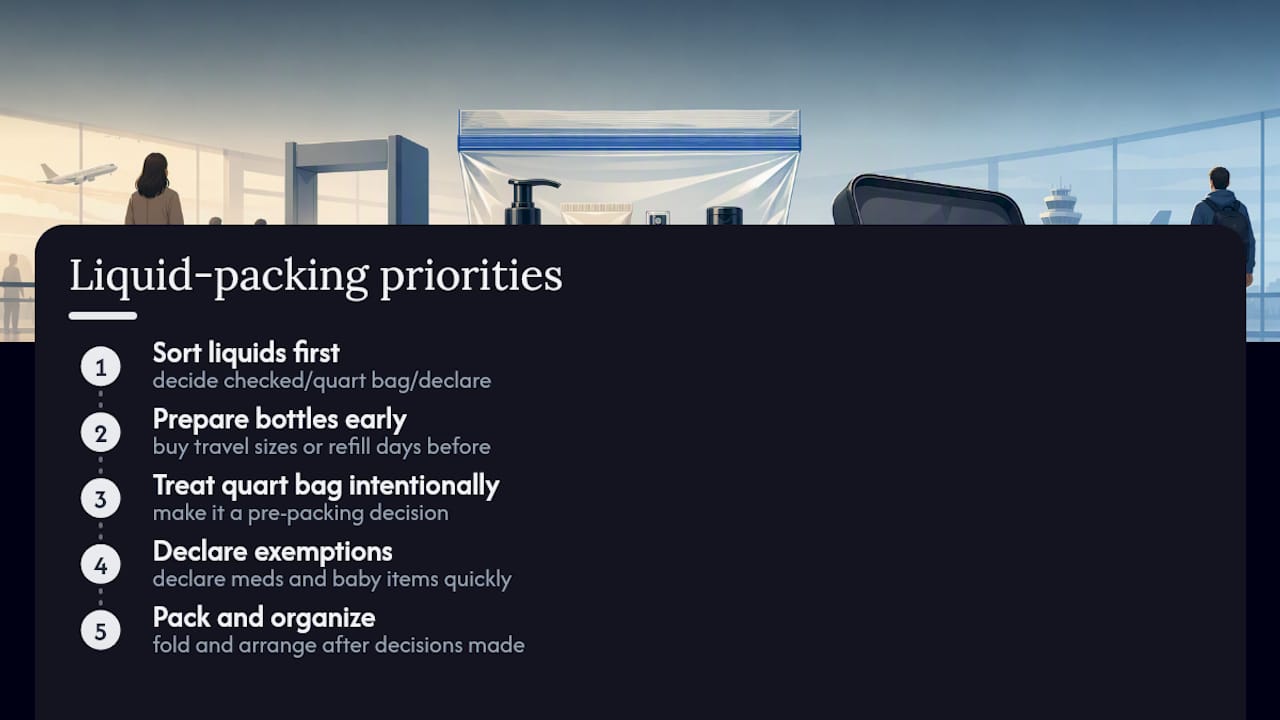
Where conventional advice falls short is treating the quart bag as an afterthought instead of a packing decision made early. If you buy travel-size versions or refill reusable bottles a few days before your trip, checkpoint stress mostly disappears. The exemptions for medication and baby items get overcomplicated too. Travelers assume declaring something invites hassle, when in practice it's usually faster than trying to sneak a borderline item through and getting flagged anyway.
What should you prioritize first? Sort your liquids before you pack anything else. Decide what's checked, what's in the quart bag, and what gets declared. Everything downstream, the actual folding and organizing, is easier once that decision is made.
— Helen
Sources
- Liquids, Aerosols, and Gels Rule - Security Screening - TSA
- Preparing international travelers: travel health kits - CDC