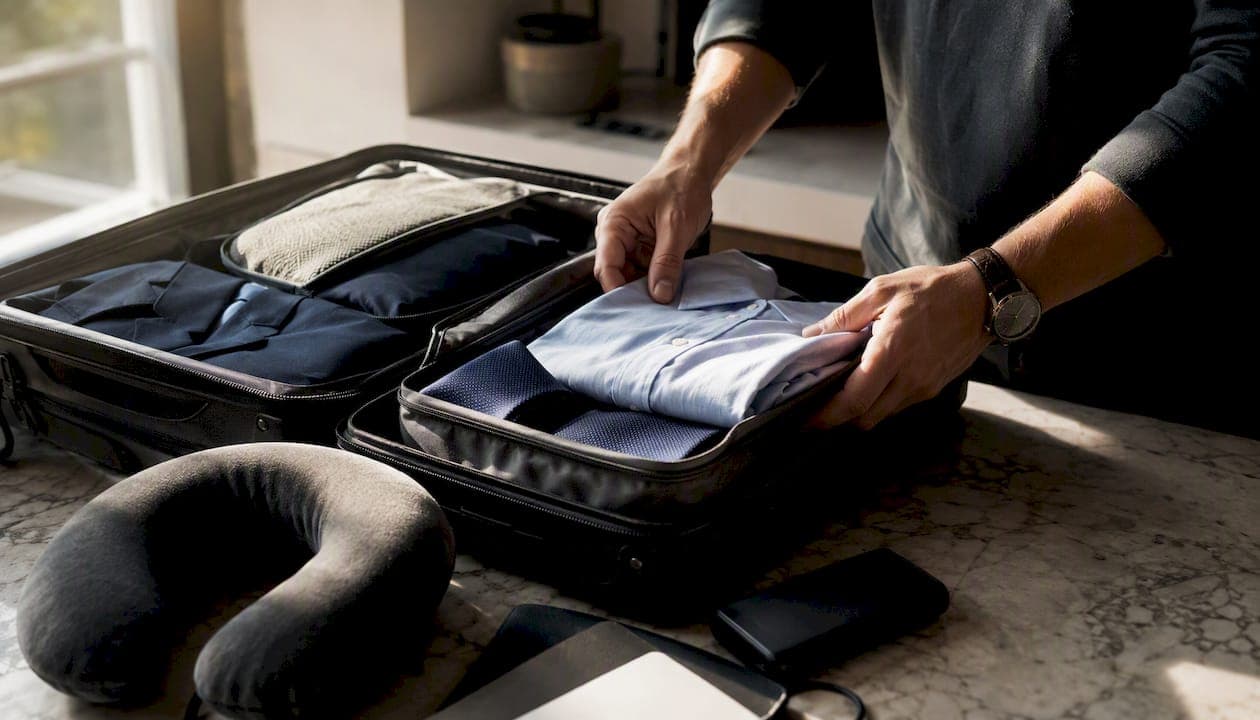
Carry-on first. That's the single rule that makes every business trip faster, cheaper, and less stressful. Pack your packing list for business trips around a carry-on bag, and you skip baggage claim, eliminate lost-luggage risk, and walk straight to your meeting. Here are the eight must-haves that belong in every business traveler's bag, no matter the destination:
- Travel documents: passport or REAL ID-compliant driver's license, plus digital and physical copies
- Laptop and charger: your primary work machine plus the cable
- Phone and charging cable: plus a wall adapter
- Power bank: charged before departure
- One complete professional outfit: shirt/blouse, pants/skirt, blazer, dress shoes
- Toiletries bag: travel-size items in a TSA-compliant 3-1-1 bag (containers 3.4 oz/100 mL or less)
- Prescription medications: in original containers, in your carry-on
- Wallet: credit cards, ID, small cash
Pro Tip: Charge every device the night before departure, back up your laptop to encrypted cloud storage, and photograph your passport and credit cards. Store those photos in a password-protected folder, not just your camera roll.
You can download and print a full version of this checklist through Destlist's packing workflow guide, which includes role-based templates you can copy and customize.
Key Takeaways
A carry-on-first strategy with a capsule wardrobe, organized tech, and verified documents covers the vast majority of business trips without checked luggage or last-minute scrambles.
| Point | Details |
|---|---|
| Carry-on first | For trips of three nights or fewer, a carry-on eliminates baggage claim delays and lost-luggage risk. |
| Capsule wardrobe | One blazer, two bottoms, and three tops in neutral colors cover most professional trip needs. |
| Documents and backups | Carry REAL ID or passport, plus encrypted digital copies of all travel documents and cards. |
| Tech and power planning | Pack a power bank (up to 100 Wh for carry-on), a universal adapter, and save boarding passes offline before departure. |
| Destlist custom lists | Destlist's custom itinerary service generates destination-specific packing lists alongside your full trip plan within 24 hours. |
Table of Contents
- What luggage works best for business travel?
- How to pack by trip length: overnight, 3-day, and 5-day templates
- What tech gear do you actually need on the road?
- How to build a travel wardrobe that stays professional and wrinkle-free
- Toiletries, medications, and wellness items for business trips
- Packing systems that actually save time
- Travel documents and money: what to carry and how to protect it
- TSA and airport rules every business traveler should know
- Business-specific extras most travelers forget
- Printable packing checklists and templates you can use now
- How this checklist was built
- The one packing habit that actually sticks
- Destlist builds your packing list so you don't have to
- Sources
What luggage works best for business travel?
The decision is simpler than most travelers make it out to be. For trips of three nights or fewer, a carry-on is almost always the right call. According to The Gearland's business travel gear guide, a carry-on with a dedicated laptop compartment and external pockets speeds security screening and keeps your workspace ready between flights. Checked luggage earns its place on longer trips, trips requiring bulky formalwear like a full suit for a black-tie event, or trips where you're hauling branded materials for a conference booth.
Features worth prioritizing when you shop:
- Laptop compartment: dedicated sleeve that lays flat for TSA screening
- Garment or compression sleeve: keeps suits and blazers wrinkle-free
- 360° spinner wheels: reduces shoulder strain in long terminals
- TSA-approved lock: built-in combination lock, not a padlock
- External-access pockets: for documents, boarding passes, and a water bottle
- Weight: lighter shell means more room for your actual gear within airline limits
Pro Tip: Wear your heaviest items on the plane: your blazer, dress shoes, or a chunky sweater. It frees up meaningful space in your bag. For a full suit, a slim garment bag that fits in the overhead bin beats folding every time.
Gate-checking is a reasonable middle ground on packed regional flights. If you gate-check, move your laptop, documents, and medications into your personal item first.
How to pack by trip length: overnight, 3-day, and 5-day templates
Overnight trip (1 night)
Clothing: 1 complete professional outfit, 1 casual outfit or sleepwear, 1 extra pair of socks and underwear Tech: laptop + charger, phone + cable, power bank, earbuds Toiletries: travel toothbrush/paste, deodorant, face wash, any prescriptions Documents: ID/REAL ID, boarding pass (offline), credit cards, company travel authorization Extras: business cards, presentation USB
3-day trip
Clothing: 1 blazer, 2 dress shirts/blouses, 1 pair dress pants/skirt, 1 casual outfit, 3 pairs socks and underwear, 1 pair dress shoes, 1 pair comfortable shoes Tech: full overnight kit plus travel adapter, presentation remote Toiletries: full 3-1-1 bag, travel first-aid basics, any prescriptions Documents: full document set plus travel insurance card, hotel confirmation Extras: receipt/expense pouch, snacks, reusable water bottle
5-day trip
Clothing: 1 blazer, 3 dress shirts/blouses, 2 pairs dress pants/skirts, 1 casual outfit, socks and underwear appropriate for the trip duration, workout clothes if needed, 1 pair dress shoes, 1 pair sneakers Tech: full 3-day kit plus portable projector or spare HDMI adapter Toiletries: full 3-1-1 bag, travel steamer, laundry bag, stain stick Documents: full document set plus passport if international, itinerary printed and digital Extras: laundry bag, extra business cards, branded materials if applicable
Scaling rule: add one top and one set of socks/underwear per extra day. At five nights, check hotel laundry options before adding a checked bag. Many business hotels offer next-day laundry, which lets you keep a carry-on-only strategy even on longer trips.
Capsule outfit matrix
| Base pieces | Outfit 1 | Outfit 2 | Outfit 3 |
|---|---|---|---|
| Navy blazer + white shirt + gray pants | Full formal meeting look | Blazer off, shirt + pants for dinner | Blazer + dark jeans for networking |
| Black dress/skirt + neutral blouse | Client presentation | Blouse + blazer for conference | Dress alone for evening event |
For multi-city trips, add one neutral layer (a lightweight cardigan or packable rain jacket) and one extra pair of shoes at most. The flexible travel planning guide from Destlist covers mixed-purpose itineraries in more detail.
What tech gear do you actually need on the road?
Business travel efficiency depends on digital preparation as much as physical packing. Download airline apps, save boarding passes offline, and pre-load any files you'll need before you leave the hotel's Wi-Fi zone.
Core tech checklist:
- Laptop with charger
- Phone with charging cable and wall adapter
- Power bank (see capacity guidance below)
- Universal travel adapter (especially for international trips)
- Noise-canceling earbuds or headphones
- Presentation remote with spare batteries
- USB drives with presentation files (two copies)
- HDMI or USB-C adapter for AV connections
- International SIM card or eSIM if traveling abroad
Power bank capacity: 10,000 mAh charges a smartphone roughly two to three times and tops off earbuds several times over. 20,000 mAh covers a laptop partial charge. Airlines generally allow power banks up to 100 Wh (roughly 27,000 mAh) in carry-on only. Check your airline's current policy before packing anything above that threshold, as rules vary by carrier.
Pro Tip: Use a dedicated cable organizer or tech pouch so you're not untangling cords at 6 AM. Label each cable with a small piece of tape. Record your laptop's serial number in a secure note app before you leave, and enable remote-wipe on your phone and laptop.
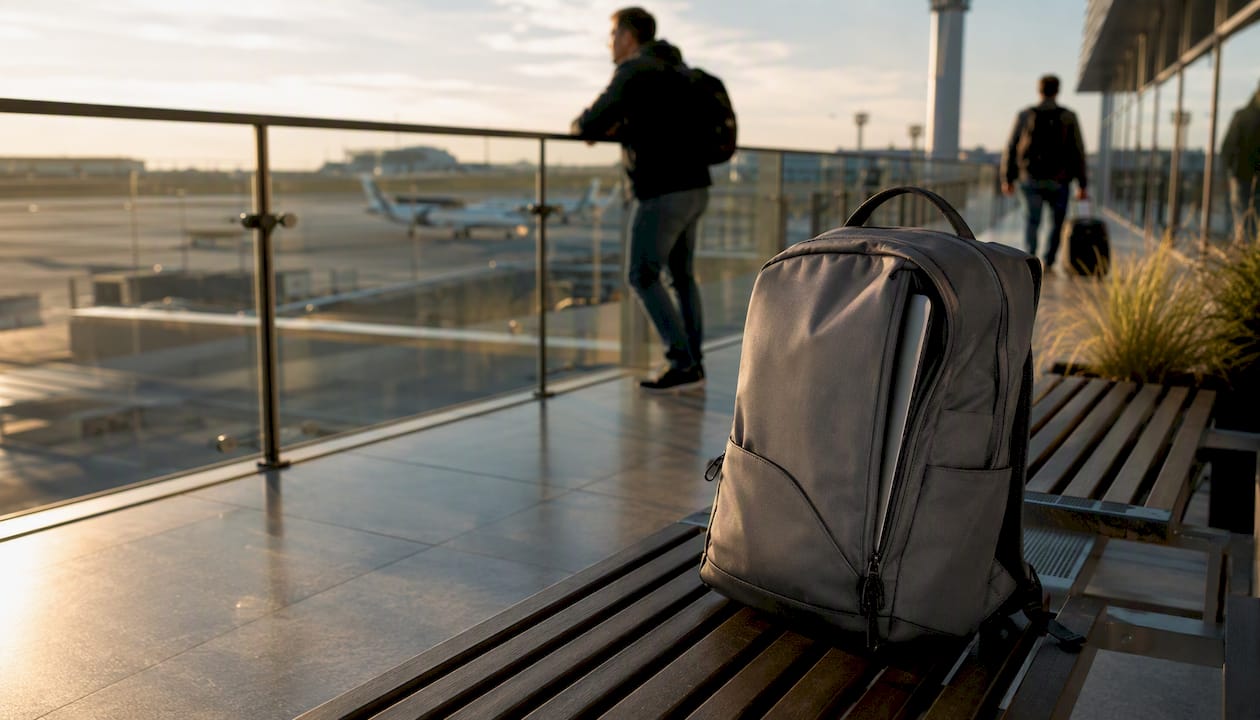
A dedicated laptop-first backpack with an external-access sleeve saves real time at TSA. You unzip one panel, the laptop slides out flat onto the belt, and you're through in under a minute.
How to build a travel wardrobe that stays professional and wrinkle-free
A capsule wardrobe for business travel follows one principle: every piece mixes with at least two others. Start with this skeleton:
- 1 blazer (navy, charcoal, or black)
- 2 dress pants or skirts (one dark, one neutral)
- 3 tops (two dress shirts/blouses, one versatile knit)
- 1 pair dress shoes
- 1 casual outfit (dark jeans + clean sneakers or flats)
- Workout clothes if your schedule includes a gym
Merino wool is particularly useful: it resists odor, regulates temperature, and looks polished. Packing guides consistently recommend neutral color palettes and wrinkle-resistant fabrics for exactly this reason.
For packing technique, rolling works well for casual items and knits. Fold dress shirts flat and stack them with tissue paper between layers, or use a packing cube to compress them. Packing cubes by category (clothing, tech, toiletries) also cut the time you spend searching through your bag at 11 PM in a hotel room.
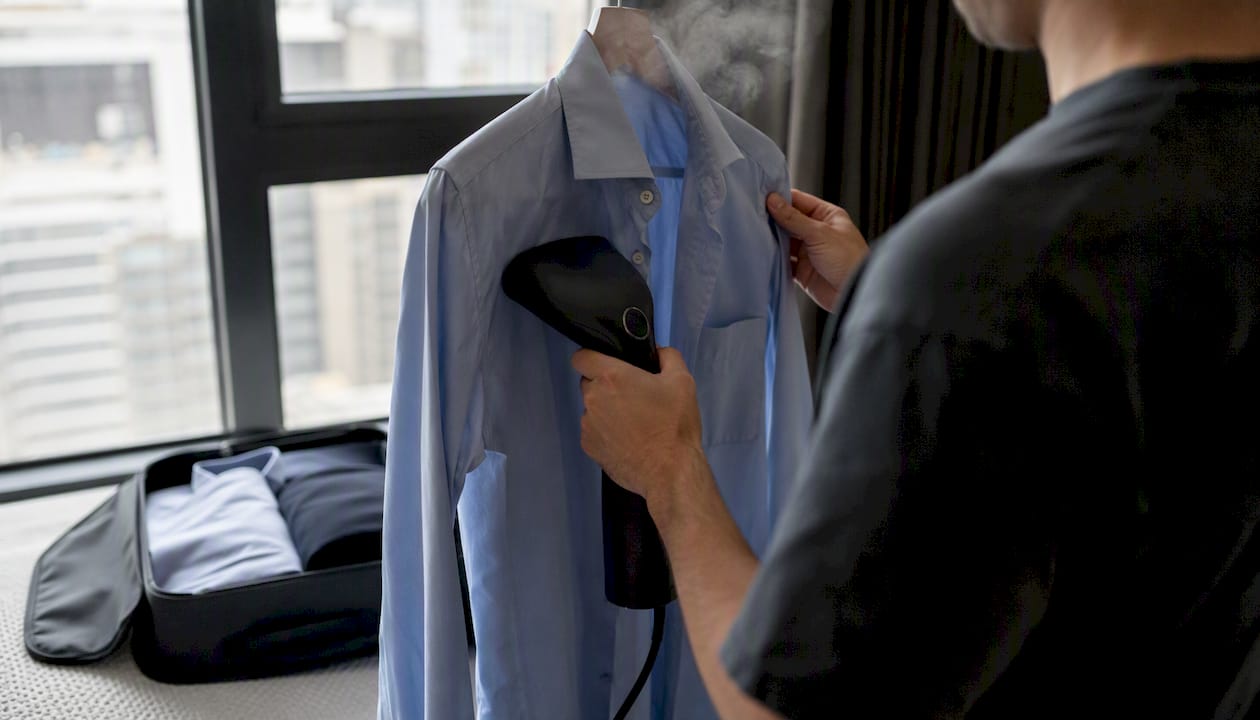
Wrinkle fixes when you arrive: hang clothes in the bathroom during a hot shower. A travel steamer handles stubborn creases in about three minutes and weighs less than a pound. Most business hotels also offer pressing services, though turnaround times vary.
Pro Tip: Pack one statement accessory: a silk scarf, a bold tie, or a distinctive watch. It lets you wear the same blazer to three different events without looking like you did.
Toiletries, medications, and wellness items for business trips
Keep your toiletries bag pre-packed and ready to grab. Here's what belongs in it:
- Toothbrush and toothpaste (travel size)
- Deodorant
- Face wash and moisturizer
- Shampoo and conditioner (or plan to use hotel products)
- Razor and shaving cream or electric razor
- Hair styling tools (travel-size dryer or flat iron if needed)
- Makeup essentials (foundation, mascara, lip color)
- Nail file and clippers
- Hand sanitizer
- Lip balm
- Travel first-aid: pain reliever, antacid, bandages, blister pads
For medications, carry prescriptions in their original labeled containers and pack extra doses in case of delays. Store all medications in your carry-on, never in checked luggage. Some countries restrict specific drugs, including common ones like certain ADHD medications or codeine-based pain relievers. Check the U.S. Embassy page for your destination before you travel.
The TSA 3-1-1 rule applies to all liquids, gels, and aerosols in carry-on bags: containers must be 3.4 oz (100 mL) or less, all fitting in one 1-quart zip-top bag. Medications and baby formula are exempt from the size limit but must be declared at the checkpoint. Solid toiletries (shampoo bars, solid deodorant) sidestep the rule entirely and are worth considering for longer trips.
Meal planning is another overlooked wellness factor. The business travel meal planning guide from Wild Foodz covers how to manage nutrition and dietary needs on the road, which pairs well with packing a few portable snacks for long travel days.
Packing systems that actually save time
A good packing system means you spend ten minutes packing, not forty. Here's a workflow that works:
- Lay everything out first. Put every item you plan to pack on the bed before anything goes in the bag. Then remove one item.
- Pack heaviest items at the bottom (shoes, toiletries bag, power bank).
- Use packing cubes by category: one for clothing, one for tech accessories, one for documents and extras.
- Place the laptop last in its dedicated sleeve so it's the first thing out at security.
- Documents and boarding passes go in an external pocket or a slim document organizer you can reach without opening the main compartment.
- Laundry bag at the bottom of the main compartment so dirty clothes stay separate from clean ones.
Recommended tools:
- Packing cubes (compression style for longer trips)
- Shoe bags (keeps soles away from clothing)
- Tech organizer pouch (cables, adapters, power bank)
- Receipt and expense pouch (paper receipts, business cards received)
- Slim RFID-blocking document wallet
Pro Tip: Pack a small 'in-case' kit in a zip-top bag: two safety pins, a stain-removing stick, a few bandages, a needle and thread, and a small piece of clear tape. It takes up almost no space and has saved more than one presentation outfit.
Digital preparation is part of the packing system too. Download your boarding passes, hotel confirmation, and any meeting files before you leave home. Hotel Wi-Fi is unreliable enough that you don't want to be downloading a 50 MB presentation deck in the lobby at 7:45 AM.
Travel documents and money: what to carry and how to protect it
Document checklist:
- Passport (required for all international travel; keep digital and physical copies)
- REAL ID-compliant driver's license or state ID for domestic flights
- Visas (physical and digital copies where applicable)
- Travel insurance card and policy number
- Flight itinerary and hotel confirmations (printed and offline on phone)
- Company travel authorization letter if required
- Emergency contact list
For international trips, the U.S. Department of State recommends carrying proof of onward or return travel, since some countries require it at the border. Store digital copies of every document in an encrypted cloud folder, not just your email.
Money and cards:
- Two credit cards from different networks (Visa and Mastercard cover most destinations)
- Small amount of local currency for taxis, tips, or markets that don't take cards
- Notify your bank before departure to avoid fraud holds
- Store your bank's international customer service number separately from your wallet
Pro Tip: Use an RFID-blocking wallet or passport sleeve. It's a minor investment that prevents electronic skimming in crowded airports and transit hubs. Keep a photo of your credit card front and back in your encrypted cloud folder so you can report it accurately if it's stolen.
TSA and airport rules every business traveler should know
The rules that trip up even experienced travelers most often:
- 3-1-1 liquids: all carry-on liquids in containers 3.4 oz or less, in one 1-quart zip-top bag. Medications are exempt but must be declared.
- REAL ID for domestic flights: as of the current TSA enforcement date, a REAL ID-compliant license or a passport is required. Check TSA.gov for the latest status before your trip.
- Laptops and large electronics: remove from bag and place in a separate bin unless you have TSA PreCheck.
- Power banks: carry-on only, up to 100 Wh per most airline policies. Never check them.
- Shoes and belts: remove at standard lanes; PreCheck members keep them on.
For fastest security processing, put your laptop in an external-access sleeve, wear slip-on shoes, and keep your 3-1-1 bag at the top of your personal item. A multi-compartment bag with a separated document and laptop pocket cuts the time you spend unpacking at the checkpoint.
TSA PreCheck costs $78 for five years and pays for itself quickly if you fly more than four or five times a year. Global Entry ($100 for five years) includes PreCheck and speeds customs re-entry after international trips. If you travel internationally for work even twice a year, Global Entry is worth it.
Some hotels handle the convenience side of business travel better than others. The Wild Foodz hospitality guide on business travel convenience covers how hotel amenities like in-room adapters, laundry services, and concierge support can reduce what you need to pack in the first place.
Business-specific extras most travelers forget
Beyond the basics, these items separate a prepared professional from someone scrambling before a presentation:
- Business cards (or a digital card app like HiHello as backup)
- Spare presentation USB with your deck in multiple formats (PPTX and PDF)
- HDMI, USB-C, and VGA adapters (conference rooms still use all three)
- Presentation remote with spare batteries
- Printed handouts if your presentation relies on them
- Branded materials (brochures, samples, swag) if you're representing your company at a booth
For expense readiness, carry a small accordion-style receipt pouch or use an expense-tracking app like Expensify or SAP Concur to photograph receipts immediately. Petty cash in small bills handles tips, airport meals, and situations where cards aren't accepted.
Pro Tip: The day before any presentation, plug your laptop into the venue's AV system or a comparable setup and run through your slides. Adapter incompatibilities and resolution mismatches are far easier to fix at home than in a conference room with 40 people waiting.
Printable packing checklists and templates you can use now
The templates in this article are designed to be copied directly into a notes app, a spreadsheet, or printed as a PDF. To customize:
- Remove items that don't apply to your role (skip the presentation remote if you're attending, not presenting)
- Add destination-specific items based on climate (umbrella, heavy coat, sunscreen)
- Check hotel amenities before packing duplicates (most business hotels provide hair dryers, irons, and basic toiletries)
- Verify laundry access if you're considering a lighter bag for a longer trip
The Destlist packing workflow guide offers a one-click export of role-based templates you can adapt for sales trips, conferences, client visits, or multi-city itineraries. For destination-specific packing (cold-weather cities, tropical climates, international trips with strict customs rules), the Destlist guide to packing for unique destinations covers climate-specific add-ons in detail.
Before finalizing any checklist, run three quick checks: destination weather forecast for your travel dates, meeting type (formal client dinner vs. trade show floor), and laundry access at your hotel.
How this checklist was built
This guide draws on official TSA and U.S. Department of State guidance, industry-standard packing resources, and Destlist's own travel-practitioner workflows developed across thousands of trip plans.
Primary sources used:
- TSA official guidance on REAL ID and liquids rules
- U.S. Department of State on international travel documents
- The Gearland business travel gear guide on luggage features and carry-on strategy
- Cvent's corporate travel management blog on digital preparation
- Amex Global Business Travel checklist on capsule wardrobe and packing systems
- Destlist's internal packing list workflows, refined through real trip planning across business and leisure travel segments
This article was written by Helen, a travel editorial contributor at Destlist with a focus on practical systems for frequent business travelers.
The one packing habit that actually sticks
Most packing stress comes from starting from scratch every trip. The fix is simple: keep a permanent travel kit.
Store a pre-packed toiletries bag, a spare charging cable, a travel adapter, your 3-1-1 liquids bag, and a few business cards in a dedicated travel pouch that never gets fully unpacked. When a trip comes up, you grab the pouch, add your clothing and laptop, and you're done. The night before departure, lay out your outfit for the next day, charge every device, and confirm your boarding pass is saved offline. That's the whole system.
Staying polished on travel days is mostly about removing decisions. When you know exactly what you're wearing and where every item lives in your bag, the morning of a flight feels like any other morning.
Destlist builds your packing list so you don't have to
Packing for a business trip gets complicated fast when the destination changes, the meeting type shifts, or you're juggling three cities in five days. Destlist's custom travel itinerary service generates destination-specific packing lists alongside your full trip plan, including flights, hotels, daily routes, and weather alerts, delivered within 24 hours.
Where a generic checklist gives you the same list for Miami in July and Chicago in January, Destlist's AI-assisted planning adjusts for climate, meeting type, trip length, and your personal preferences. The Done For You Travel Planning option handles everything from itinerary to packing guidance, so you spend your pre-trip time on work, not logistics. Start with a custom itinerary and get a packing list built around your actual trip.
Sources
- Travel
- TSA — REAL ID
- Cvent blog — Business travel essentials
- The Gearland — Business travel gear guide
For country-specific entry rules, visa requirements, and medication restrictions, always check the destination's official government pages and the U.S. Embassy site for that country.