
TL;DR:
- Pre-planning travel itineraries enhances satisfaction, saves time, and reduces stress by aligning activities with personal preferences.
- A flexible framework with anchor activities and buffers allows spontaneous experiences without sacrificing efficiency or enjoyment.
A pre-planned travel itinerary is the single most effective tool for turning a chaotic vacation into a confident, satisfying experience. Travelers who plan ahead spend less time confused at airports, less money on impulse bookings, and more time actually enjoying their destination. Research shows that custom itineraries yield 40% higher satisfaction than standard package tours. That gap exists because personalized planning aligns every day of your trip with what you actually want to do, not what a generic tour operator decided for you. Whether you are heading to Tokyo for a week or road-tripping through the American Southwest, understanding why use pre-planned itineraries is the first step toward traveling better.
Why pre-planned itineraries save time and reduce travel stress
The most underrated benefit of planning ahead is the time you recover during the trip itself. A well-structured itinerary typically requires 3 to 5 hours of upfront planning but saves more than 10 hours of wasted trip time. Those hours disappear fast when you are standing on a street corner debating where to eat, realizing two attractions are on opposite sides of the city, or discovering the museum you wanted closes on Tuesdays.

Decision fatigue is a real and measurable drain on travel enjoyment. Every small choice you make during a trip, from which metro line to take to where to grab lunch, pulls from the same cognitive reserve. A pre-planned schedule eliminates dozens of those micro-decisions before you even pack your bag. The result is a traveler who arrives at each destination with energy and focus rather than exhaustion.
Pre-planning also prevents logistical conflicts that are nearly impossible to spot in the moment. Booking a morning cooking class in Florence and an afternoon winery tour 40 kilometers away sounds fine on paper until you realize the class runs late and Italian trains run on their own schedule. Mapping your day in advance surfaces these conflicts while you still have time to fix them.
- Eliminates redundant travel between distant attractions on the same day
- Prevents double-booking or scheduling gaps that waste paid vacation time
- Reduces arguments and group friction caused by on-the-spot disagreements
- Gives every traveler in a group a shared reference point for the day
Pro Tip: Build your itinerary around two or three anchor activities per day and leave at least 90 minutes of unscheduled buffer time. That buffer absorbs delays, spontaneous discoveries, and the simple reality that everything takes longer than you expect.
What are the financial and logistical advantages of booking ahead?
Early booking is not just about securing a spot. It is about paying less for the same experience. Travel demand tightens as departure dates approach, which means prices rise and availability shrinks. Booking flights and accommodations early improves your options and reduces costs, while using refundable options preserves flexibility if plans change.
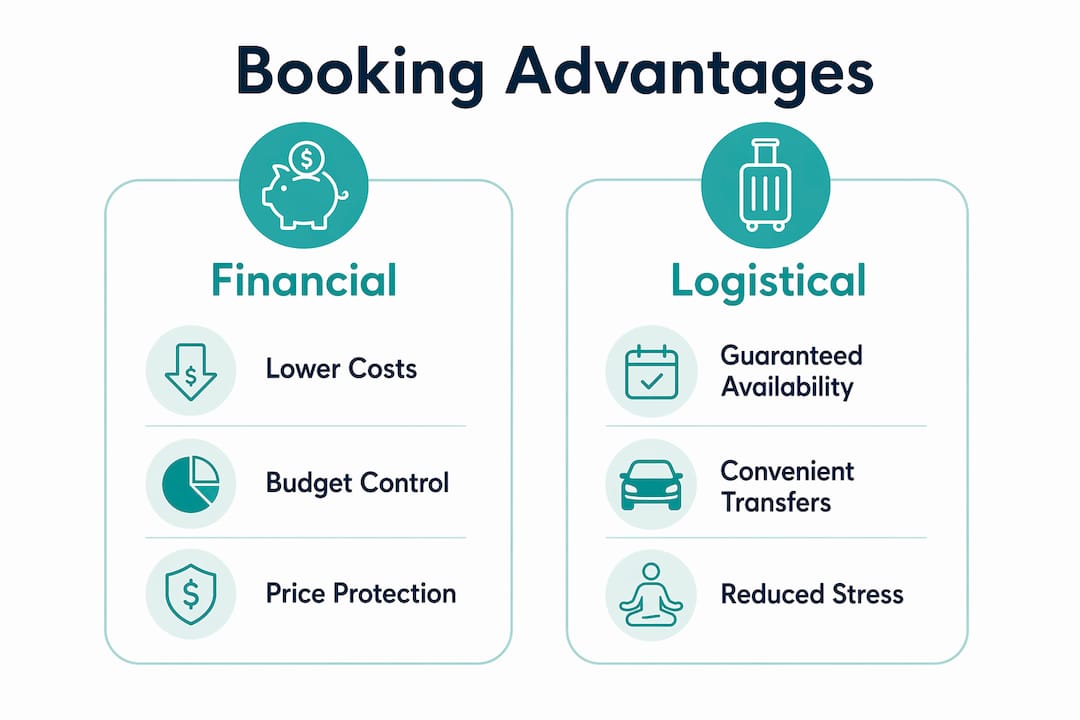
The financial discipline that comes with itinerary planning is equally valuable. When you map out your trip in advance, you allocate budget to your actual priorities rather than spending reactively. A traveler without a plan often overspends on convenience, paying premium prices for last-minute restaurant reservations, rushed airport transfers, or sold-out tours that could have been booked weeks earlier for half the price.
The table below compares three booking timing strategies and their typical outcomes.
| Booking timing | Cost impact | Availability | Flexibility |
|---|---|---|---|
| 3+ months ahead | Lowest prices, best selection | Widest choice of flights, hotels, and tours | High with refundable options |
| 4 to 6 weeks ahead | Moderate prices, good options | Most popular slots still available | Moderate |
| Last minute (under 2 weeks) | Highest prices, limited options | Key experiences often sold out | Low, mostly non-refundable |
Booking early also protects you from the quiet disappointment of last-minute compromises. Settling for a hotel two neighborhoods away from where you wanted to stay, or missing the Uffizi Gallery because timed-entry tickets sold out months ago, are the kinds of letdowns that a pre-planned itinerary prevents entirely. For travelers visiting high-demand destinations like Rome, Kyoto, or Iceland, early booking is not optional. It is the difference between the trip you imagined and the trip you settled for.
Pro Tip: When booking popular tours or museum tickets, look for personalized transfer options that bundle logistics into a single reservation. This reduces the number of moving parts you manage on travel day.
How to balance structure and spontaneity in a pre-planned itinerary
The most common fear about pre-planning is that it kills spontaneity. That fear is based on a false choice. The best itineraries offer a flexible framework rather than a rigid schedule, combining planned anchors with open space for unscripted moments.
Experienced planners use what travel writers call the anchors-plus-buffers system. You fix one to three must-do events per day, such as a guided tour, a restaurant reservation, or a timed museum entry, and leave the surrounding time unscheduled. That open time is where the real travel magic happens: the unexpected market you wander into, the local bar a hotel concierge recommends, or the extra hour you spend at a viewpoint because the light is perfect.
Hybrid itineraries with one to three daily anchor activities and buffer periods allow adaptability without sacrificing the structure needed for efficient travel. This approach consistently outperforms both rigid minute-by-minute schedules and completely unplanned trips on traveler satisfaction measures.
Overly rigid planning creates its own problems. Itineraries fail most often due to underestimating transit times and over-scheduling, not from poor choice of attractions. A plan that accounts for check-in queues, security lines, and the physical reality of walking 15,000 steps a day is a plan that actually works.
- Fix no more than three anchor activities per day
- Schedule anchors with realistic transit time between them, not map distance
- Leave at least one full afternoon per three-day block completely unscheduled
- Rank your optional activities so you know which ones to drop if the day runs long
Pro Tip: Before finalizing your itinerary, check route practicality by plotting each day's activities on a map. If your morning, afternoon, and evening stops form a triangle across the city, restructure the day around geography, not just interest.
What psychological benefits come from planning your trip in advance?
Planning a trip does more for your mental state than most travelers realize. Active planning enhances anticipation, which correlates with greater happiness and resilience during travel. The positive emotional effect begins weeks before you board a plane.
Marking a travel date and building out your itinerary activates brain reward circuits tied to pleasure and mental wellbeing, boosting happiness well in advance of the trip itself. Psychologists describe this as the anticipation effect. It functions as a form of self-care, improving mood and motivation during the weeks of ordinary life that precede your departure.
"Travelers involved in planning experience greater anticipation, which primes them to better handle unscripted travel disruptions." — Women Leading Travel
This psychological priming has a practical payoff. Travelers who have engaged deeply with their itinerary before departure are better equipped to adapt when things go wrong, because they already have a mental model of the trip. A canceled train or a closed attraction is a minor detour, not a crisis, when you know your options in advance.
The planning process itself also provides structured mental breaks from daily routines. Researching a destination, comparing neighborhoods, and choosing between experiences engages the imagination in ways that reduce stress and improve emotional regulation. The importance of travel schedules extends well beyond logistics. It reaches into how you feel about your life in the weeks before you leave.
How to get started with an effective pre-planned itinerary
Building a solid itinerary does not require a travel agent or hours of spreadsheet work. The process becomes fast and repeatable once you follow a clear sequence.
- List your non-negotiables first. Write down the two or three experiences that define the trip for you. Everything else is built around those anchors.
- Research opening hours, booking requirements, and geographic proximity for each anchor activity. This step catches most logistical conflicts before they become problems.
- Use a digital planning tool or AI platform to generate a day-by-day framework. Tools like Destlist combine AI-generated structure with human curation to produce itineraries that account for transit times, walking distances, and budget.
- Add optional activities around each anchor. These fill buffer time without creating pressure. If you get to them, great. If not, the day still succeeds.
- Verify the route makes geographic sense. Plot each day on a map and confirm you are not crisscrossing the city unnecessarily.
- Set a budget ceiling for each category (accommodation, food, activities, transport) before you start booking. This prevents the slow budget creep that derails otherwise well-planned trips.
Planning workflows that focus on key anchors and buffer times minimize planning time yet prevent day-to-day uncertainty, which is one of the most consistent stressors travelers report. A focused, time-efficient planning process protects both your budget and your enjoyment.
Key takeaways
Pre-planned itineraries deliver measurable gains in time, money, and traveler satisfaction by combining structured anchors with deliberate flexibility.
| Point | Details |
|---|---|
| Time savings are significant | A 3 to 5 hour planning investment saves 10 or more hours of wasted trip time. |
| Early booking cuts costs | Booking flights and hotels months ahead secures lower prices and better availability. |
| Hybrid planning beats rigid schedules | One to three daily anchors plus buffer time outperforms both rigid and unplanned approaches. |
| Planning boosts mental wellbeing | Itinerary building activates anticipation, improving mood and resilience weeks before departure. |
| Personalization drives satisfaction | Custom itineraries yield 40% higher satisfaction than generic package tours. |
Why I think most travelers underestimate the power of planning
After years of covering travel and watching how people actually experience their trips, I have come to one firm conclusion: the travelers who enjoy their trips most are not the ones who "go with the flow." They are the ones who planned well enough that going with the flow became an option.
There is a version of spontaneity that is genuinely freeing, and a version that is just anxiety with a passport. The difference is preparation. When you know your hotel is confirmed, your key reservations are locked in, and your days have a logical shape, you can say yes to the unexpected without panic. That afternoon you spent wandering a neighborhood you had never heard of? It happened because your morning was organized enough to give you the afternoon.
I have also seen the opposite play out repeatedly. Travelers who arrive without a plan spend the first day recovering from the chaos of figuring out where to stay and what to do. By day three, they are exhausted from constant decision-making and have missed the experiences they actually came for. The irony is that rigid over-planners and zero-planners often end up equally frustrated, just for different reasons.
The sweet spot is a stress-free itinerary structure that gives you confidence without boxing you in. Plan the anchors. Protect the buffers. Then show up and let the trip surprise you.
— Helen
Let Destlist plan your next trip in under 24 hours
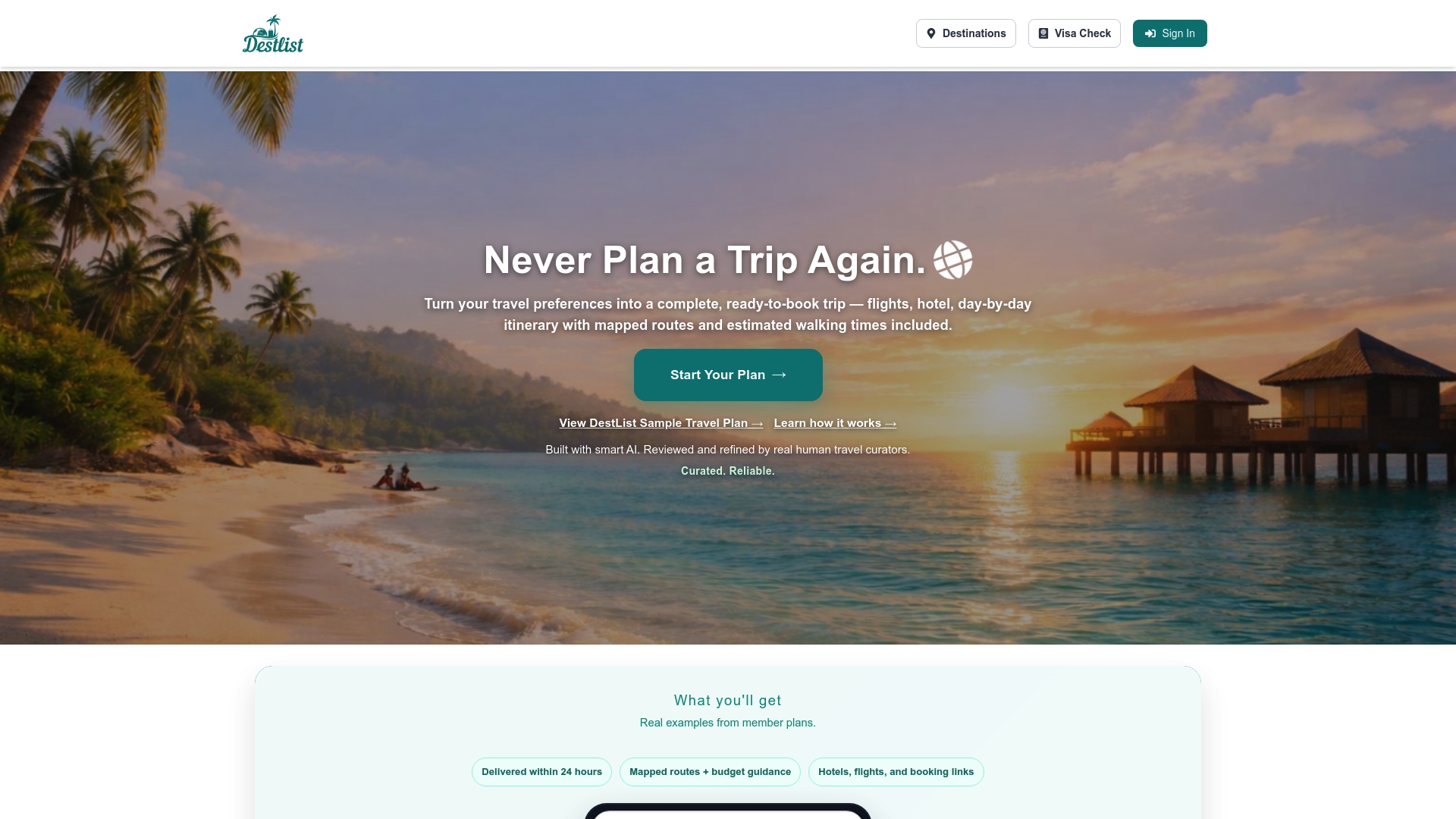
Destlist builds custom travel itineraries that combine AI-generated structure with human expertise, delivering a complete, ready-to-book trip plan within 24 hours. Every itinerary includes day-by-day activities, mapped routes with estimated walking times, budget-matched flights and hotels, and weather alerts. You tell Destlist your destination, travel dates, and priorities. The platform handles the logistics, the sequencing, and the research. For busy professionals and leisure travelers who want the benefits of pre-planned trips without spending a weekend on spreadsheets, Destlist turns planning from a chore into a starting point for genuine excitement.
FAQ
Why use pre-planned itineraries instead of winging it?
Pre-planned itineraries save more than 10 hours of wasted trip time and reduce the decision fatigue that drains energy during travel. They also secure better prices and availability for flights, hotels, and key experiences.
How much time does itinerary planning actually take?
A well-structured itinerary typically requires 3 to 5 hours of upfront planning. Using AI-powered tools like Destlist reduces that investment significantly while producing a more detailed result.
Does planning ahead kill spontaneity?
No. The anchors-plus-buffers approach fixes one to three key activities per day and leaves the rest open, which creates the conditions for spontaneous discoveries rather than eliminating them.
What are the psychological benefits of trip planning?
Planning activates brain reward circuits tied to pleasure and wellbeing, boosting happiness weeks before departure. Travelers who plan also handle unexpected disruptions better because they already have a mental model of the trip.
What is the best way to start building a travel itinerary?
Start by listing your two or three non-negotiable experiences, then build the rest of the trip around those anchors. Use a digital planning tool to check route logic, transit times, and budget before you book anything.