The five things that matter most for travel in 2026: confirm your entry authorization before you book, enroll in STEP and buy travel insurance, book flights and hotels direct with early-morning departures when you can, protect your health with a real medical prep routine, and leave room in your itinerary to breathe. Everything else is detail.
That short list exists because 2026 changed the rules on a few fronts. New entry-authorization systems are rolling out across multiple regions, AI planning tools are everywhere but not all of them are reliable, and a packed calendar of major events means certain cities will be brutally crowded on specific dates. Here's the fast version before we go deeper:
- Check whether your destination requires ETIAS or an ETA before you book anything.
- Register your trip with STEP (Smart Traveler Enrollment Program) if you're a U.S. citizen traveling abroad.
- Check CDC travel health notices for your destination weeks, not days, before departure.
- Book flights and hotels direct, and favor early-morning departures.
- Pack a 3 to 5 day buffer of prescription medications and keep lithium batteries in your carry-on.
- Build unstructured downtime into every itinerary longer than four days.
Key Takeaways
Smart travel in 2026 means confirming entry authorizations early, protecting your health with real prep, booking direct with early departures, and using AI tools with human verification rather than blind trust.
| Point | Details |
|---|---|
| Check authorizations first | Confirm ETIAS/ETA status and enroll in STEP weeks before departure, not days. |
| Pack a medical buffer | Carry prescriptions with extra days' supply and keep them in your carry-on. |
| Book direct, fly early | Early-morning departures carry lower cancellation risk than late-day flights. |
| Verify AI suggestions | Use AI for fares and routes, but confirm experience picks and local rules yourself. |
| Get a human-reviewed plan | Destlist pairs AI drafts with human curators for ready-to-book 2026 itineraries. |
Table of Contents
- Top Travel Tips 2026: A Planning Checklist You Can Actually Use
- How Do You Stay Healthy While Traveling in 2026?
- When Should You Book Flights and Hotels for 2026 Trips?
- Which Tech Tools Actually Help You Plan Smarter?
- Which 2026 Events Will Cause the Biggest Travel Crowds?
- What Should You Do 2 Weeks, 72 Hours, and the Day Before You Fly?
- Sources
Top Travel Tips 2026: A Planning Checklist You Can Actually Use
Most trip disasters trace back to something skipped weeks earlier, not something that went wrong at the airport. Work through this in order and you'll catch the expensive mistakes before they happen.
Authorization and entry rules first.
- Confirm whether your destination now requires an ETA or ETIAS. The UK's ETA is already in force, and ETIAS for the Schengen zone is rolling out for travelers heading to Europe, so a trip that didn't need pre-authorization two years ago might need one now.
- Enroll in STEP if you're a U.S. citizen going abroad. It's free, and it's how the State Department reaches you during a natural disaster or civil unrest.
- Buy travel insurance that covers medical evacuation, not just trip cancellation.
Booking and money moves next.
- Book flights and hotels directly with the airline or property when the price gap is small; see our corporate booking tips for travel coordinators for practical advice on managing bookings and transfers. It shortens the phone call when something gets canceled.
- Check the cancellation window before you pay. Many fares still carry a 24-hour free-cancellation rule.
- Bid on upgrades through the airline or hotel loyalty program rather than paying rack rate.
Pack smart.
- Prescription meds with a several-day buffer, packed in a carry-on, never checked luggage.
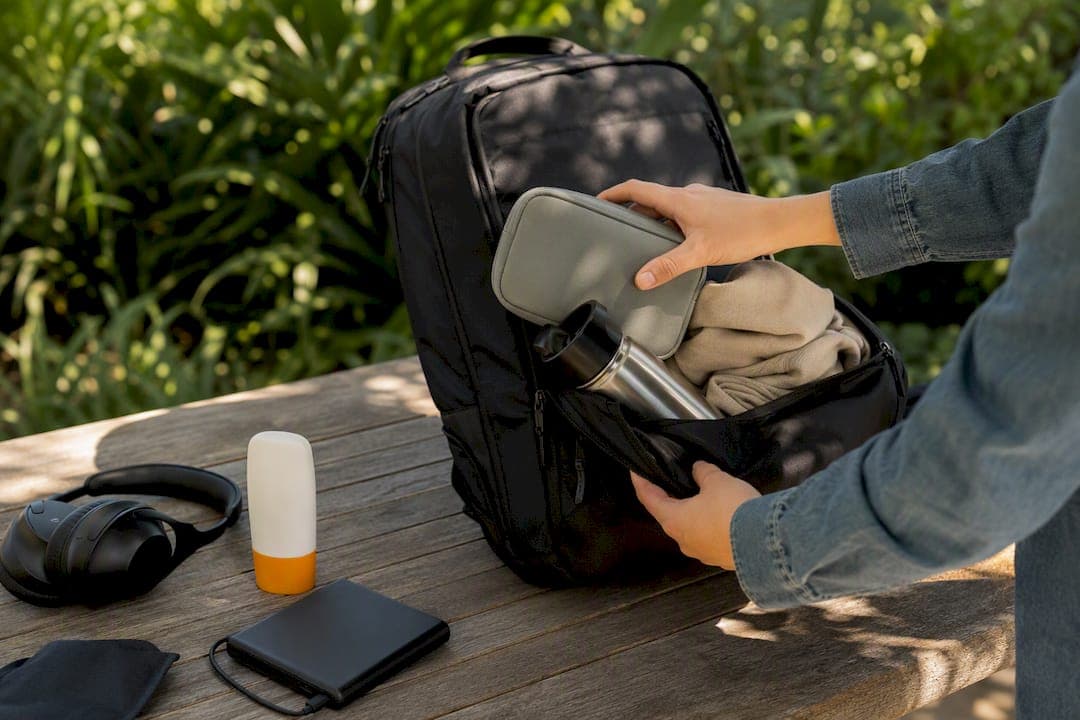
- Chargers, a portable battery, and any lithium-ion devices, all in the cabin, since most airlines restrict them from checked bags.
- Check short-term rental legality at your destination if you're booking through a private host; some cities have tightened rules mid-year.
- An eSIM, activated before you land, not after.
How Do You Stay Healthy While Traveling in 2026?
Prevention beats treatment on the road, and the fix is boring: vaccines, sleep, water, and a medical kit you actually packed instead of meant to pack. That's the whole strategy, and it works better than any wellness gadget you'll see in an airport shop.
Clinical guidance backs this up directly. Nursing experts flag over-planning and skipped rest as the most common reason travelers get sick or exhausted mid-trip, and the fix isn't complicated: build mandatory downtime into the schedule instead of treating rest as something that happens if there's time left over.
Before you leave, run through this:
- Check vaccine requirements and outbreak notices for your destination through the CDC's travel health pages.
- Map the nearest hospital or clinic to where you're staying, before you land, not after something goes wrong.
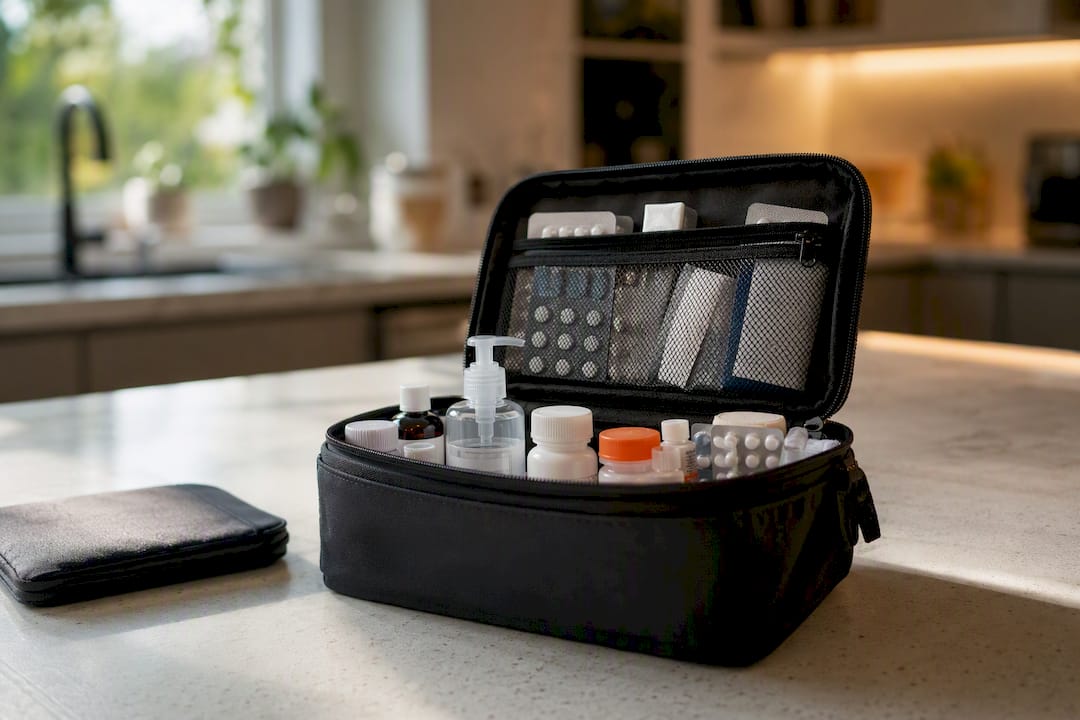
- Pack prescriptions with a buffer in case of delays, plus basics like rehydration salts and any regular medication in its original packaging.
Once you're there, the wellness fundamentals still carry the most weight: wash your hands more than feels necessary, hydrate harder than you think you need to, and get up and walk during long flights to cut the risk of blood clots. If you develop a fever or persistent symptoms, don't tough it out through three more cities. Find care.
Pro Tip: Block out one no-plans half day for every four days of travel. Treat it like a confirmed reservation, not a "we'll see" slot, and you'll actually use it.
When Should You Book Flights and Hotels for 2026 Trips?
Destination choice and departure time matter more than most people budget for. Book domestic flights three to six weeks out and international flights two to four months out for the best mix of price and availability, and pick an early-morning departure whenever the schedule allows it.
The timing detail is not superstition. Flights departing after 9:00 p.m. carry a meaningfully higher cancellation risk than early departures, since delays compound as the day goes on and airlines run out of room to recover. A 7:00 a.m. flight that gets bumped an hour is an inconvenience. A 9:45 p.m. flight that gets bumped an hour can mean a canceled connection and a hotel bill you didn't plan for.
A few other things worth doing before you pay:
- Book direct with the hotel or airline where the price is close, since third-party bookings often bury resort fees and surcharges that only show up at checkout.
- Set fare alerts and watch fare-bucket movement instead of chasing day-of-week pricing myths. Airlines run dynamic pricing, and a single "best day to book" rule doesn't hold up anymore.
- Weigh destinations by cost of living, not just flight price. Lonely Planet's budget research consistently shows shoulder-season travel and lower-cost countries stretch a budget further than chasing a cheap flight to an expensive city.
- Skip dynamic currency conversion at the register, use a card with no foreign transaction fee, and set up a digital wallet or eSIM before you land.
Which Tech Tools Actually Help You Plan Smarter?
AI is genuinely useful for the technical grind of trip planning, fare comparisons, itinerary drafts, route mapping, but it's a poor substitute for human judgment on where to actually eat or which neighborhood is worth your time. Use it for the math, verify the experience picks yourself.
That split matters more in 2026 because AI-generated travel content has gotten convincing enough to sound authoritative while being flatly wrong about opening hours or entry rules that changed last month. Fact-checked testing of viral travel hacks found some tools still deliver real value, travel eSIMs chief among them, while others (incognito-mode pricing tricks, for one) are just myths that refuse to die.
The tools worth actually using:
- Fare-alert apps that track price and fare-bucket movement over time.
- A travel eSIM provider, activated before departure, to skip roaming charges entirely.
- Encrypted cloud copies of your passport, insurance card, and boarding passes, so a lost phone doesn't mean a lost trip.
- Contactless payment set up on your phone before you leave, not scrambled together at a foreign ATM.
Pro Tip: Install and activate your eSIM the night before your flight, then test it before you leave home Wi-Fi. Finding out it doesn't work while you're standing in a jet-bridge is too late.
For a deeper look at combining AI drafts with human review, the same logic applies to full itineraries, not just individual bookings.
Which 2026 Events Will Cause the Biggest Travel Crowds?
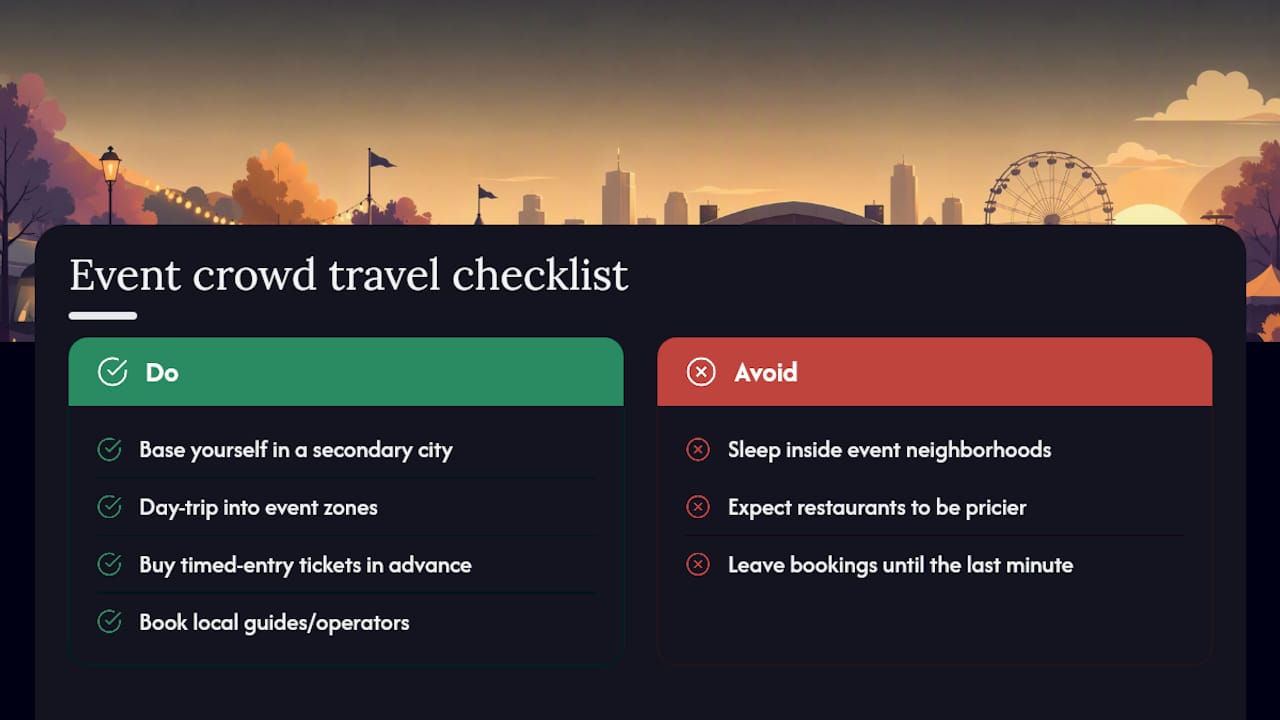
Major sporting events, anniversary celebrations, and festival calendars will spike prices and hotel occupancy in specific cities on specific dates in 2026, and the fix is simple: base yourself in a secondary city and day-trip into the crowd rather than sleeping in the middle of it.
Overtourism remains one of the biggest operational headaches travelers hit in 2026, and it shows up as inflated restaurant prices, sold-out attractions, and hotel rates that triple overnight near a host venue. Buy timed-entry tickets for major sites in advance, expect local prices to spike near event zones, and consider a "beta city" 30 to 60 minutes away where rooms cost less and the streets are walkable. Book with locally owned operators and guides where you can. It spreads tourism revenue instead of concentrating it, and it usually gets you a better experience anyway.
What Should You Do 2 Weeks, 72 Hours, and the Day Before You Fly?
Spreading trip prep across three checkpoints catches the mistakes that ruin trips, the missed authorization, the expired passport, the medication left in a checked bag, before they become a crisis at the gate.
Two or more weeks out: confirm your ETA or ETIAS status, enroll in STEP, buy travel insurance, order or activate your eSIM, and map the nearest clinic or hospital to your accommodation.
72 hours out: reconfirm every booking, download offline maps for areas with weak signal, photograph or copy your passport and insurance documents, and check the airline's carry-on and battery rules before you pack.
Day of travel: choose the earliest reasonable departure, keep medications, chargers, and any lithium-ion devices in your carry-on, and double-check your entry authorization one last time before you leave for the airport.
Publisher perspective: why these priorities for 2026
The 2026 shift is real: new entry authorizations, tightened short-term rental rules in some cities, and a flood of AI planning tools that range from genuinely useful to confidently wrong. This checklist came together by cross-referencing official guidance from the CDC and the State Department with clinical health input and current travel-planning data, then keeping only what holds up. When you'd rather hand the legwork to a human-reviewed process, that's exactly what Destlist builds.
If you want a ready-to-book plan, here's how Destlist helps
Everything above takes hours to do right, checking authorizations, comparing fares, building a packing list that matches your actual destination. Destlist compresses that into a plan a human curator reviews before it reaches you, built from your preferences rather than a generic template.
Three things map directly to the tips in this guide: destination-specific checklists that flag visa and entry-authorization requirements before you book, packing lists tailored to where you're actually going and what the weather will do, and partner perks on eSIMs and travel add-ons so you're not hunting for a provider the night before your flight. Every itinerary gets reviewed by a human curator before it's marked ready, which is the AI-plus-verification split this whole article argues for. If you're ready to skip the spreadsheet, start a custom travel itinerary and get a plan built around your dates, budget, and mood.
Sources
- Travel Reminder Checklist for 2026—Your 11-Point Guide | TravelAwaits
- How to Stay Healthy While Traveling: The Ultimate Wellness Guide - WTOP News
- Essential Travel Tips That Actually Work (2026): Save Time, Money & Stress
- Kiwi
- 8 best budget travel tips - Lonely Planet
This article is general information, not a substitute for advice from a qualified doctor. Consult a qualified healthcare professional about your own circumstances before acting on anything here.