
TL;DR:
- Effective budget travel relies on early booking, expense tracking, and using free local insights to maximize savings. Planning ahead and knowing which costs are negotiable helps travelers spend deliberately without sacrificing experiences.
Budget travel tips are strategies that help travelers cut costs on flights, accommodation, food, and activities without giving up the experiences that make a trip worth taking. The term "budget travel" is sometimes used loosely, but the underlying discipline is called travel cost management: a deliberate approach to planning, timing, and spending that keeps your wallet intact. Tools like Google Flights, Rome2Rio, and Hostelworld have made this discipline accessible to anyone with a phone and a destination in mind. The key insight is simple. Saving money on travel is less about deprivation and more about timing, research, and knowing which costs are negotiable.
1. What are the best budget travel tips for timing your bookings?
Timing is the single most powerful lever in travel cost management. Book domestic flights 1–3 months in advance and international flights 2–8 months out to hit the lowest fare windows. Last-minute bookings almost always cost more, and the savings from planning ahead are real and repeatable.
The day you fly matters as much as when you book. Flying midweek and avoiding peak travel days like Fridays and Sundays consistently yields lower prices and smaller crowds. Smaller regional airports often charge less in fees and taxes than major hubs, so check both options before committing.
- Set a fare alert on Google Flights for your target route.
- Watch prices for two to three weeks before booking.
- Book the moment the price drops to your target range.
- Avoid booking on weekends when airline prices tend to spike.
- Check nearby airports within a two-hour drive of your destination.
Pro Tip: Separating price discovery from booking prevents the trap of endless searching. Set a price target, use Google Flights to track it, and book decisively when it hits. Indecision costs money.
2. How budgeting apps improve daily travel spending control

A travel budget without a tracking system fails within the first two days. Budgeting apps and planned expense tracking are the most reliable way to stay on target during a trip. Apps like Trail Wallet and TravelSpend let you set a daily limit and log every purchase in real time.
The smarter move is to build a 20%–30% buffer into your total budget before you leave. Unexpected costs, a missed bus, a pharmacy run, a rainy-day museum visit, will always appear. A buffer prevents those moments from derailing your entire trip financially.
- Set a firm daily spending limit before departure, not after arrival.
- Open a dedicated travel account or use a no-foreign-transaction-fee card like Charles Schwab or Wise.
- Log every expense the same day you spend it, not at the end of the trip.
- Separate fixed costs (accommodation, transport) from variable costs (food, activities) in your tracker.
- Review your daily travel spending each evening to catch overruns early.
Pro Tip: Budget failure rarely comes from one big splurge. It comes from small daily overruns that compound. Checking your tracker every night takes two minutes and saves your trip.
3. What are the best research and planning tools for affordable travel?
The right tools cut hours off your research time and surface deals you would never find manually. Rome2Rio compares every transport option between two points, including buses, trains, ferries, and flights, with estimated costs for each. That single comparison often reveals a train or bus route that costs a fraction of the cheapest flight.
Hostelworld goes beyond beds. Local traveler insights and community feedback reveal free events, cheap local restaurants, and neighborhood tips that no algorithm surfaces. Nomad List adds a data layer, showing cost of living, internet speed, and weather for hundreds of cities, which helps you choose a destination that fits your budget before you even search for flights.
| Tool | Best for | Cost |
|---|---|---|
| Google Flights | Fare tracking and flexible date search | Free |
| Rome2Rio | Multi-mode transport comparison | Free |
| Hostelworld | Budget accommodation and community tips | Free to browse |
| Nomad List | Destination cost comparison | Free tier available |
| Trail Wallet | Daily expense tracking on the road | Paid app |
Reddit communities like r/solotravel and r/shoestring are underrated research tools. Travelers post real prices, current scams to avoid, and neighborhood recommendations that travel blogs rarely update. Cross-referencing those posts with Google Maps reviews gives you a ground-level picture of any destination.
4. Practical ways to save on transport, accommodation, food, and activities
On-the-ground spending is where most travel budgets collapse. The decisions you make daily, not the flights you booked months ago, determine whether you come home with money left over.
Transportation: Public transit beats taxis on price in almost every city. A metro day pass in cities like Madrid, Bangkok, or Mexico City costs a fraction of a single rideshare ride. Walk when distances are under two miles. Your legs are free, and you see more.
Accommodation: Mixing one or two nights in a quality hotel with the rest in well-reviewed hostels or guesthouses cuts accommodation costs significantly without sacrificing comfort on the nights that matter. Booking directly with smaller guesthouses often gets you a better rate than any platform. Combining lodging and dining at the same property sometimes unlocks discounts that neither option offers separately.
Food: Eat where locals eat. Markets, food halls, and lunch specials at sit-down restaurants cost far less than tourist-area menus. Pack snacks for long travel days to avoid airport and train station prices, which are consistently the most expensive food you will buy on any trip.
Activities: City passes in destinations like Amsterdam, Prague, and New York bundle museum entries and transit into a single discounted price. Free walking tours, available in most major cities, give you a solid orientation and local perspective at no fixed cost, though tipping the guide is standard practice.
- Avoid renting a car last-minute at the airport. Prices are highest there.
- Skip the tourist-trap restaurants directly adjacent to major landmarks.
- Use travel rewards points strategically to wipe out flight or hotel costs entirely.
- Look for free museum days, which most major institutions offer weekly or monthly.
- Book tours and activities in advance online rather than at the gate, where walk-up prices are higher.
5. Why a budget travel checklist prevents costly surprises
A budget travel checklist is a pre-departure audit that catches the costs most travelers forget until they are already at the airport. Travel insurance, visas, transportation, accommodation, and food all belong in your budget before you book anything else. Insurance purchased immediately after booking costs less and covers more than insurance bought the week before departure.
Visa fees vary wildly by destination and nationality. A visa to India, for example, costs around $25 for Americans, while some African destinations charge $100 or more. Missing that line item in your budget is a common and avoidable mistake. A solid step-by-step planning guide walks you through every category before you commit to a destination.
The checklist also forces you to confront the real cost of a trip before you fall in love with the idea of it. That honest accounting is what separates travelers who come home financially intact from those who spend months recovering from a vacation.
6. How to use travel rewards points without wasting them
Travel rewards points are one of the most underused tools in budget travel. Used well, they eliminate major expenses entirely. Used poorly, they expire or get redeemed for low-value gift cards. The discipline is in the planning.
Credit cards like Chase Sapphire Preferred and American Express Gold earn points on everyday spending, not just travel. Transferring those points to airline or hotel partners, rather than redeeming through the card's own portal, typically delivers two to three times the value per point. That difference on a transatlantic flight can mean the gap between paying $800 and paying nothing.
The catch is that rewards points require planning to accrue and redeem at peak value. Award seats on popular routes disappear months in advance. The travelers who benefit most are those who treat points like a savings account, building a balance with a specific trip in mind before they start searching for redemptions.
7. How to find free and low-cost experiences at any destination
Free experiences are not a consolation prize. They are often the most memorable part of a trip. Every city has a layer of free culture that most tourists miss entirely because they book everything through a paid platform.
Local traveler insights consistently surface the best low-cost options: neighborhood festivals, public markets, free concert series, and community events that do not appear on TripAdvisor. Asking your hostel staff or a local guesthouse owner for their honest recommendations takes two minutes and routinely produces the best experiences of a trip.
Facebook Events, Eventbrite, and city-specific blogs list free and cheap events updated weekly. Checking those sources the day before you arrive in a new city takes fifteen minutes and often fills your itinerary with options that cost nothing. The best travel planning tools combine curated itineraries with local knowledge so you do not have to build that research from scratch every time.
Key takeaways
The most effective budget travel strategy combines early booking, daily expense tracking, and deliberate use of free tools and local knowledge to cut costs without cutting experiences.
| Point | Details |
|---|---|
| Book at the right time | Domestic flights: 1–3 months out. International: 2–8 months out for the best fares. |
| Build a spending buffer | Add 20%–30% to your estimated budget to cover unpredictable on-the-ground costs. |
| Use comparison tools | Rome2Rio and Google Flights surface cheaper transport options most travelers never check. |
| Track spending daily | Log every expense the same day using an app like Trail Wallet or TravelSpend. |
| Include all costs upfront | Budget for insurance, visas, and transport before you fall in love with a destination. |
The honest truth about budget travel no one tells you
Budget travel is not about suffering through bad hostels or eating gas station sandwiches for a week. The travelers who do it well are not the ones who spend the least. They are the ones who spend deliberately.
The biggest mistake I see is treating the flight as the only real cost and then improvising everything else on arrival. That improvisation is expensive. Last-minute accommodation, airport food, and tourist-trap taxis add up to hundreds of dollars that a single afternoon of planning would have prevented. The smart vacation budgeting mindset is not about restriction. It is about knowing exactly where your money is going so you can spend freely on the things that actually matter to you.
Flexibility is the other half of the equation. Rigid itineraries break under the pressure of real travel. The best trips I have taken had a solid financial framework and a loose daily plan. That combination gives you the confidence to say yes to an unexpected opportunity without worrying that it will wreck your budget. Pre-plan the expensive parts. Leave room for the rest.
— Helen
How Destlist helps budget travelers plan smarter trips
Destlist builds complete, ready-to-book travel itineraries that match your budget from the first search. The platform combines AI planning with human curation to produce day-by-day trip plans that include flights, hotels, mapped routes, and estimated walking times, all filtered to your spending range.
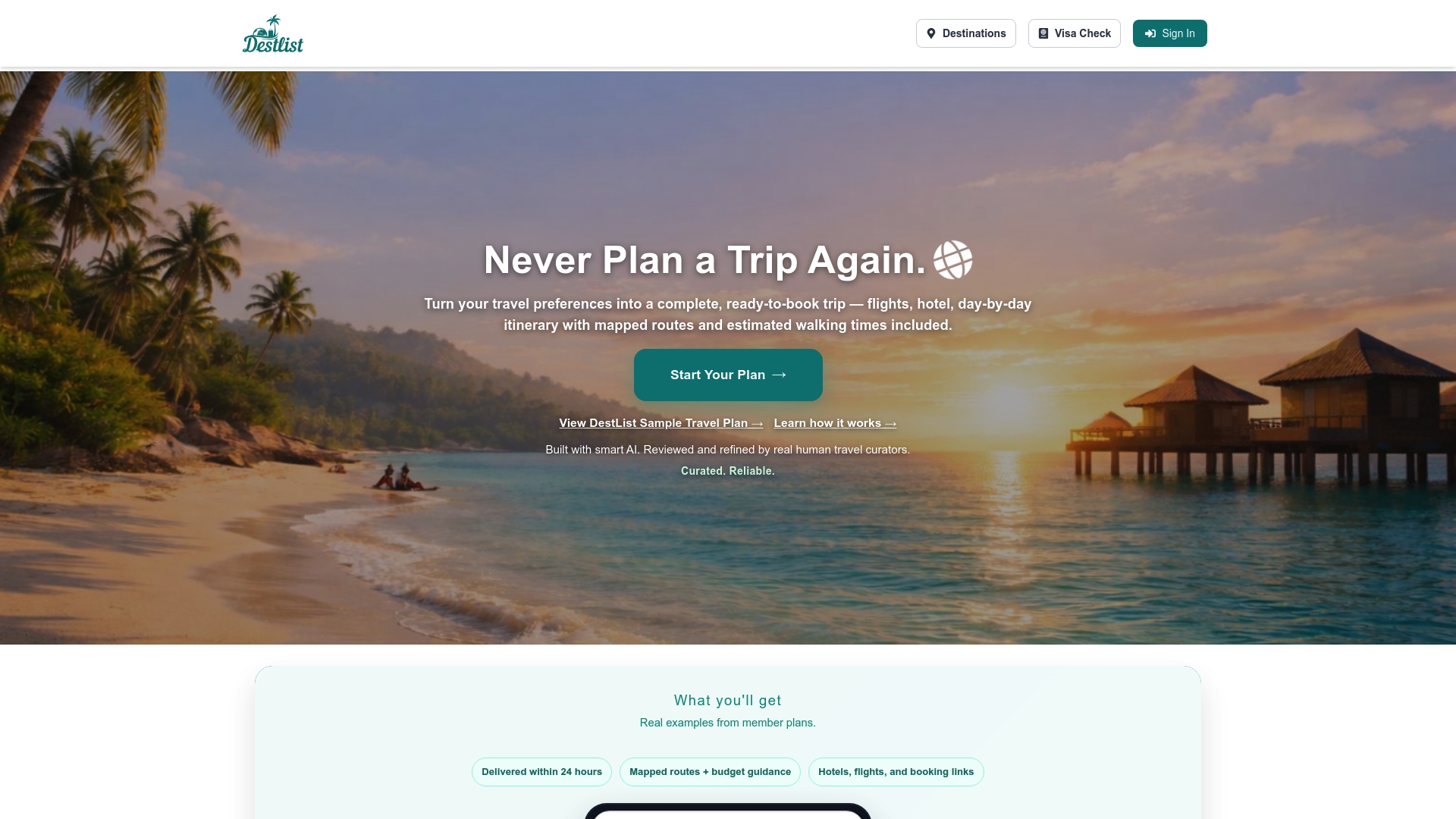
Budget-conscious travelers can use Destlist's custom travel itinerary tool to get a personalized plan built around their budget and travel style, delivered within 24 hours. For those still deciding where to go, the destination discovery tool matches your mood and budget to the right trip before you spend a minute on research. Destlist also offers guided tour options for travelers who want curated experiences without the premium price tag of booking through a traditional travel agent.
FAQ
What is the cheapest day to book flights?
Tuesdays are often the cheapest days to both book and fly. Avoiding peak travel days like Fridays and Sundays also reduces fares and airport congestion.
How much buffer should I add to my travel budget?
Add a 20%–30% buffer over your estimated total. Unexpected costs on the ground are the most common reason travel budgets fail.
When should I buy travel insurance?
Buy travel insurance immediately after booking your trip. Purchasing early locks in lower rates and provides coverage for a wider range of cancellation scenarios.
What free tools help with budget travel planning?
Google Flights, Rome2Rio, and Hostelworld are the three most useful free tools for comparing fares, transport options, and accommodation costs before you commit to any booking.
Do travel rewards points actually save money?
Yes, when redeemed through airline or hotel transfer partners rather than card portals. Points used strategically can eliminate the cost of flights or hotels entirely, but they require advance planning to access the best redemption rates.