
TL;DR:
- Budget travel focuses on intentional choices to maximize experiences and lower costs.
- Building a flexible, organized itinerary with local activities and public transport reduces expenses.
- Prioritizing authentic, free or low-cost experiences creates memorable trips without overspending.
Many travelers assume a tight budget forces them to skip the best experiences, but that belief couldn't be further from the truth. Budget travel is less about deprivation and more about intentional choices that stretch every dollar further. A well-built budget travel itinerary is a day-by-day game plan that sequences your activities, transport, meals, and accommodations to deliver maximum value. When you plan with purpose, you often see more, eat better, and feel less stressed than travelers spending twice as much without a clear strategy.
Table of Contents
- What is a budget travel itinerary?
- How to build a personalized budget travel itinerary
- Maximizing value with smart choices: Transport, activities, and food
- Common mistakes and expert tips for budget travel itineraries
- Rethinking budget travel itineraries: Why less is often more
- Level up your next trip with custom budget travel planning
- Frequently asked questions
Key Takeaways
| Point | Details |
|---|---|
| Budget itineraries defined | Strategic travel plans combine cost-saving choices in activities, accommodation, and meals to deliver more for less. |
| Personalization is key | A great budget itinerary matches your unique interests and spending limits for a richer experience. |
| Plan for flexibility | Always include a buffer and be ready to adapt your itinerary to reduce stress and costs. |
| Smart choices save more | Leveraging local food, public transport, and free activities maximizes value and enjoyment without overspending. |
What is a budget travel itinerary?
A budget travel itinerary is not just a list of places to visit. It is a structured, day-by-day plan that balances where you go, how you get there, where you sleep, and what you eat, all while keeping your spending in check. The goal is simple: get the most meaningful experiences possible without draining your bank account.
What separates a budget itinerary from a standard travel plan is the layer of financial awareness built into every decision. A typical travel plan might say "visit the Colosseum." A budget itinerary says "visit the Colosseum on Tuesday, book online in advance to save 15%, walk from the hostel instead of taking a cab, and grab lunch from the market stall two blocks away."
Good budget-friendly travel planning usually includes these core elements:
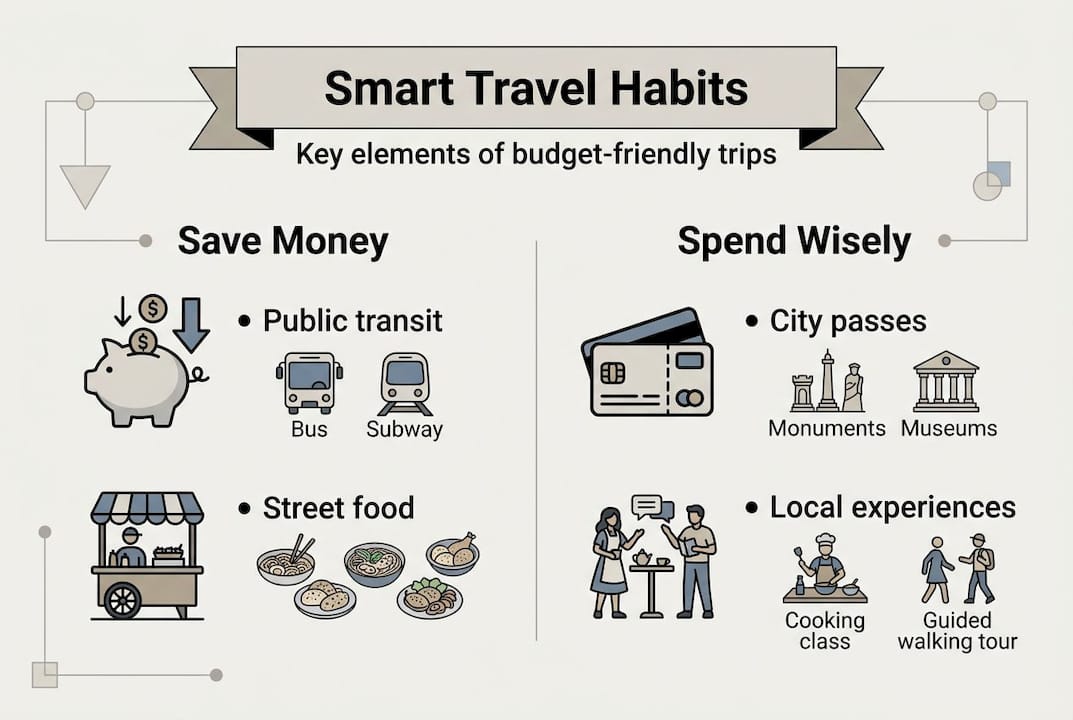
- Free or low-cost activities like public parks, walking tours, and local festivals
- Public transportation instead of taxis or rental cars
- Meals at local spots, street food stalls, or markets rather than tourist restaurants
- A daily spending cap that keeps your total trip cost predictable
- Flexible time blocks that allow for spontaneous discoveries without blowing your budget
The benefits go beyond just saving money. When you choose the right travel budget structure upfront, you reduce the anxiety that comes from watching your account balance drop unexpectedly. You also tend to interact more with locals, eat more authentic food, and move through cities at a pace that actually lets you absorb the culture.
"Prioritizing free or low-cost activities, public transport, and street food helps stretch your budget without sacrificing the quality of your experience."
One often overlooked advantage is that streamlining itinerary formatting and keeping your plan organized reduces decision fatigue on the road. When you already know where you are eating dinner and how you are getting to the next city, you spend your mental energy enjoying the trip instead of solving logistics.
How to build a personalized budget travel itinerary
Building a budget itinerary that actually works for you takes a bit of upfront effort, but the payoff is enormous. Here is a practical sequence to follow:
- Set a realistic daily budget. Research daily costs in Europe or your target destination before committing to anything. Costs vary wildly. A budget day in Southeast Asia might run $30, while a budget day in Scandinavia could be $80.
- Choose your destination with cost in mind. Some cities are naturally budget-friendly. Others require more creativity. Pick places where your money goes further, especially if this is your first time planning a low-cost trip.
- Map your core activities first. Identify the two or three things you absolutely must do, then build the rest of the days around free or affordable options.
- Plan your transport and accommodation together. Staying slightly outside the city center often cuts hotel costs by 30 to 40% while still offering easy access via public transit.
- Allocate food spending by meal type. Budget more for one sit-down meal per day and keep breakfast and lunch cheap with market finds or supermarket stops.
One of the most useful decisions you will make is whether to travel fast or slow. Here is how the two approaches compare:
| Factor | Fast travel | Slow travel |
|---|---|---|
| Daily cost | Higher (more transport) | Lower (fewer moves) |
| Cultural immersion | Surface-level | Deep and authentic |
| Boredom risk | Low | Moderate if unplanned |
| Flexibility | Limited | High |
| Best for | Short trips | Longer journeys |
For stress-free trip planning, slow travel wins on cost and depth of experience. But it requires more intentional activity planning to stay engaged. A hybrid approach, moving every three to four days instead of daily, often hits the sweet spot.
Pro Tip: Always buffer 10 to 20% of your total travel budget for surprises. A missed train, a spontaneous day trip, or a sudden craving for a nice meal should not derail your entire financial plan. Build the cushion in from day one using a solid step-by-step planning guide.
When planning travel routes, think geographically. Zigzagging across a country wastes both time and money. Move in one logical direction and let the route drive your destination order.
Maximizing value with smart choices: Transport, activities, and food
Once your framework is in place, the real savings come from the daily choices you make on the ground. Three categories matter most: how you move, what you do, and what you eat.

Transport is often the biggest variable cost. Savvy travelers chain affordable regions, use overnight buses and trains to save on accommodation, and walk whenever a city allows it. Train passes in Europe, bus networks in Southeast Asia, and metro cards in major cities can cut your daily transport spend dramatically. Avoid airport taxis, tourist shuttle buses, and last-minute flight upgrades unless you have budgeted for them.
Activities do not need to cost much to be memorable. Some of the best travel experiences are completely free:
- Free walking tours (tip-based, usually excellent quality)
- Public parks, beaches, and viewpoints
- Local markets and street festivals
- Museum free days (many major museums offer one free day per week)
- Wandering neighborhoods that tourists rarely visit
For paid attractions, look into city passes or combination tickets. They often reduce per-attraction costs by 20 to 40%. You can also personalize your travel by focusing on experiences that align with your actual interests rather than ticking off generic tourist boxes.
Food is where most travelers overspend without realizing it. Eating where locals eat is not just cheaper, it is almost always better. Street food, market stalls, and neighborhood restaurants away from the main squares offer authentic meals at a fraction of the tourist price. Supermarket dinners with local cheeses, bread, and produce are a legitimate and enjoyable strategy, especially in expensive cities.
Here is a sample daily spending breakdown across popular budget travel regions:
| Region | Accommodation | Food | Transport | Activities | Daily total |
|---|---|---|---|---|---|
| Southeast Asia | $10 to $20 | $8 to $15 | $3 to $8 | $5 to $10 | $26 to $53 |
| Eastern Europe | $20 to $40 | $15 to $25 | $5 to $10 | $8 to $15 | $48 to $90 |
| Western Europe | $40 to $80 | $25 to $45 | $10 to $20 | $15 to $25 | $90 to $170 |
| Latin America | $15 to $30 | $10 to $20 | $3 to $8 | $5 to $12 | $33 to $70 |
Pro Tip: Explore affordable travel destinations before locking in your trip. Switching from Western to Eastern Europe, or from popular beach towns to lesser-known coastal spots, can cut your daily budget by 30 to 50% while often delivering a richer, less crowded experience. Budget travel strategies consistently show that destination choice is the single biggest lever on your total trip cost.
Common mistakes and expert tips for budget travel itineraries
Even experienced travelers fall into predictable traps. Knowing what to avoid puts you well ahead of the curve.
Here are the most common mistakes budget travelers make:
- Over-planning every hour. A packed schedule sounds efficient but leads to burnout fast. Leave breathing room in each day.
- Ignoring local events. Free concerts, markets, and festivals happen constantly. Not checking local event listings means missing out on some of the best free entertainment around.
- Skipping the contingency buffer. Unexpected costs are not rare, they are guaranteed. A missed connection, a pharmacy run, or a weather delay will happen. Plan for it.
- Rushing between cities. Moving too fast costs more in transport and means you never settle into a place long enough to find the good, cheap spots locals actually use.
- Booking everything in advance. Some flexibility lets you take advantage of last-minute deals, especially on accommodation.
Expert travelers know that the best itineraries are frameworks, not rigid scripts. You optimize trip planning not by scheduling every minute but by building a structure that absorbs the unexpected without falling apart.
"Slow travel can enhance immersion but may lead to boredom if not balanced with intentional activity planning."
Regular check-ins with your spending are just as important as your initial plan. Every two or three days, review what you have spent versus what you budgeted. Small adjustments early prevent big overruns later. A sample budget itinerary can give you a realistic benchmark to compare your own plan against.
The travelers who get the most out of budget trips are the ones who stay curious and flexible. They know their daily limit, but they also know when a spontaneous detour is worth the extra $10.
Rethinking budget travel itineraries: Why less is often more
Here is something the typical budget travel guide will not tell you: obsessing over every dollar can actually ruin your trip. There is a version of budget travel that becomes so focused on optimization that it stops being travel and starts being an endurance sport.
We have seen this pattern repeatedly. Travelers who squeeze every cent out of every day often come home exhausted rather than refreshed. They remember the spreadsheet more than the sunset.
The better approach is to identify two or three experiences per trip where you are willing to spend more, a special dinner, a guided tour, a scenic train ride, and then be ruthless about cutting costs everywhere else. This creates contrast. The memorable moments stand out because the rest of the trip was simple and low-key.
Deeper planning strategies consistently show that value and memory are not the same thing as cheap. Budget travel done well is about spending intentionally, not spending as little as humanly possible. Give yourself permission to splurge on the things that matter and let go of the guilt around it.
Level up your next trip with custom budget travel planning
Putting all of this into practice takes time, research, and a lot of tab-switching. That is exactly where DestList comes in.
DestList combines AI-powered tools with real travel expertise to build custom travel itineraries that are both cost-efficient and genuinely enjoyable. You share your preferences, budget, and travel dates, and we handle the rest: flights, hotels, day-by-day activities, mapped routes, and even packing lists. Our done-for-you travel planning service delivers a ready-to-book trip within 24 hours. If you want to start smaller, browse our affordable curated tours to find options that match your budget and travel style without the hours of research.
Frequently asked questions
What are the must-have elements in a budget travel itinerary?
A solid budget itinerary includes free or low-cost activities, efficient transport routes, affordable meals, a daily spending cap, and a 10 to 20% buffer for unexpected costs. These elements work together to keep spending predictable without limiting your experience.
Is it true that budget travel means sacrificing quality experiences?
No. Careful planning lets you access rich, authentic experiences by prioritizing local attractions, street food, and free cultural events at a fraction of the typical tourist cost. Slow travel and eating local consistently deliver some of the most memorable moments on any trip.
How much extra should I budget for surprises?
Plan an extra 10 to 20% of your daily budget as a cushion for unexpected expenses like delays, medical needs, or spontaneous opportunities worth taking.
What are the best transportation methods for saving money?
Public buses, trains, and walking are the most reliable money-saving options. Chaining affordable regions and using regional transit passes can cut your transport costs significantly compared to taxis or domestic flights.