
TL;DR:
- Frictionless trip planning removes unnecessary steps between a travel idea and a confirmed itinerary. It uses integrated platforms and AI tools to connect discovery, planning, and booking seamlessly. Travelers benefit from faster, personalized, and less stressful arrangements through real-time data and group coordination.
Frictionless trip planning is defined as the removal of every unnecessary step between a travel idea and a confirmed, ready-to-go itinerary. The term comes from product design, where "friction" means any obstacle that slows a user down. Applied to travel, it describes a planning experience where discovery, personalization, and booking connect without gaps, repeated data entry, or dead ends. Platforms built on this principle use AI itinerary engines, integrated digital travel guides, and real-time budget tools to collapse what used to be a multi-week research process into a single, connected workflow. The result is fewer decisions that drain energy and more attention left for the trip itself.
What are the key components of frictionless trip planning?
Frictionless trip planning rests on one core idea: every stage of planning should feed directly into the next. Friction arises from disconnects between discovery, planning, and booking. When those stages are siloed, travelers repeat work, lose context, and burn out before they ever pack a bag.
The building blocks of a truly friction-free experience include:
- Integrated platforms. A single environment where you browse destinations, build an itinerary, and confirm bookings without switching tabs or re-entering details. Tourism organizations like Destination Niagara already use interactive digital publications that let travelers explore, plan, and book without leaving the page.
- AI-powered itinerary generation. Context-aware algorithms that factor in your travel style, budget, and dates to produce a day-by-day plan in seconds rather than hours.
- Real-time data synchronization. Booking confirmations, digital tickets, and expense records that update across every device automatically, including offline access for moments without cell service.
- Reduced decision points. Fewer forks in the road. The platform makes low-stakes calls, like suggesting the best route between two museums, so you focus on high-value choices, like which city to visit next.
- Unified group coordination. Shared itineraries, expense splitting, and group messaging in one place rather than scattered across email threads and spreadsheets.
Pro Tip: Before choosing a planning tool, count how many separate apps or websites your current process requires. If the answer is more than three, you are creating friction before the trip even starts.
Integrated platforms also increase booking confidence. Convenience is a key travel decision driver, and tools that simplify discovery directly speed up the moment a traveler commits to a destination.

How do modern technologies enhance stress-free travel arrangements?
AI is the engine behind the most significant gains in easy vacation planning. AI itinerary engines use context-aware algorithms that factor in traveler preferences, real-time conditions, and multi-modal transport options to build optimized schedules automatically. That means a platform can weigh flight times, hotel check-in windows, and local event schedules simultaneously, something a spreadsheet cannot do.
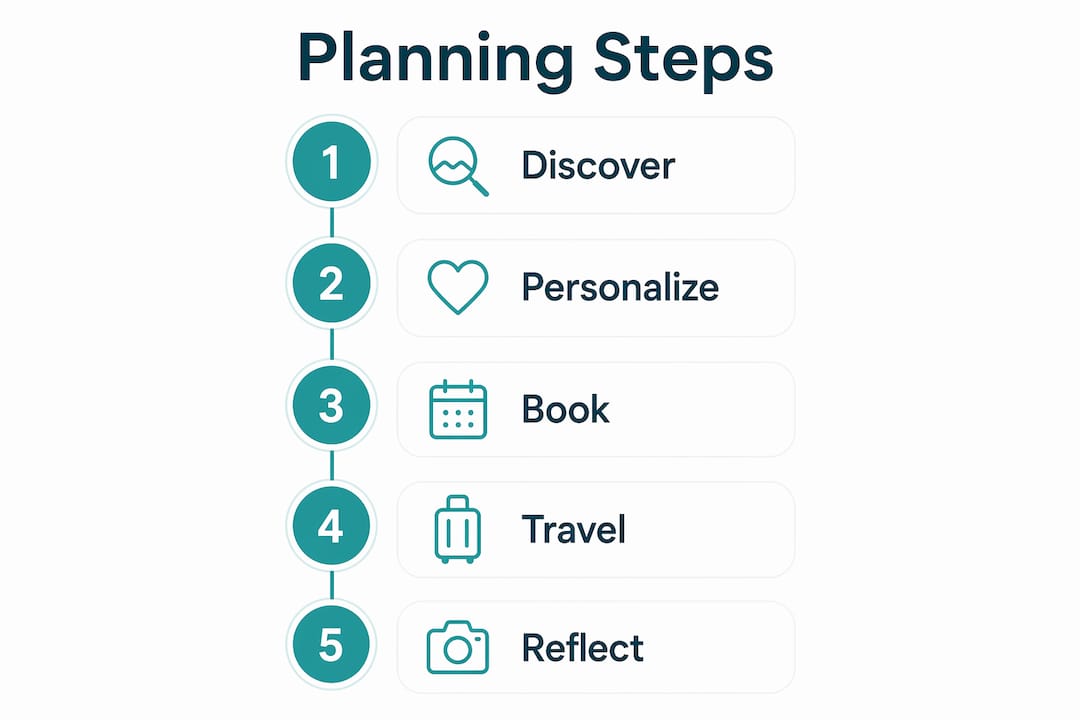
The speed advantage is striking. Some platforms process a 137-day cruise itinerary in under 10 seconds. That shift from manual spreadsheet work to automated trip management is not a minor convenience. It represents hours of research returned to the traveler.
Mobile connectivity adds another layer. Offline access to booking confirmations, maps, and tickets removes the anxiety of losing signal in a foreign city. AI tools adapt recommendations in real time based on context, including season, budget shifts, and traveler mood, so the plan stays relevant even when circumstances change mid-trip.
The table below compares manual planning against an AI-assisted approach across four key dimensions:
| Dimension | Manual planning | AI-assisted planning |
|---|---|---|
| Itinerary build time | Hours to days | Seconds to minutes |
| Budget tracking | Manual spreadsheet updates | Automatic, real-time sync |
| Personalization | Based on memory and notes | Algorithm-driven, context-aware |
| Adaptability | Requires full replanning | Instant suggestion updates |
Understanding digital reservations and connected booking systems is also part of this picture. When hotel and flight confirmations flow directly into your itinerary, you eliminate a full category of copy-paste errors.
Pro Tip: Look for tools that store your preferences across trips. A platform that remembers you prefer aisle seats and boutique hotels cuts setup time for every future plan.
What challenges should travelers understand about frictionless planning?
Frictionless planning is not the right fit for every traveler in every situation. The concept has real limits worth knowing before you commit to a fully automated approach.
The most common tension is between automation and personal control. Some travelers want the platform to decide; others want suggestions they can override. A well-designed tool offers both. The risk with over-automation is that you end up with a plan that is technically efficient but feels generic.
A second challenge is the myth that connectivity kills adventure. Connectivity reduces survival-related anxiety by 90%, allowing travelers to be "lost with confidence" rather than paralyzed by logistics. That is the opposite of limiting spontaneity. When you know rebooking a missed train takes 30 seconds, you are more willing to wander off the planned route.
There is also the concept of "positive friction," the kind of unplanned discovery that makes a trip memorable. Frictionless planning targets logistical friction, not experiential friction. The goal is to remove the stress of figuring out where to sleep, not the joy of stumbling into a neighborhood market.
Key nuances to keep in mind:
- Not every traveler benefits equally. Highly spontaneous travelers may find structured itineraries constraining, even when those itineraries are AI-generated.
- Data privacy matters. Platforms that store preferences and booking history hold sensitive information. Check privacy policies before syncing payment details.
- Over-reliance on a single platform creates a single point of failure. Always keep a backup copy of critical booking references offline.
- Reduced friction improves confidence and motivates travelers to explore beyond standard tourist lists, but only when the tool respects the traveler's own style.
The best frictionless tools adapt to diverse travel personalities rather than forcing everyone into the same planning mold.
How can travelers practically apply frictionless planning?
Turning the concept into a real trip requires a few deliberate choices. These steps move you from theory to a plan you can actually board a plane with.
-
Choose a platform that connects inspiration to booking. Start with a tool that lets you browse destinations and build an itinerary in the same environment. Integrated travel planning eliminates the gap between "I want to go somewhere" and "here is my confirmed hotel."
-
Use AI suggestions as a starting draft, not a final answer. AI-generated itineraries are fastest when you treat them as 80% complete. Adjust the pacing, swap one restaurant for a local recommendation, and the plan becomes yours without starting from scratch.
-
Organize group travel in one shared space. Group trip planning apps that consolidate itineraries, expenses, and communication in one place simplify collaborative travel significantly. Shared schedules and real-time expense splitting prevent the "who owes what" conversation from derailing the trip.
-
Download offline versions of your itinerary before departure. Frictionless planning breaks down the moment you lose signal and cannot access your hotel address. Offline access to critical data is non-negotiable for international travel.
-
Plan multiple trips in a single session when possible. Multi-trip planning tools let you block out the year's travel in one sitting, which prevents the repetitive setup fatigue that comes from starting fresh every time.
-
Audit your planning process after each trip. Note which decisions felt unnecessary and which tools added steps instead of removing them. That feedback loop is how you build a genuinely personal, friction-free system over time.
Removing low-value decisions is the strategic core of this entire approach. When logistics handle themselves, your mental energy goes toward the experiences that actually matter.
Key Takeaways
Frictionless trip planning works because it removes logistical obstacles at every stage, from inspiration through booking, so travelers spend energy on experiences rather than administration.
| Point | Details |
|---|---|
| Unified planning reduces effort | Platforms that connect discovery and booking in one place eliminate repeated data entry and decision fatigue. |
| AI cuts build time dramatically | Context-aware itinerary engines can process complex multi-segment trips in seconds, not hours. |
| Connectivity supports adventure | Reduced logistical anxiety frees travelers to explore confidently beyond standard tourist routes. |
| Automation needs a personal override | The best tools generate a strong draft itinerary and let you customize it without starting over. |
| Offline access is non-negotiable | Storing booking confirmations and maps offline prevents a single connectivity gap from derailing a trip. |
Why I think most travelers are solving the wrong planning problem
The conventional advice on trip planning focuses on finding the right tools. After years of watching travelers plan, I am convinced the real problem is different. Most travelers are not short on tools. They are short on a clear decision about which decisions are worth making at all.
The travelers I see plan the best trips are not the ones with the most elaborate spreadsheets. They are the ones who decided early that hotel star ratings below a certain threshold are not worth debating, that restaurant choices can be made on arrival, and that the only decisions worth pre-making are the ones that cannot be undone cheaply. That is the real architecture of a low-friction trip.
Technology accelerates this, but it does not replace the mindset. An AI itinerary engine is most powerful when you give it clear constraints, not when you ask it to decide everything. The data-driven trip ideas that work best are the ones where the traveler already knows what kind of experience they want and uses the tool to execute it fast.
The future of frictionless travel is not more automation. It is smarter defaults, better personalization, and tools that learn your preferences so you never answer the same question twice. That future is closer than most travelers realize.
— Helen
Destlist turns your travel preferences into a ready-to-book plan
Planning a trip should not feel like a second job. Destlist combines AI-generated itineraries with human travel curation to deliver a complete, personalized trip plan within 24 hours.
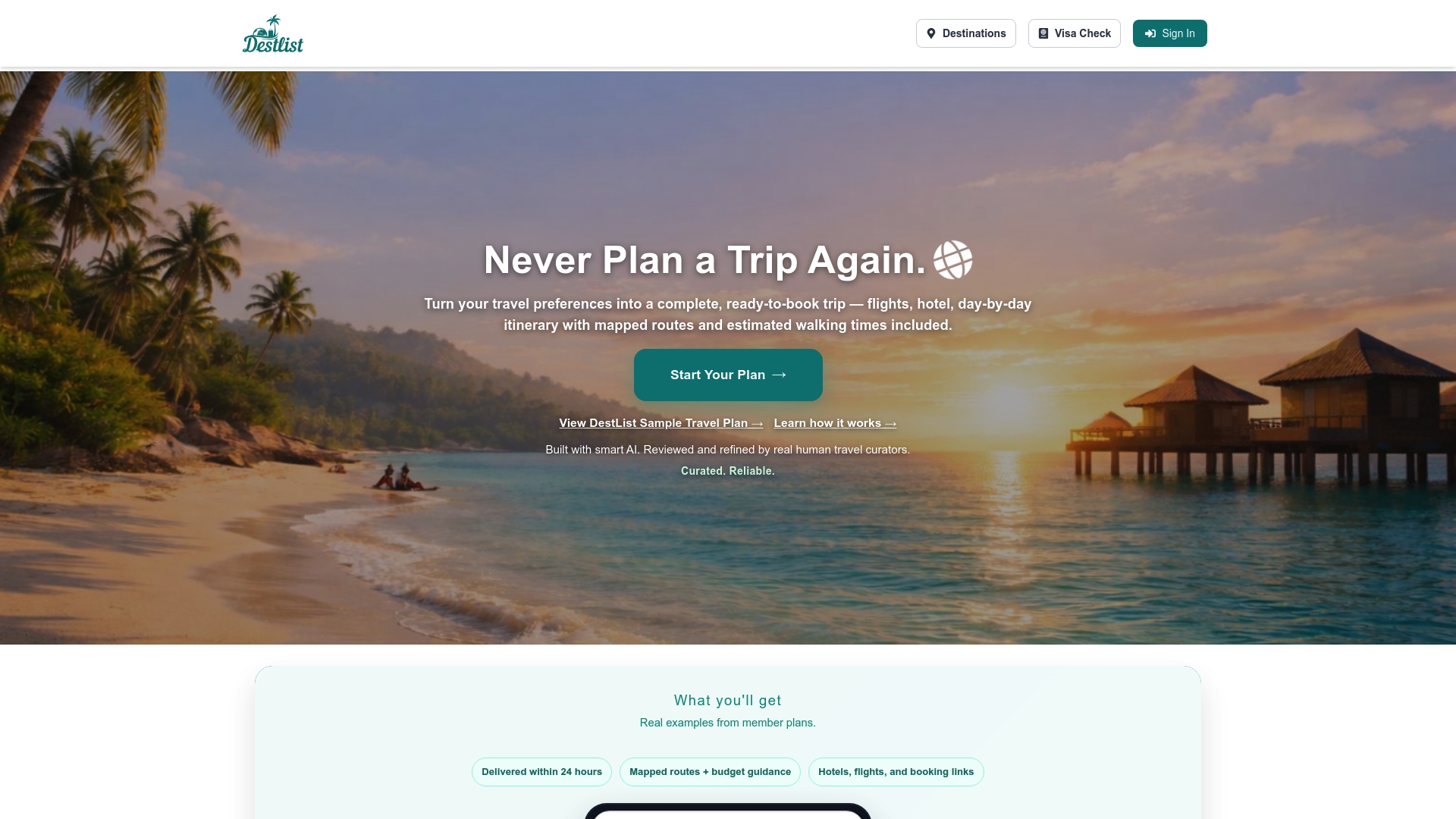
Every plan includes day-by-day activities, mapped routes, estimated walking times, flight and hotel matches within your budget, and weather alerts. You set the preferences. Destlist handles the logistics. Whether you want a curated travel plan built around a specific destination or a fully custom travel itinerary tailored to your exact travel style, the platform delivers a plan you can act on immediately, without the back-and-forth of building it yourself.
FAQ
What is frictionless trip planning?
Frictionless trip planning is the process of connecting discovery, personalization, and booking into one uninterrupted workflow that removes unnecessary decisions and repeated steps. The goal is to reduce the logistical effort between a travel idea and a confirmed, ready-to-use itinerary.
How does AI improve the trip planning process?
AI itinerary engines process traveler preferences, real-time conditions, and transport options simultaneously to generate optimized day-by-day plans in seconds. That speed and context-awareness replaces hours of manual research and cross-referencing.
Does frictionless planning remove spontaneity from travel?
Frictionless planning targets logistical friction, not experiential freedom. Connected travelers report significantly lower anxiety, which makes them more willing to explore beyond planned routes rather than less.
What should I look for in a frictionless planning tool?
Look for a platform that integrates destination discovery, itinerary building, and booking in one place, supports offline access to critical documents, and adapts suggestions based on your budget and travel style.
Is frictionless planning useful for group travel?
Group trip planning benefits directly from frictionless tools. Platforms that consolidate shared itineraries, expense splitting, and group communication in one place eliminate the coordination overhead that typically derails collaborative trip planning.