
TL;DR:
- Luxury trip planning is now accessible to busy professionals and families seeking personalized travel experiences. It involves expert coordination, insider access, proactive risk management, and seamless itineraries that prioritize relaxation and control. The industry is shifting towards meaningful, sustainable, and collaborative travel, emphasizing trust and tailored service.
Luxury trip planning is no longer reserved for celebrities and billionaires. The luxury concierge travel market was valued at USD 5.8 billion in 2024 and is projected to reach USD 10.9 billion by 2033, growing at a 7.2% CAGR. That kind of sustained expansion signals something important: busy professionals, families, and leisure travelers everywhere are discovering that highly personalized, expertly coordinated travel is genuinely within reach. This guide breaks down exactly what luxury trip planning involves, what separates it from standard tours, which trends are reshaping the industry in 2026, and how you can apply these insights to your next trip.
Table of Contents
- Defining luxury trip planning: What does it really mean?
- Core elements: What sets luxury planning apart?
- Comparing bespoke luxury planning vs standard tours
- Emerging trends: Wellness, sustainability, and milestone travel in 2026
- Why true luxury is about trust—what most guides miss
- Streamline your next trip with DestList's personalized planning
- Frequently asked questions
Key Takeaways
| Point | Details |
|---|---|
| Personalization is central | Luxury trip planning focuses on custom experiences tailored just for you. |
| Expert advisors matter | Human expertise ensures seamless travel and crisis solutions beyond AI. |
| Flexible options for all | Both busy professionals and leisure travelers can benefit from bespoke or standard approaches. |
| Wellness and sustainability drive choices | Travelers in 2026 prioritize meaningful, eco-friendly, and wellness-focused journeys. |
| Trust is the real luxury | A trusted relationship with your advisor is more valuable than amenities or price tags. |
Defining luxury trip planning: What does it really mean?
Luxury trip planning is widely misunderstood. Most people picture a billionaire's private jet or a suite in Monaco, but the reality is far more practical and accessible. At its core, luxury trip planning is about removing friction from the travel experience. It means someone else handles the research, the logistics, the contingency plans, and the details you wouldn't even think to check until something goes wrong.
Understanding how customization transforms travel planning helps clarify why this market is growing so rapidly. The average busy professional has limited vacation days and even less mental bandwidth to compare 40 flight options, cross-reference hotel reviews, and build a day-by-day itinerary that actually flows well. Luxury planning fills that gap with precision.
Here's what a genuine luxury trip planning service typically includes:
- Personalized itineraries built around your actual interests, travel style, and pace preferences
- Curated accommodations ranging from boutique hotels to high-end vacation rentals with private amenities
- VIP perks such as early check-ins, room upgrades, and complimentary amenities
- Insider access to experiences that aren't available through standard booking channels
- Proactive monitoring including weather alerts, flight tracking, and real-time rebooking support
- A dedicated point of contact who knows your preferences and history
Who actually uses these services? The profile has broadened considerably. It's the senior marketing executive with two weeks of vacation time and no desire to spend weekends scrolling through travel forums. It's the family planning a multigenerational trip to celebrate a grandparent's 80th birthday. It's the couple seeking a meaningful honeymoon without the risk of a poorly reviewed resort ruining everything.
"True luxury in travel isn't measured by thread count or Michelin stars. It's measured by how completely you were able to relax, knowing every detail had already been thought through before you arrived."
The luxury concierge travel market growth to a projected USD 10.9 billion by 2033 reflects a fundamental shift: time has become the new luxury currency. People with disposable income increasingly prioritize experiences over possessions, and they want those experiences delivered without the planning overhead.
Core elements: What sets luxury planning apart?
Now that we know who luxury trip planning serves, let's examine what actually makes the experience unique and valuable. Not all premium travel services are equal, and the differences matter.
The best luxury planners deliver across five distinct dimensions:
-
VIP treatment built into the itinerary. This isn't about hoping for an upgrade at the front desk. Expert advisors negotiate early check-ins, confirmed suite upgrades, welcome amenities, and priority access well before departure. These perks are baked in, not crossed fingers.
-
Proactive risk management. A flight gets canceled. A restaurant closes unexpectedly. A political situation changes entry requirements three days before you depart. Experienced advisors anticipate these scenarios and have backup plans ready. That's a fundamentally different level of service than a booking platform that sends you a confirmation email and disappears.
-
Insider access. The best experiences aren't listed on general travel sites. A luxury planner with strong supplier relationships can secure tickets to sold-out cultural events, reserve tables at restaurants with year-long waitlists, and arrange private after-hours tours of museums. According to expert concierge guidance, VIP perks like upgrades, proactive risk management, insider access to sold-out events, and human judgment for crises consistently outperform what AI-only platforms can provide.
-
Human judgment when it counts. Algorithms are excellent at comparing prices and flagging schedule conflicts. They're not great at understanding that your 68-year-old mother needs a hotel with elevator access or that your preference for "authentic local food" means something very different than a tourist-trap restaurant with "local" in the name.
-
Seamless itinerary flow. See how personalized trip plans avoid the classic mistake of packing too many activities into one geographic area, requiring unnecessary transit. Great planning means each day moves logically, with realistic timing and breathing room.
Pro Tip: When evaluating a luxury planning service, ask specifically how they handle travel disruptions. Their answer will tell you immediately whether you're talking to a true advisor or an upscale booking engine. A real advisor has protocols, supplier contacts, and the authority to rebook on your behalf at any hour.
The technology dimension matters too. Platforms that use AI to streamline itinerary processes can dramatically accelerate the logistics side of planning, surfacing better flight combinations and hotel options far faster than manual research. The key is combining that speed with human oversight for the nuanced decisions.
Comparing bespoke luxury planning vs standard tours
Let's put luxury trip planning in context by comparing bespoke and standard approaches, so you can identify the best fit for your travel goals.
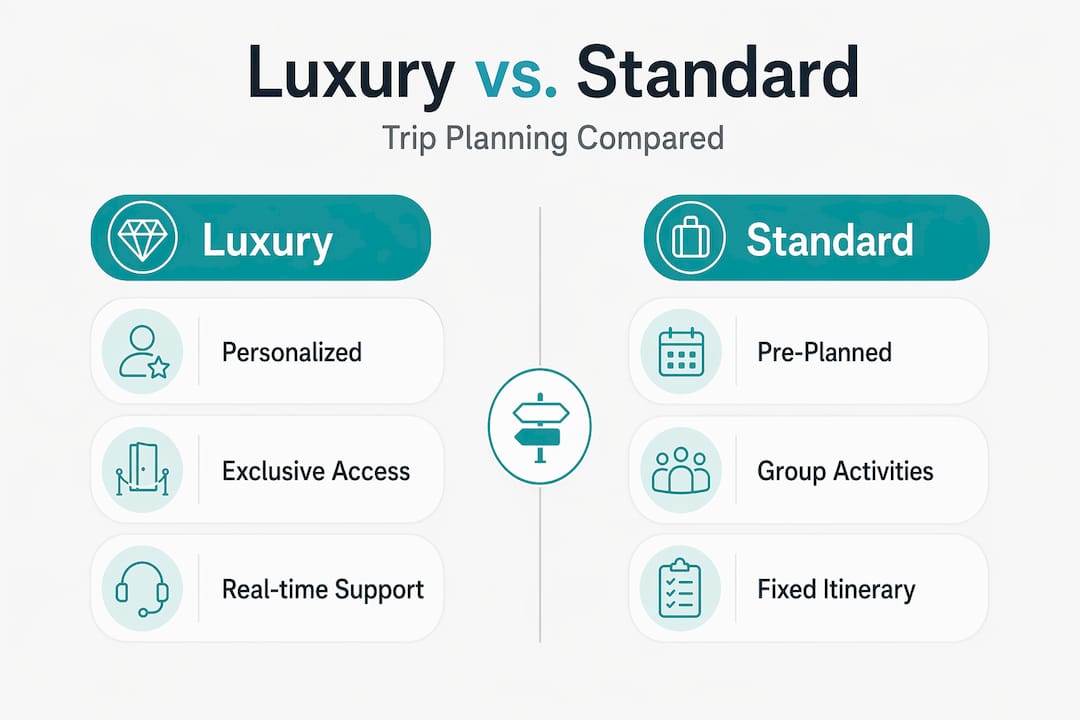
Bespoke vacation services build every element of your trip from scratch around your specific needs. Standard tours package popular itineraries and sell them at a lower per-person cost by spreading overhead across many travelers. Neither is objectively superior. The right choice depends on what you value most.

| Feature | Bespoke luxury planning | Standard pre-planned tours |
|---|---|---|
| Personalization | Fully custom to your preferences | Fixed itinerary, limited flexibility |
| Pricing | Higher, reflects exclusivity | Lower, economies of scale |
| Flexibility | Adjustable at any stage | Difficult to modify post-booking |
| Group dynamic | Private or small custom group | Larger mixed groups |
| Insider access | Exclusive, advisor-negotiated | Standard tourist track |
| Crisis handling | Dedicated advisor response | Call center or self-service |
| Pace control | Entirely up to you | Set schedule for all participants |
| Best for | Complex trips, milestone events | Budget-conscious, straightforward trips |
According to a detailed comparison of travel approaches, bespoke planning offers significantly higher flexibility and exclusivity but comes with higher costs, while hybrid AI-assisted models handle logistics efficiently but still require human advisors for complex personalization.
The hybrid model is worth understanding in more detail. Platforms that combine automated logistics with human curation can offer custom travel itineraries at competitive price points while still delivering the personalization that makes travel feel truly yours. This middle ground is increasingly where smart travelers land, especially professionals who want premium output without paying for a fully white-glove concierge on every trip.
If you want done-for-you travel planning without spending months on research or paying for a fully bespoke service, the hybrid approach delivers real value. You get curated recommendations, logical itinerary flow, and matched accommodations, all built around your preferences rather than a one-size-fits-all template.
Emerging trends: Wellness, sustainability, and milestone travel in 2026
Beyond traditional luxury, new trends are shaping the way travelers experience bespoke trips. Here's what's changing in 2026 and how it impacts your planning options.
The most significant shift is the move away from status-driven travel toward what the industry calls "meaningful luxury." According to Virtuoso's 2026 luxury travel survey, the dominant trend is a shift toward meaningful, sustainable, wellness-focused experiences with collaborative planning between travelers and their advisors. This isn't just marketing language. It's changing what gets booked, what gets prioritized, and how planners design trips.
| Trend | What it looks like in practice | Who it appeals to most |
|---|---|---|
| Wellness travel | Spa retreats, hiking programs, digital detox itineraries | Burnout-prone professionals |
| Sustainable luxury | Low-impact eco-lodges, carbon-offset flight options | Environmentally conscious travelers |
| Milestone travel | Anniversary trips, multigenerational family reunions | Families, couples celebrating key moments |
| Slow travel | Extended stays, deeper cultural immersion | Retirees, remote workers |
| Collaborative planning | Ongoing advisor conversations vs one-time booking | All segments seeking personalization |
Key drivers behind these shifts include:
- Post-pandemic priorities. Travelers who lost years of experiences now place enormous value on quality over quantity. One exceptional trip beats three mediocre ones.
- Wellness as infrastructure. Recovery, sleep quality, nutrition access, and stress reduction are being built into itineraries the same way transfers and restaurant reservations once were.
- Eco-friendly vacationing is no longer a niche preference. High-end travelers increasingly expect their planners to offer environmentally responsible alternatives without compromising comfort.
- Milestone complexity. Planning a 25th wedding anniversary trip for two people is manageable. Planning a multigenerational family reunion for 18 people across three generations, with varied mobility needs and dietary restrictions, is genuinely complex. As noted in guidance on VIP travel advising, complex multi-generational family trips, milestone events, and major travel disruptions require advisor relationships capable of arranging custom solutions like private pop-up hotels and exclusive venue buyouts.
Planning multiple trips efficiently is another growing need, particularly for professionals who travel internationally for both work and leisure. Having a planner who knows your preferences across trips eliminates the re-briefing process each time and allows for genuine customization at speed.
The collaborative planning trend is particularly meaningful. Rather than submitting a form and receiving a static itinerary, travelers are increasingly working with planners through ongoing conversations, refining preferences and building a profile that improves with each trip. This is where customized travel itineraries become a genuine long-term asset rather than a one-time product.
Why true luxury is about trust—what most guides miss
Most articles about luxury trip planning focus on the features: the upgrades, the access, the technology, the price points. Those elements matter. But they miss the deeper reason why affluent, time-pressured people pay for these services in the first place.
The real value is trust. Specifically, the ability to hand something over and genuinely stop worrying about it.
That might sound simple, but it's extraordinarily rare. Think about how many services promise to save you time and then generate more back-and-forth, more decisions, more oversight on your part. A truly effective luxury planner removes decisions from your plate rather than multiplying them. They know enough about your preferences, tolerances, and priorities to make judgment calls on your behalf. That only happens when a real relationship exists between you and your planner.
Technology is an excellent enabler here. When planners have access to platforms that handle the logistics layer quickly and accurately, they spend more time on the human layer. Understanding the best types of trip planners reveals that the most effective services combine algorithmic efficiency with human insight rather than treating them as competing approaches.
The uncomfortable truth about luxury travel is that the most expensive option isn't always the best one. What matters is fit. A planner who genuinely understands your travel personality, who proactively flags the things you'd hate before they happen, and who can pivot seamlessly when reality doesn't match the reservation is worth more than one with a fancier brand name. Luxury is control. It's comfort. It's the peace of mind that comes from knowing you didn't miss something important because you ran out of time to check.
Streamline your next trip with DestList's personalized planning
Understanding what genuine luxury trip planning involves changes how you approach your own travel decisions. You don't need to choose between doing everything yourself and paying a premium concierge for every detail.
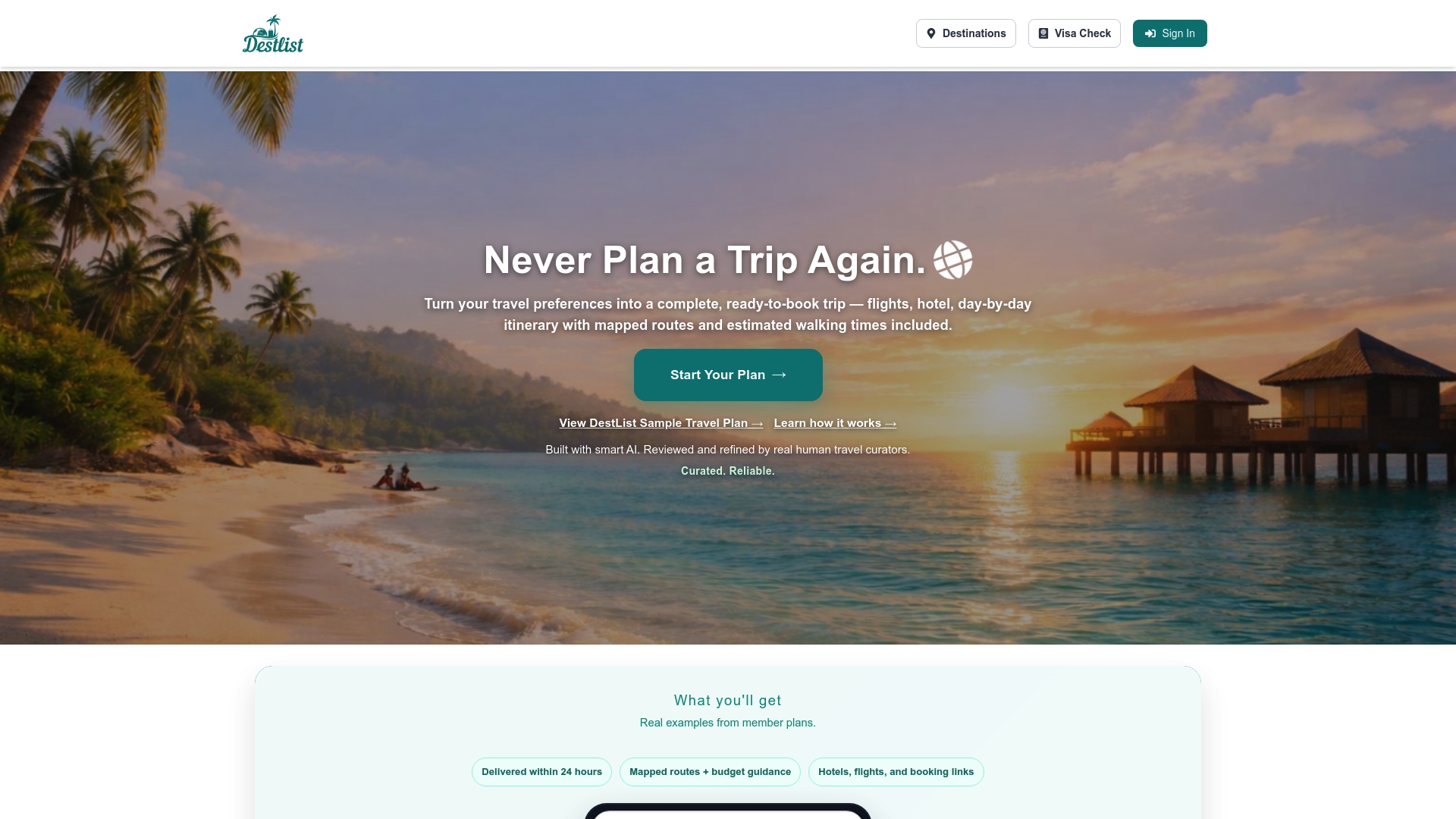
DestList bridges that gap with precision. The platform combines AI-driven logistics with curated human expertise to deliver fully personalized travel plans within 24 hours, covering flights, hotels, day-by-day activities, mapped routes, and estimated walking times. Every plan is matched to your budget, travel style, and specific preferences. Whether you're planning a solo city break, a family milestone trip, or a multi-country adventure, you get a custom travel itinerary that's actually ready to book, not just a list of suggestions to research further. Visit DestList to start building your next trip today, and see how effortless personalized travel planning can be.
Frequently asked questions
How much does luxury trip planning usually cost?
Fees vary widely depending on service level and trip complexity, with bespoke planning costing significantly more than standard tours due to higher personalization and exclusivity. Expect premium pricing for VIP access, dedicated advisors, and fully custom solutions.
What's included in a luxury trip planning service?
Most services cover personalized itineraries, exclusive access, VIP perks, and real-time support, with expert concierge advisors providing proactive risk management and human judgment for complex situations. Some platforms also include packing lists, weather alerts, and destination discovery tools.
Is luxury trip planning only for high net-worth individuals?
No. While historically associated with wealthy travelers, the luxury concierge travel market is expanding to serve busy professionals and leisure travelers who value customization and hassle-free experiences over pure extravagance.
How do luxury planners handle travel disruptions?
Human advisors are essential for real-time crisis management, offering judgment, supplier contacts, and rebooking authority that automated systems cannot replicate. The best planners have contingency protocols ready before disruptions even occur.
What are the biggest trends in luxury trip planning for 2026?
The Virtuoso 2026 survey points to meaningful, wellness-focused, and sustainable trips as the top priorities, with collaborative planning between travelers and advisors increasingly replacing one-time transactional bookings.