TL;DR:
- Solo travel offers enriching experiences, but careful planning ensures safety, comfort, and spontaneity.
- Preparing by understanding your goals, setting realistic budgets, and booking key logistics helps transform plans into reality.
Solo travel is one of the most rewarding ways to see the world, but a solid solo travel planning guide can mean the difference between a trip you remember fondly and one that spirals into stress before you even board the plane. The challenge most solo travelers face is not a lack of enthusiasm. It is the paralysis that comes from not knowing where to start, how to balance structure with spontaneity, or how to stay safe without micromanaging every hour. This guide walks you through each step, from clarifying your priorities to packing your bag, with the kind of depth that actually helps.
Table of Contents
- Understanding your why and setting your travel priorities
- Locking in essentials: booking flights and first night accommodation
- Building a curated yet flexible itinerary with pacing and safety in mind
- Safety planning and sharing your itinerary
- Final preparations: packing smart, handling documents, and embracing the solo travel mindset
- Why flexible, personalized solo travel plans beat rigid packing lists
- Simplify your solo travel planning with DestList
- Frequently asked questions
Key Takeaways
| Point | Details |
|---|---|
| Start with your why | Clarify your travel goals to choose the right destination and set a realistic budget for a solo trip. |
| Lock in essentials early | Book your flights and first night’s accommodation first to make your trip real and reduce stress. |
| Build a flexible itinerary | Choose a small number of fixed priorities plus buffer time and keep your daily plans adaptable. |
| Share and check in | Share a rough itinerary with trusted contacts and establish a simple check-in routine for safety. |
| Pack light and prepare | Bring essential items, important documents, and adopt a confident mindset for a smoother solo travel experience. |
Understanding your why and setting your travel priorities
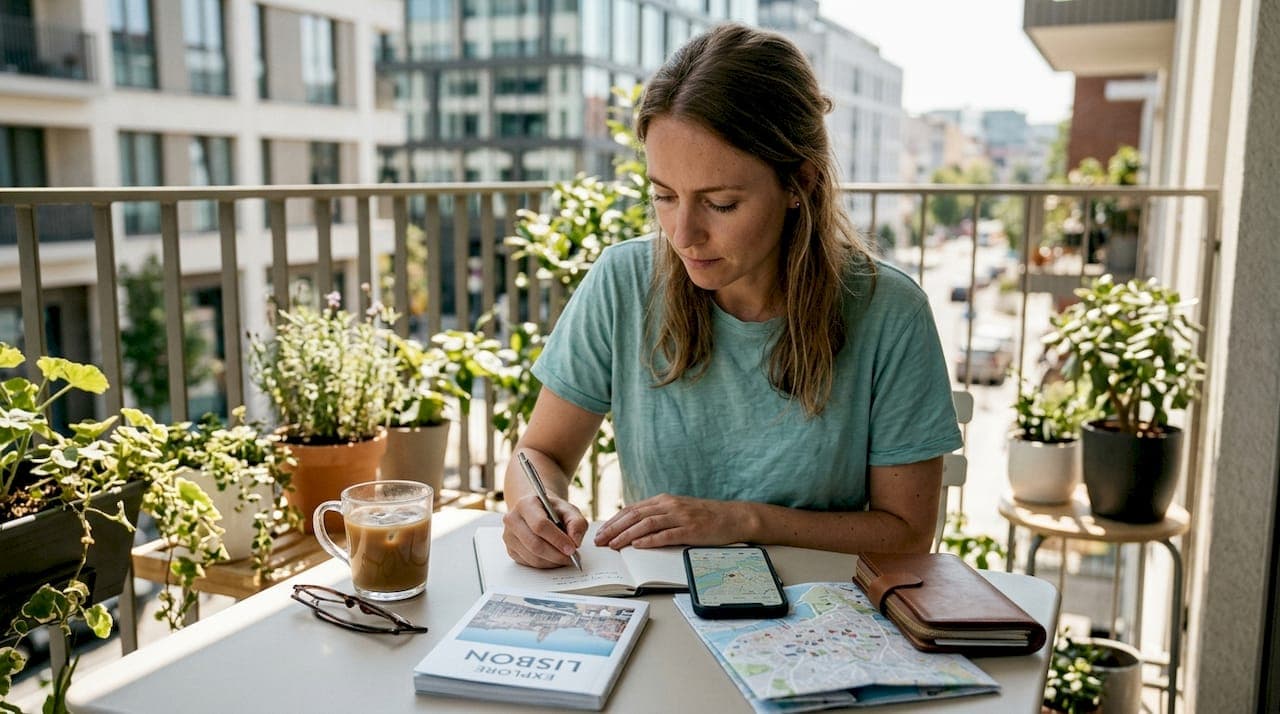
Every good solo trip starts with an honest question: what do I actually want from this? Not the Instagram version. The real answer. Whether that is wandering through ancient ruins in Athens, surfing in Costa Rica, or sitting quietly in a Kyoto garden, your answer shapes every decision that follows — destination, budget, pacing, and the type of accommodation that will feel right at 10 p.m. when you are alone in a foreign city.
If you are new to planning a solo trip, resist the urge to jump straight to flight prices. Start with your why and pick a destination that matches your desired experience and comfort level. A first-time solo traveler who craves culture but dreads language barriers will have a very different experience in Tokyo versus Lisbon. Both are incredible. Only one is a smart first move for that particular traveler.
When it comes to budget, think beyond the obvious. Most people calculate flights and hotels and stop there. A realistic solo travel budget covers:
- Accommodation (hostels, guesthouses, boutique hotels based on your comfort tier)
- Daily food and drink (research average meal costs for your destination before you go)
- Local and intercity transport (trains, buses, taxis, ride shares)
- Activities and entrance fees (museums, tours, experiences)
- One-time costs (visa fees, travel insurance, vaccinations if required)
- A 15-20% buffer for unexpected costs, price changes, or spontaneous decisions
The budget buffer is not optional. It is the thing that stops a missed train or a sudden rainstorm from ruining your mood. For more on tailoring trip itineraries to your specific preferences and budget, that resource is worth your time before you start booking anything.
Locking in essentials: booking flights and first night accommodation
Once you know where you are going and roughly what you can spend, commit to it. The single most effective thing you can do to move from "thinking about a trip" to "actually going on a trip" is to book your flights. That one action changes everything psychologically. A date on the calendar makes the trip real.
Book flights and first night accommodation first to transform your plans into something tangible and ease initial travel stress. For your first night especially, choose somewhere central with flexible check-in hours and solid reviews for solo travelers. You do not want to be navigating an unfamiliar city at midnight looking for a poorly located guesthouse with a broken key box.
Here is what to nail down before anything else:
- Outbound and return flights (or a one-way if you are keeping the return flexible)
- First night accommodation with clear check-in instructions and a central location
- Airport transfer or transport plan for arrival day
What you should not do is try to book every single day of the trip before you leave. Over-scheduling kills the spontaneity that makes solo travel so good. Leave days two through seven open for booking once you arrive and get a feel for the place. For a more detailed breakdown of this approach, the step-by-step trip planning framework at DestList is built specifically for this kind of staged booking strategy.
Pro Tip: Use your airline's seat map to pick a window seat on long flights. It gives you a wall to lean against, eliminates the awkward "excuse me" routine, and makes solo overnight travel significantly more comfortable.
Building a curated yet flexible itinerary with pacing and safety in mind
Here is where most solo travelers either get it exactly right or completely wrong. The two failure modes look like this: person A plans every hour of every day and burns out by day three. Person B plans nothing and spends half the trip in analysis paralysis choosing between options. The answer sits firmly in the middle.
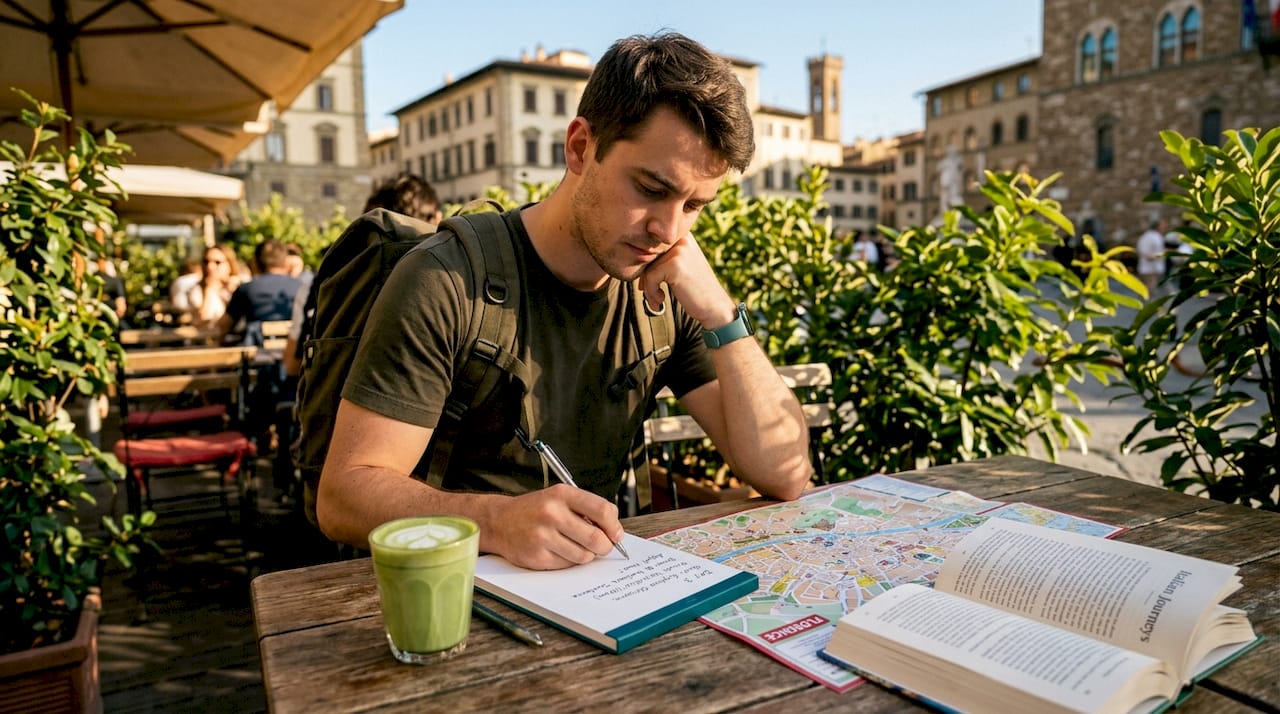
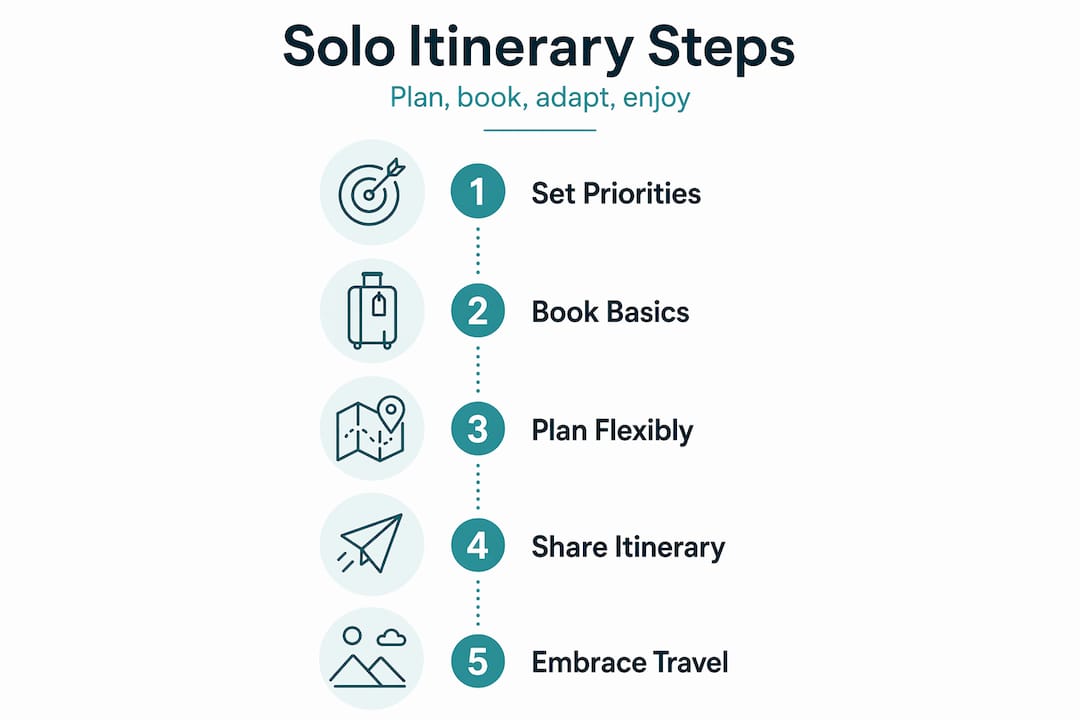
Plan a small number of fixed priorities — three to five must-do experiences — combined with a loose itinerary and built-in buffer time. Those anchor points give your trip shape without turning it into a work schedule. Everything else fills in around them naturally.
How to build your flexible solo itinerary:
- List every experience you want to have on this trip, without filtering
- Circle your top three to five non-negotiables
- Assign each one to a rough day (not a specific time)
- Add one backup activity per day in case something falls through
- Leave at least one full half-day per three days completely unplanned
Including buffer time and avoiding over-scheduling is one of the most practical solo travel tips you can act on before you go. Delays happen. You get tired. You discover a market that was not in any guide and you want to stay an extra two hours. Buffer time is what lets you say yes to that.
For travelers who are new to solo travel, easing into solo outings and booking group activities alongside solo ones builds confidence and adds a layer of safety. A day tour with a small group, a cooking class, or a guided hike gives you social connection and structured safety without committing to traveling with a companion full time.
| Itinerary style | Best for | Main benefit | Main risk |
|---|---|---|---|
| Fully scripted | None | Theoretical control | Burnout, frustration |
| Anchor points + free time | Most solo travelers | Balance of structure and freedom | Requires confidence to improvise |
| Fully unplanned | Experienced travelers | Maximum freedom | Decision fatigue, missed experiences |
| Group tour hybrid | First-time solo travelers | Safety, social connection | Less personal autonomy |
Pro Tip: Check the flexible travel planning guide from DestList for destination-specific pacing templates. Their travel planning checklist also helps you spot gaps in your plan before you leave.
Safety planning and sharing your itinerary
Solo travel safety advice does not have to be complicated, but it does need to be deliberate. The single most effective thing you can do costs you nothing: email your rough itinerary to someone you trust before you leave.
Share a rough itinerary including hotel contact details with a trusted person and check in regularly after arrivals and when moving between destinations. This does not need to be a minute-by-minute log. A simple message saying "Arrived in Porto, staying at [hotel name], heading to Lisbon on Thursday" is enough.
Your solo travel safety checklist should include:
- A copy of your itinerary and accommodation details emailed to at least one trusted contact
- A simple check-in schedule agreed upon in advance (upon arrival, before each departure)
- Emergency contact information saved in your phone AND written down on paper
- Travel insurance details accessible both digitally and in print
- A secure communication app for check-ins (WhatsApp works well across most countries)
Before international travel, the U.S. Department of State's international travel checklist covers passport validity, visa requirements, and enrolling in the STEP program so the embassy knows you are in-country.
The mental load of safety planning shrinks dramatically when you set it up once and stick to a routine. A two-minute check-in text is not a burden. It is a habit that removes a significant amount of background anxiety from your trip.
For managing the organizational side of all this, the itinerary planning workflow built for busy travelers is a practical resource that keeps contacts, bookings, and check-in schedules in one place.
Final preparations: packing smart, handling documents, and embracing the solo travel mindset
The golden rule of solo travel packing: bring half of what you think you need. Then take out two more things. Pack light with carry-on only when possible, and bring essential medications and a backup power bank for your devices. Heavy luggage is a solo traveler's worst enemy. You have no one to watch your bag while you use a restroom, no one to help carry it up four flights of stairs, and no one to trade off with when your arms give out.
Packing essentials for solo travel:
- Clothing for the climate, planned seven days, maximum (pack for laundry, not for options)
- Essential medications and any prescriptions with a doctor's note for customs
- A portable power bank with enough capacity to charge your phone twice
- A small first-aid kit with basics: bandages, pain relief, antidiarrheal medication
- Copies of all travel documents stored separately from originals
Document organization checklist:
- Passport (check expiry: most countries require six months validity beyond your return date)
- Visa approvals, printed and digital copies
- Travel insurance policy with emergency contact number
- Accommodation confirmations for at least the first night
- Credit and debit cards, including one backup kept separately
- Vaccination records if required for entry (check current requirements at CDC travel health)
The mindset piece is the one most single traveler planning guides skip over. Solo travel is genuinely joyful and occasionally lonely. Sometimes you will have a day where everything clicks and you feel completely alive. Other days, you will eat dinner alone and feel the weight of that. Both are part of the experience. Going in with that expectation, rather than pretending the lows do not exist, is what allows you to stay flexible and enjoy the trip rather than resenting it when it is not perfect.
Pro Tip: Download your destination's offline maps using smart packing tips recommended by DestList's planning team. An offline map is more useful than any app when you are in an area with poor signal and need to navigate on foot.
Why flexible, personalized solo travel plans beat rigid packing lists
Here is what 15 years of travel writing and talking to hundreds of solo travelers has taught me: the people who have the best solo trips are not the most organized ones. They are the ones who planned just enough to feel secure, then let go.
Over-planning peak experiences often leads to disappointment due to delays or fatigue. Capping your day at one or two activities plus genuine rest time is not a lazy approach. It is the approach that keeps you enjoying the trip on day seven as much as day one.
The conventional advice in most solo travel planning guides treats your itinerary like a to-do list. More items checked off equals a better trip. That framing is wrong and it costs travelers the very thing they went looking for. The real value of a plan is not the schedule it creates. It is the mental clarity it produces. When you know your anchor experiences, your check-in routine, and your emergency contacts are handled, your brain is free to be present. That presence is the actual experience.
Gradually mixing solo time with group activities is not just a safety strategy. It is a confidence-building one. The traveler who joins a walking tour on day two is ready to navigate an unfamiliar neighborhood alone on day four. Comfort-driven trip itineraries are built around this progression, and it works consistently across experience levels.
Think of your itinerary not as a script but as an operational document: contacts, anchor experiences, check-in times, and buffer space. Everything else is improvisation, and that is where the good stories come from.
Simplify your solo travel planning with DestList
Planning a solo trip well takes time, and time is exactly what most travelers do not have. Building a custom travel itinerary from scratch — one that accounts for your pace, interests, safety needs, and budget — can take days of research that most people simply cannot fit around a full schedule.
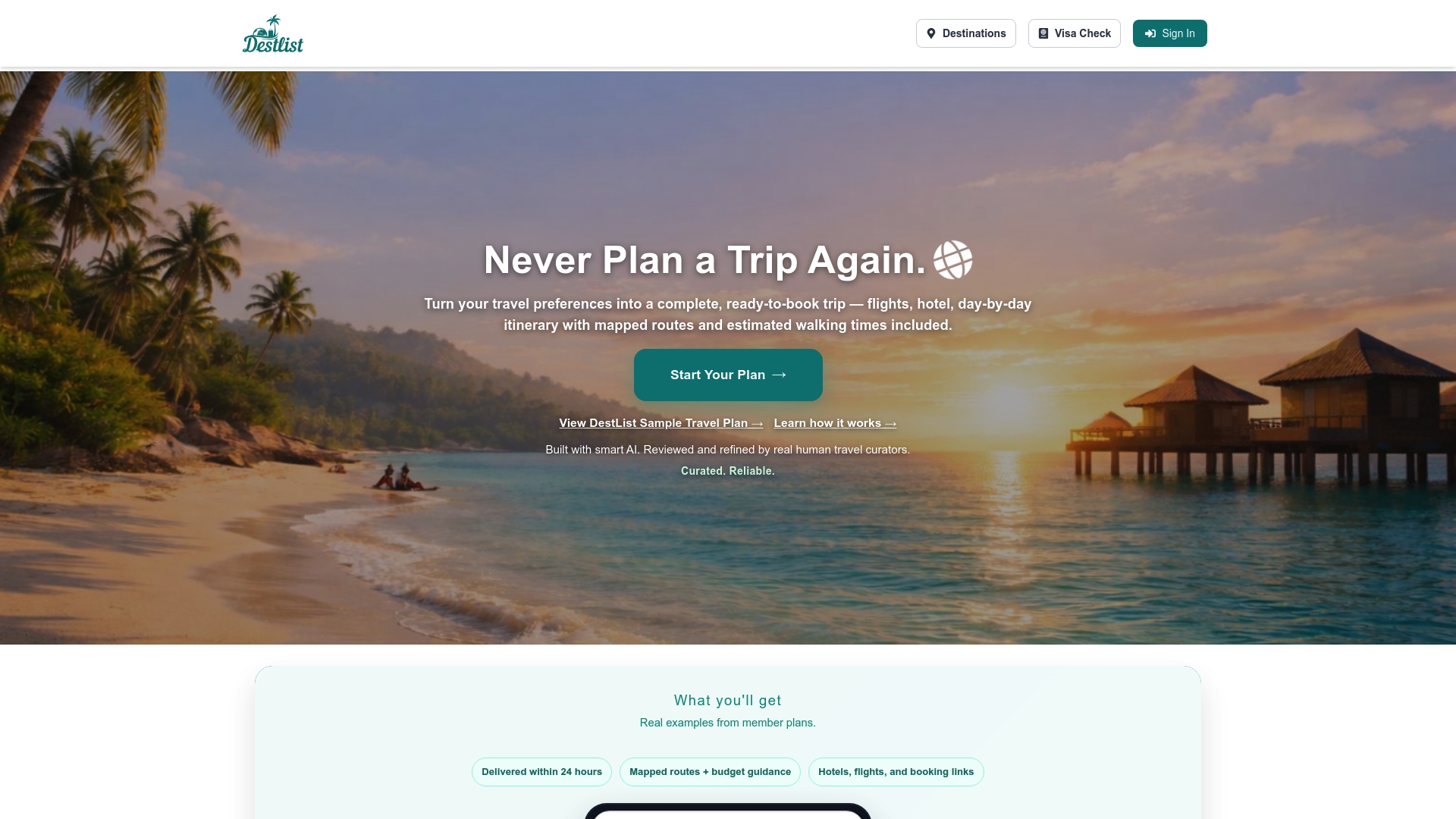
DestList handles that work for you. Their done for you travel planning service uses a combination of AI and human expertise to deliver a ready-to-book solo travel plan within 24 hours, complete with curated day-by-day activities, flight and hotel options matched to your budget, mapped routes with estimated walking times, and weather alerts. If packing is where your planning stalls, their smart packing list tool generates a personalized checklist based on your destination and trip length so nothing important gets left behind.
Frequently asked questions
What is the best way to start planning a solo trip?
Begin by defining your travel goals and budget, then select a destination that fits your experience level and book your flights and first night's accommodation before planning any further activities.
How can I stay safe while traveling solo?
Share a rough itinerary and accommodation contacts with a trusted person before you leave, and set up a simple check-in schedule at each destination to maintain safety without added stress.
How many activities should I plan per day on a solo trip?
Plan one to two activities per day alongside deliberate downtime to avoid fatigue and keep your enjoyment level high throughout the trip.
Why is building flexibility into my itinerary important?
Flexibility prevents disappointment from delays or fatigue, and loose itineraries reduce mental load while allowing you to adapt your plans to real-time experiences and unexpected discoveries.
What should I pack for solo travel?
Pack light with essentials, including any medications and a power bank, to stay mobile and prepared without being weighed down by luggage you will regret at every staircase.