
A seamless travel experience is the provision of a smooth, efficient, safe, secure, and enjoyable journey from a traveler's origin to their destination and back again, with minimal repeated touchpoints, predictable transitions, and consistent identity recognition across every stage. This guide delivers exactly that framing, plus the tools to act on it.
Here is what you will find inside:
- A working definition grounded in OECD, WTTC, and IATA standards
- A stage-by-stage checklist from pre-travel through return
- The core technologies that make frictionless travel possible
- Measurable KPIs and a metrics table for teams
- U.S. regulatory notes covering TSA PreCheck, Global Entry, and CBP programs
- Implementation checklists for travelers and industry operators
The regulatory notes throughout are scoped to the U.S. market. International standards from OECD, WTTC, and IATA are used as definitional anchors, not jurisdiction-specific rules.
Key Takeaways
A seamless travel experience requires identity continuity, interoperable data flows, and proactive AI orchestration across every journey stage, from pre-travel enrollment through post-trip reconciliation.
| Point | Details |
|---|---|
| Working definition | OECD defines seamless travel as smooth, efficient, safe, secure, and enjoyable end-to-end journey with minimal repeated touchpoints. |
| Top technology enablers | Biometrics, AI orchestration, digital travel credentials, and API-based PNR data flows deliver the most measurable friction reduction. |
| Primary KPIs to track | Average security processing time, percentage of touchpoints avoided, NPS change, and baggage mishandling rate. |
| U.S. compliance priority | Separate biometric data used for operations from data used for personalization; obtain explicit consent before any biometric collection. |
| Destlist planning advantage | Destlist coordinates flights, hotels, and daily routes into a single itinerary before departure, reducing on-trip decision load and transfer friction. |
Table of Contents
- What does "seamless travel" actually mean?
- What seamless travel looks like at each journey stage
- Which technologies actually deliver frictionless travel?
- What are the real benefits, and how do you measure them?
- Privacy, security, and U.S. regulatory considerations
- How travelers and industry teams prepare for seamless travel
- Comparing solution approaches and their tradeoffs
- What the research and practitioners say
- The gap between what "seamless" promises and what actually ships
- Destlist turns your trip plan into a ready-to-book itinerary
- Sources
What does "seamless travel" actually mean?
Defining seamless travel experiences requires separating the marketing phrase from the operational reality. The phrase gets used loosely, but the concept has a precise, standards-backed meaning.
The OECD defines it as the provision of a smooth, efficient, safe, secure, and enjoyable travel experience from a traveler's point of origin to a destination, within the destination, and back again. That definition is traveler-centric: it measures success by what the traveler feels and experiences, not by what the operator deploys.
From an industry perspective, the scope is end-to-end and multimodal. It covers every handoff point: airline to airport, airport to ground transport, hotel check-in to in-destination activity. The traveler should never feel the friction of those handoffs.
Three bodies anchor the professional vocabulary here. The OECD provides the policy framework linking facilitation, safety, and sustainable development. The WTTC (World Travel and Tourism Council) frames the Safe and Seamless Traveller Journey, emphasizing biometric-enabled, contactless identity as a core enabler. IATA drives industry digitalization, including digital travel credentials and interoperable standards that connect airline, airport, and border systems. Together, they form the reference architecture that serious implementers use.
The OECD also notes that seamless travel should deliver equitable and sustainable tourism benefits, not only economic efficiency. That framing matters for policy teams and destination managers who often treat friction reduction as a pure throughput problem.
What seamless travel looks like at each journey stage
The concept only becomes useful when mapped to specific moments. Here is what "frictionless" concretely means across the six major stages.
Pre-travel
The traveler confirms visa eligibility, receives accurate entry requirements, and completes enrollment in trusted traveler programs before departure day. The outcome: no surprises at the border. The enabler needs to operate well in advance before departure, since enrollment windows for programs like TSA PreCheck or Global Entry require advance processing. Customized pre-trip planning that surfaces these requirements automatically is one of the clearest wins at this stage.
Booking
A single booking flow captures flight, hotel, ground transport, and key activities without forcing the traveler to re-enter identity data across platforms. The traveler outcome is time saved and cognitive load reduced. Digital reservations that pre-populate traveler profiles across connected systems are the practical expression of this. The enabler must operate at the moment of purchase, not after.
Check-in, airport, and terminal
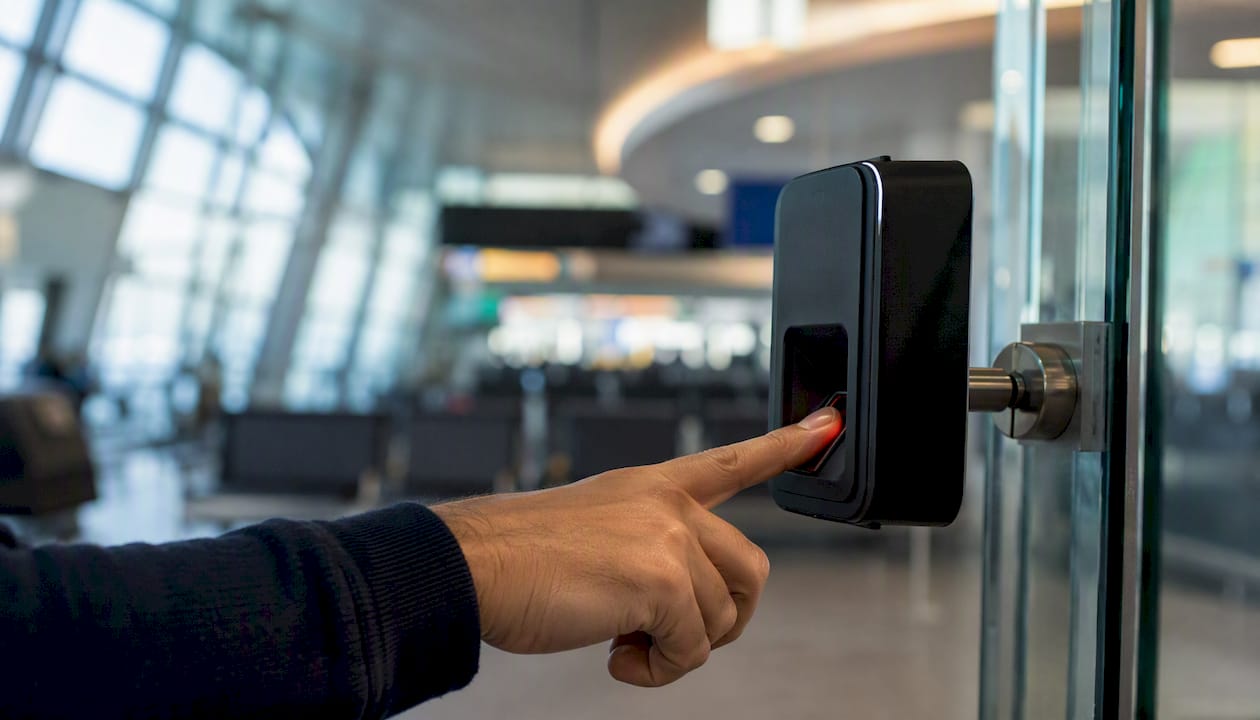
This is where identity continuity earns its keep. eu-LISA research confirms that regulation, industry practice, and technology can reduce repeated presentations of travel documents, enabling contactless, end-to-end processes. A traveler who enrolls biometrics once should not need to show a passport at bag drop, the gate, and the lounge separately. The WTTC's Safe and Seamless Traveller Journey framework treats this single enrollment and multi-touchpoint recognition as the baseline expectation.
Transit and connections
Tight connections are where seamless travel most visibly fails. The traveler outcome here is real-time re-routing and proactive notification before the traveler realizes there is a problem. AI orchestration systems that monitor PNR data and push alerts to a traveler's mobile device are the primary enabler. Timing is critical: the system needs to act shortly before a connection closes, not after.
In-destination
Contactless hotel check-in, mobile room keys, and pre-staged room preferences eliminate the front-desk queue. These on-property integrations form a meaningful part of the in-destination experience. The traveler outcome is arriving at a room that is ready, configured to their preferences, with no paperwork.

Return and post-travel
Automated baggage tracking notifications, digital receipts, and loyalty point reconciliation close the loop. The traveler should not need to call anyone to find out where their bag is or whether their miles posted. Post-travel feedback loops also feed data back into the system for the next trip.
Cross-stage continuity requirement: All six stages depend on a single source of truth for traveler identity and preferences. Without synchronized data across operators, each stage reverts to a standalone experience, and the seams reappear.
Pro Tip: Enroll in TSA PreCheck or Global Entry before your next trip. Both programs reduce document-presentation touchpoints at U.S. airports and borders, and Global Entry includes PreCheck automatically. Processing times vary, so applying well in advance before departure is recommended.
Which technologies actually deliver frictionless travel?
The technology stack behind smooth travel journeys is not a single product. It is a set of interoperable layers, each solving a specific friction point.
- Biometrics and identity continuity: Facial recognition and fingerprint matching allow a traveler's identity to be verified once and recognized across multiple touchpoints. IDEMIA's identity-management approach shows how contactless biometrics can increase passenger throughput while maintaining security compliance. The traveler benefit is speed; the operator benefit is reduced staffing at manual check points.
- AI orchestration: Amadeus documents how AI layers coordinate booking, check-in, and airport touchpoints into a single, responsive experience. AI reads PNR data, monitors flight status, and triggers proactive interventions before the traveler notices a problem. Contextual AI suggestions at the right moment in the journey are a direct output of this orchestration.
- Digital travel credentials (DTCs): IATA-backed digital credentials replace physical documents with verifiable, encrypted identity tokens that border agencies and airlines can read from a traveler's mobile device. The operational benefit is faster processing at every checkpoint.
- API-based data flows (PNR/API): Passenger Name Record (PNR) and Advance Passenger Information (API) data flows connect airline, airport, and border systems. When these APIs are current and interoperable, a gate agent knows a traveler's connection status without a phone call to another terminal.
- Contactless payments: Tap-to-pay at airport retail, in-flight purchases, and hotel checkouts removes one more decision point. The traveler benefit is speed; the operator benefit is reduced transaction time per customer.
- Baggage tracking: RFID-enabled bag tags and real-time tracking apps give travelers visibility into where their luggage is at every transfer point. Mishandling rates drop when staff can locate a bag before it misses a connection.
- Mobile apps and super-apps: A single app that holds boarding passes, hotel keys, ground transport bookings, and destination guides reduces the number of interfaces a traveler must manage. Travel preferences stored in the app enable personalization without repeated data entry.
- Interoperable standards: None of the above works across operators without agreed standards. IATA's ONE Order and NDC standards, and WTTC's globally interoperable, technology-agnostic framework, are the connective tissue.
Pro Tip: Before adding personalization layers to your platform, confirm that identity continuity and data interoperability are solid. A personalized recommendation delivered to the wrong traveler profile is worse than no personalization at all.
What are the real benefits, and how do you measure them?
The case for effortless travel solutions is not abstract. Both travelers and operators see concrete, measurable gains.
Traveler benefits include reduced wait time at checkpoints, fewer repeated identity presentations, predictable transitions that lower cognitive load, and a higher sense of control over the journey. Travel psychology research links this predictability directly to traveler wellbeing and perceived value: when travelers know what comes next and trust the system to handle exceptions, stress drops measurably.
Operator benefits include higher throughput per gate or checkpoint, yield uplift from ancillary sales triggered at the right moment, and NPS/CSAT gains that translate into repeat bookings. Trip analytics give operators the data to identify which friction points cost the most in satisfaction scores.
| Metric | Why it matters | How to measure it |
|---|---|---|
| Avg. time through security (min) | Directly reflects checkpoint efficiency | Gate-to-gate timing logs, TSA throughput data |
| % of touchpoints avoided | Measures identity continuity success | Ratio of biometric vs. manual verifications |
| NPS / CSAT change | Captures perceived experience quality | Pre/post survey at journey end |
| Baggage mishandling rate | Tracks operational reliability | RFID scan logs vs. reported mishandling claims |
| Connection rebooking rate | Measures proactive intervention success | PNR exception reports before vs. after AI deployment |
For pilot programs, a useful before/after framing is: "Before deployment, average security processing time was X minutes per traveler. After biometric enrollment at bag drop, that figure dropped to Y minutes across a 90-day window." That structure forces teams to set a baseline before they launch, which most pilots skip.
Privacy, security, and U.S. regulatory considerations
Biometrics and AI orchestration create real privacy obligations. U.S. operators need to address these before deployment, not after.
Key compliance checklist for U.S. implementers:
- Obtain explicit, informed consent before collecting biometric data at any touchpoint
- Apply data minimization: collect only what is needed for the specific operational purpose
- Separate identity signals used for security operations from those used for personalization and marketing
- Define and publish data retention limits for biometric templates
- Establish fallback processes for travelers who opt out of biometric enrollment
- Align with CBP's Biometric Entry/Exit program requirements for international travelers at U.S. airports
- Review state-level biometric privacy laws (Illinois BIPA is the most stringent; others are emerging)
U.S. traveler programs that enable seamless flows:
- TSA PreCheck: Enrolled travelers use dedicated lanes with reduced screening requirements at participating U.S. airports. The program reduces checkpoint time and document-presentation steps for domestic and some international flights.
- Global Entry: A CBP program that allows pre-approved, low-risk travelers to use automated kiosks at U.S. international airports, bypassing standard passport control queues. Includes TSA PreCheck.
- CBP's Biometric Entry/Exit: Facial recognition at international departure gates, matching travelers against existing government photo databases. Travelers may opt out and use standard document verification instead.
Pro Tip: Keep identity signals for operations and identity signals for personalization in separate data stores with separate access controls. Mixing them creates both a compliance risk and a trust problem with travelers who consented to one use but not the other.
How travelers and industry teams prepare for seamless travel
Traveler checklist
- Enroll in TSA PreCheck or Global Entry at least 60 days before your first qualifying trip.
- Store your passport, boarding passes, and hotel confirmations in a single mobile wallet or travel app.
- Enable push notifications for your airline and any ground transport apps so proactive alerts reach you before a problem escalates.
- Pack carry-on only when possible: checked baggage is the single highest-friction variable in a short-connection itinerary.
- Keep device batteries sufficiently charged at all airport touchpoints. Biometric and mobile-key systems require a functioning screen.
- Check visa and entry requirements at least two weeks before departure, not the night before. Practical tips for business travelers consistently flag document preparation as the most preventable friction source.
Provider implementation checklist
- Establish a governance model before any technology procurement. Identify who owns the traveler data model and who has authority to change it.
- Audit your current identity touchpoints. Map every point where a traveler presents a document or credential. That map is your friction inventory.
- Choose an interoperability standard first. IATA ONE Order, NDC, or a WTTC-aligned framework. Technology choices follow the standard, not the reverse.
- Run a single-point pilot. Fix one high-friction touchpoint, such as bag drop or identity check, and measure throughput before expanding. Amadeus's documented approach confirms this sequencing produces the clearest early wins.
- Define pilot KPIs before launch. Security processing time, biometric adoption rate, and NPS delta are the three minimum baselines.
- Negotiate cross-stakeholder data agreements with airlines, airports, ground transport, and hospitality partners before go-live. A seamless experience for the traveler requires synchronized data across all operators.
Questions to ask vendors
- What interoperability standards does your system support natively?
- How does your consent flow handle travelers who opt out of biometrics mid-journey?
- What is your data retention policy for biometric templates, and how is deletion verified?
- What fallback process exists when biometric matching fails?
- How do you handle PNR data synchronization across airline and airport systems in real time?
Comparing solution approaches and their tradeoffs
Not every operator needs the same solution. The right approach depends on the traveler segment, the operational context, and the budget available.
Lightweight integration (APIs + mobile apps) covers booking and in-destination stages primarily. The primary technology is API-based data flows and mobile apps. The operational benefit is faster booking and reduced front-desk load. Implementation complexity is low to medium, with moderate cost. Privacy implications are limited to data-sharing agreements between booking platforms. Best for tour operators, boutique hotels, and leisure travelers who want convenience without infrastructure investment.
Identity-first strategy (biometrics + digital travel credentials) covers check-in, airport, and border stages. The primary technology is facial recognition, DTCs, and IDEMIA-style identity management. The operational benefit is throughput gains at high-volume checkpoints. Implementation complexity is high, with significant upfront cost. Privacy implications include biometric data governance, consent management, and state-law compliance. Best for major airports, large airlines, and frequent business travelers.
AI orchestration layer covers all stages but adds the most value at transit and connection points. The primary technology is AI, PNR monitoring, and proactive alerting. The operational benefit is exception management before the traveler notices a problem. Implementation complexity is medium to high, depending on existing data infrastructure. Privacy implications center on how AI uses traveler behavioral data. Best for airlines and corporate travel managers handling high-volume itineraries.
Decision rule: Choose lightweight integrations when your primary goal is reducing booking friction and improving in-destination experience. Choose identity-first when throughput at physical checkpoints is the bottleneck. Add AI orchestration when your operation handles enough volume that manual exception management is already breaking down.
- Airports seeking throughput gains should prioritize identity-first strategies with biometric enrollment at bag drop.
- Boutique operators seeking a premium experience should prioritize API integrations and mobile-first personalization.
- Corporate travel programs should layer AI orchestration over existing booking systems before investing in biometric infrastructure.
What the research and practitioners say
The standards bodies and practitioners converge on a consistent set of priorities.
The OECD's framework positions seamless travel as a policy goal that links facilitation, safety, and sustainable development, not a technology product. The WTTC's Safe and Seamless Traveller Journey initiative identifies biometric-enabled, contactless identity and globally interoperable, technology-agnostic approaches as the fastest path to reducing repeated checkpoints while preserving security. IATA's digital travel credential work pushes the industry toward connected, frictionless workflows that cross airline, airport, and border boundaries.
The U.S. Travel Association's Commission on Seamless and Secure Travel frames modernization and cross-industry coordination as central to delivering a modernized travel system. That framing is significant: the commission treats the problem as a coordination failure as much as a technology gap.
From a practitioner standpoint, Destlist's integrated planning approach illustrates how pre-trip alignment reduces transfer friction. When a traveler's flight timing, hotel check-in window, and ground transport are coordinated in a single itinerary before departure, the number of real-time decisions the traveler must make drops sharply. That reduction in on-trip decision load is measurable in post-trip satisfaction scores.
Methodology note for practitioners validating pilots:
- Set a baseline measurement window of at least 30 days before deployment
- Use a minimum sample of 500 traveler journeys per condition to detect meaningful throughput differences
- Measure NPS at journey end, not at individual touchpoints, to capture the cumulative experience
- Report both the mean and the 90th-percentile wait time, since averages mask the outlier experiences that drive negative reviews
The gap between what "seamless" promises and what actually ships
The technology for frictionless travel exists. The governance for it does not, at least not consistently. That is the honest read of where the industry sits in 2026.
Legacy systems at most mid-size airports cannot exchange identity data in real time with airline departure control systems. Biometric enrollment rates remain low outside of frequent business travelers, which means the population that benefits most from identity continuity is also the smallest. And privacy regulation is moving faster than implementation playbooks, particularly at the state level in the U.S., where Illinois BIPA and similar laws create compliance obligations that vary by geography.
The optimism is real, though. AI orchestration is genuinely closing the exception-management gap. Identity continuity, once limited to premium lounges and Global Entry kiosks, is expanding to standard gate processes at major U.S. hubs. And the WTTC's globally interoperable, technology-agnostic framework gives operators a standards path that does not require betting on a single vendor.
Near-term practical wins: Fix one high-friction point, measure it, and publish the result. Bag-drop biometrics and proactive connection alerts are the two highest-ROI starting points for most U.S. airports and airlines.
Medium-term integration work: Cross-operator data agreements are the bottleneck. Airlines, airports, ground transport, and hospitality need shared identity and preference data models before the traveler experience can be truly continuous.
Longer-term collaboration needs: Industry-wide adoption of IATA digital travel credentials and WTTC interoperability standards requires regulatory alignment across CBP, TSA, and international border agencies. That alignment is years away, but the standards work happening now is what makes it possible.
Destlist turns your trip plan into a ready-to-book itinerary
Planning a trip that actually flows, where flights, hotels, ground transport, and daily activities are timed and coordinated before you leave, is the practical version of what this guide describes. Most travelers know what they want but spend hours assembling the pieces manually.

Destlist does that assembly for you. The platform combines AI planning with human review to produce a custom travel itinerary that includes flight and hotel matching, day-by-day route maps with estimated walking times, weather alerts, and packing lists, delivered within 24 hours. The result is a trip where the coordination work is done before you arrive at the airport, not during a tight connection. Browse curated destination plans or start with a custom itinerary to see how much friction disappears when the timing is handled in advance.
Sources
- Safe and seamless travel and improved traveller experience (EN)
- Seamless Traveller Journey (STJ)
- Enabling Seamless Travel to the European Union | eu-LISA
- Iata
- Air travel future: a seamless travel experience