
TL;DR:
- Collaborative travel plans are shared itineraries that allow group members to view, edit, and manage trip details centrally. They help streamline decision-making, budgeting, and communication, reducing chaos and increasing trip satisfaction. Using the right tools, establishing permissions early, and having open conversations are essential for effective group travel planning.
Group trips start with the best intentions. Someone floats a destination in the group chat, everyone reacts with fire emojis, and then the planning begins. Three weeks later, you have 400 unread messages, a shared Google Doc nobody updates, and two people who haven't confirmed they're even coming. Understanding what are collaborative travel plans and how they actually work is the difference between that chaos and a trip everyone genuinely enjoys.
Table of Contents
- Understanding collaborative travel plans and why they matter
- Tools and technology that enable collaboration for group travelers
- Common challenges and expert strategies for effective collaborative travel planning
- Privacy and security considerations when sharing travel plans collaboratively
- Applying collaborative travel planning: from theory to your next trip
- Rethinking group travel: why collaboration tools alone aren't the full solution
- Explore curated and collaborative travel plans with DestList
- Frequently asked questions
Key Takeaways
| Point | Details |
|---|---|
| Centralized coordination | Collaborative travel plans centralize trip info to eliminate chaos from scattered group chats. |
| Use dedicated tools | Specialized apps manage itineraries, expenses, polls, and real-time updates better than general messaging. |
| Set clear permissions | Define editing rights carefully to safeguard sensitive trip data and delegate planning tasks. |
| Align expectations early | Agree on budget and dates before booking to reduce conflicts and last-minute cancellations. |
| Tools complement, don’t replace people | Successful trips depend on managing relationships and clear communication alongside technology. |
Understanding collaborative travel plans and why they matter
Collaborative travel plans are shared, multi-user trip itineraries where every member of the group can view, contribute to, and edit the details in one centralized place. Think of them as a living document that replaces the scattered group chats, forwarded emails, and half-finished spreadsheets that typically define group travel coordination.
What separates a collaborative travel plan from a regular itinerary is the structure built around participation. These plans include shared budgets, group polls for decisions, real-time updates when anything changes, and role-based permissions that define who can edit versus who can only view. Collaborative trip planning apps solve five core pain points: centralizing information, financial transparency, collaborative decision-making, real-time updates, and accountability.
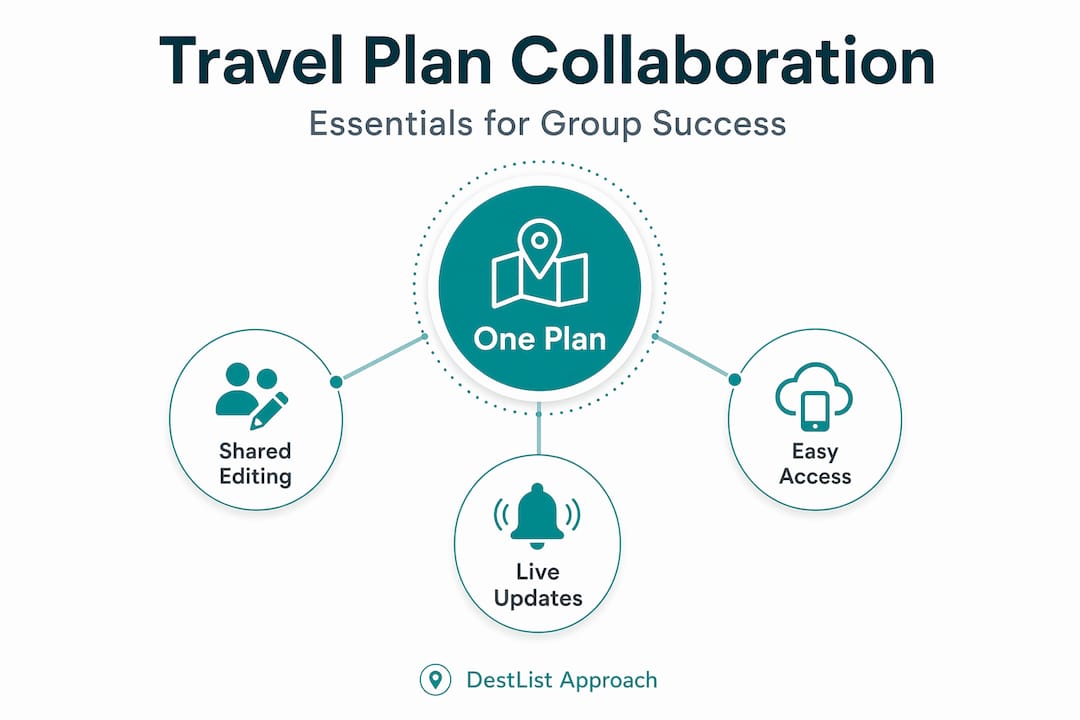
The practical impact is significant. When your group has ten people deciding between Rome and Lisbon, a collaborative plan lets you run a vote, track responses, and move forward in minutes rather than days. No more waiting on the one person who never checks their email.
Here is what a well-built collaborative travel plan typically includes:
- A shared itinerary with day-by-day activities, restaurants, and transport details that every traveler can access
- Group budget tracking that shows total costs, per-person splits, and outstanding balances
- Decision polls for choosing destinations, hotels, or activities
- Role permissions defining who edits versus who views
- Real-time notifications when bookings change, flights shift, or new items are added
- Centralized documents for confirmations, passports copies, and emergency contacts
This is where integrated travel planning proves its value. Instead of toggling between apps and tabs, a properly built collaborative plan holds everything in one place and keeps the entire group on the same page without requiring anyone to ask "wait, what time is the tour again?"
Tools and technology that enable collaboration for group travelers
Not every app does everything, and that's actually a feature, not a bug. Wanderlog, Splitwise, WhenAvailable, and Tern each address different aspects of group travel, from itinerary building and expense tracking to scheduling and permission controls. The smartest groups combine two or three tools that each do one thing well.
Here is a breakdown of the major categories and what to look for:
- Itinerary builders (like Wanderlog): drag-and-drop day planning, map integration, notes, and collaborative editing
- Expense splitters (like Splitwise): receipt scanning, currency conversion, automated reminders, and transparent cost breakdowns, which pairs naturally with solid travel spending tracking habits
- Group schedulers (like WhenAvailable): availability polling across multiple participants for finding shared travel windows
- Permission-based planners (like Tern): role controls that protect sensitive data while allowing collaboration
| Tool type | Core function | Best for |
|---|---|---|
| Itinerary builder | Shared day-by-day planning | Structuring activities and routes |
| Expense splitter | Cost tracking and splits | Managing group finances fairly |
| Group scheduler | Availability polling | Aligning travel dates across schedules |
| Permission planner | Selective access controls | Protecting sensitive booking details |
| All-in-one planner | Combined features | Smaller groups wanting simplicity |
Choosing the right combination depends on your group size, trip complexity, and how tech-comfortable everyone is. A couple planning a weekend trip with two friends doesn't need a five-app stack. A group of twelve planning a two-week international trip probably does.
One overlooked decision is who gets access to what. Permission hygiene is crucial, as defining who has edit rights and protecting sensitive trip data avoids accidental issues. When too many people have full editing rights, flights get moved by accident, details get deleted, and no one knows who made the change. Group scheduling apps often include built-in role settings precisely for this reason.
For deeper guidance on tailoring these tools to your specific travel style, efficient trip customization strategies can help you build a workflow that actually fits your group. And if you are looking for a broader comparison of what is available, resources comparing group trip planning tools can help you narrow down your choices.
Pro Tip: Set permissions on day one before anyone starts editing. Assign one or two people as editors and move everyone else to viewer status. You can always upgrade someone's access later, but cleaning up accidental edits mid-planning is genuinely painful.
Common challenges and expert strategies for effective collaborative travel planning
The technology is only as useful as the process surrounding it. Many groups fail due to lack of alignment before booking, and running structured polls for dates, budgets, and preferences early prevents costly changes later. The tool doesn't cause the problem. The skipped conversation does.
Here is a practical sequence that actually works:
- Lock in the basics first. Before touching any app, get verbal commitments from every participant on budget range, travel window, and trip length. Vague agreements lead to dropped participants after flights are booked.
- Run a destination poll with real options. Don't ask "where should we go?" Ask "which of these three destinations fits our budget and timing?" Specific choices produce decisions. Open questions produce arguments.
- Assign a trip lead. One person owns the master itinerary. Others can suggest, but the lead has final edit authority. This single step prevents more conflict than any feature in any app.
- Build the itinerary with anchor points and open blocks. Schedule two or three non-negotiable group activities per day and leave the rest open. Everyone gets structure, and no one feels imprisoned.
- Track expenses in real time, not at the end. Groups that wait until checkout to settle expenses consistently underestimate costs and create resentment. Real-time tracking surfaces issues while there is still time to adjust.
- Create a communication hub separate from the itinerary. The itinerary is for information. A group chat or shared thread is for discussion. Mixing the two turns your clean plan into a comment thread.
"Groups that use planning apps spend 67% less time coordinating and experience fewer disputes and higher satisfaction."
That number holds up in practice. When the plan exists and everyone can see it, the "wait, I thought we were doing this" conversations drop dramatically.
For groups working with a tight budget friendly travel planning approach, collaborative tools also make it easier to see where costs are piling up before anyone overspends. And if your group is more last-minute by nature, building flexibility into the itinerary planning workflow from the start saves real headaches.

Pro Tip: Put deadlines on every decision in the plan. "Vote closes Friday" is more productive than "let us know what you think." Groups with documented timelines make decisions two to three times faster than those without them.
Privacy and security considerations when sharing travel plans collaboratively
Sharing a trip plan with ten people means ten potential points of exposure. Most travelers don't think about this until something goes wrong.
Tern advises sharing sensitive trip areas like credit card information only with trusted collaborators and using privacy controls to limit access. This applies to passport numbers, hotel confirmation codes, flight PINs, and anything tied to a payment method.
Here are the core practices to protect your group's data:
- Create separate sections for sensitive documents and restrict those sections to the trip organizer and one backup person
- Avoid sharing booking confirmation PDFs in a broad group thread, as these often contain enough information to modify or cancel reservations
- Use platform-level privacy features rather than relying on app security alone. A strong password on a shared document adds a meaningful layer of protection
- Audit access periodically. If someone drops out of the trip, revoke their access immediately
- Never store payment details in a shared itinerary document, even if it's convenient
For trips involving tailored trip itineraries with premium bookings or unique experiences, this matters even more. High-value reservations are more disruptive to lose.
Even group sailing holidays, where logistics are handled by an operator, benefit from clear internal access controls so the group isn't scrambling if a coordinator changes.
Applying collaborative travel planning: from theory to your next trip
Here is a concrete workflow you can run with your group starting today:
- Send a commitment poll. Use a scheduling tool to confirm who is actually in. No commitments, no itinerary access.
- Choose your tools based on group size. Groups under six can often use a single itinerary app. Larger groups benefit from combining a scheduler, an itinerary builder, and an expense tracker.
- Set permissions before sharing the plan. Editor access to the trip lead and co-planner. Viewer access to everyone else.
- Build the itinerary with anchor activities and free blocks. Schedule two or three committed group activities per day. Leave mornings or afternoons open depending on the group's pace.
- Connect an expense tracker from day one. Whether you use a dedicated app or a shared sheet, every cost should be logged as it happens.
- Create a weekly update habit. Send a short summary to the group each week during the planning phase. This keeps everyone informed without burying the itinerary in comments.
Groups that adopt dedicated planning apps reduce coordination time by two-thirds and enjoy fewer disputes. That time compounds quickly across a multi-week trip with a large group.
Additional tools worth having in place:
- A shared folder for travel documents and confirmations
- A group poll history so decisions feel settled, not revisited
- A backup contact list stored outside the main planning app
For groups who want room to adjust as the trip evolves, flexible travel planning approaches let you build adaptability directly into the structure from the start. And if different members have very different preferences, strategies for customizing trips efficiently can help you build a plan that actually works for everyone.
Rethinking group travel: why collaboration tools alone aren't the full solution
Here is the part most articles skip. The tools work. They genuinely work. But they can't fix a group where two people have fundamentally different ideas of what a vacation means.
Planning apps organize logistics but don't resolve personality conflicts or differing vacation styles, and recognizing group dynamics before planning is critical. One person wants a packed schedule. Another needs downtime built in or the trip feels exhausting. One person is flexible on budget. Another quietly resents every restaurant above twenty dollars per person. A well-organized itinerary won't surface these tensions. Only conversation does.
The most successful group trips we've seen share one thing in common. The planner talked to everyone individually before building anything. Not a group poll. An actual one-on-one check-in about what this trip needs to feel like a success for them personally. That information shapes an itinerary no app can generate on its own.
Trip customization methods can help you build flexibility into a shared plan, but flexibility requires knowing where the fault lines are. Assign roles that match personality, not just availability. The detail-oriented person manages the itinerary. The social connector handles group communication. The budget-conscious traveler owns the expense tracker. When everyone's natural strengths are used, the planning feels lighter for everyone.
The technology creates the structure. The relationships fill it in. Treat both with equal seriousness and your group trip actually has a chance of being the trip everyone talks about afterward.
Explore curated and collaborative travel plans with DestList
Planning a group trip is genuinely complex, but you don't have to build every piece from scratch.
DestList combines AI-powered planning with real expert curation to deliver complete, ready-to-book itineraries within 24 hours. Whether you are traveling with two people or twelve, the platform matches your group's budget, travel style, and preferences into a day-by-day plan that already has the flow figured out. Browse curated travel plans built around real destinations, or use the custom travel itinerary tool to build something specific to your group. When you are ready to start from the beginning, the online travel planner walks you through every decision without the spreadsheet chaos.
Frequently asked questions
What exactly are collaborative travel plans?
Collaborative travel plans are shared trip itineraries and budgets created and edited by multiple people to simplify group travel coordination and decision-making. They solve five core pain points including centralizing information, financial transparency, and real-time updates.
How do I maintain privacy and security when sharing trip details?
Use permission controls to restrict sensitive information like payment details to trusted collaborators only. Platforms with granular privacy settings let you protect booking data while still giving the group access to the itinerary.
Which tools are best for managing group trip expenses?
Apps like Splitwise excel at transparent expense tracking by calculating shares and sending reminders, which significantly reduces money disputes during and after the trip.
What are the biggest challenges in group travel planning?
Aligning schedules, agreeing on budgets, and differing travel styles are the most common friction points. Structured polls run early in the planning process prevent these issues from derailing the trip after bookings are made.